Popcorn Ceiling vs Textured Ceiling: What’s the Difference and Which One Should You Choose?
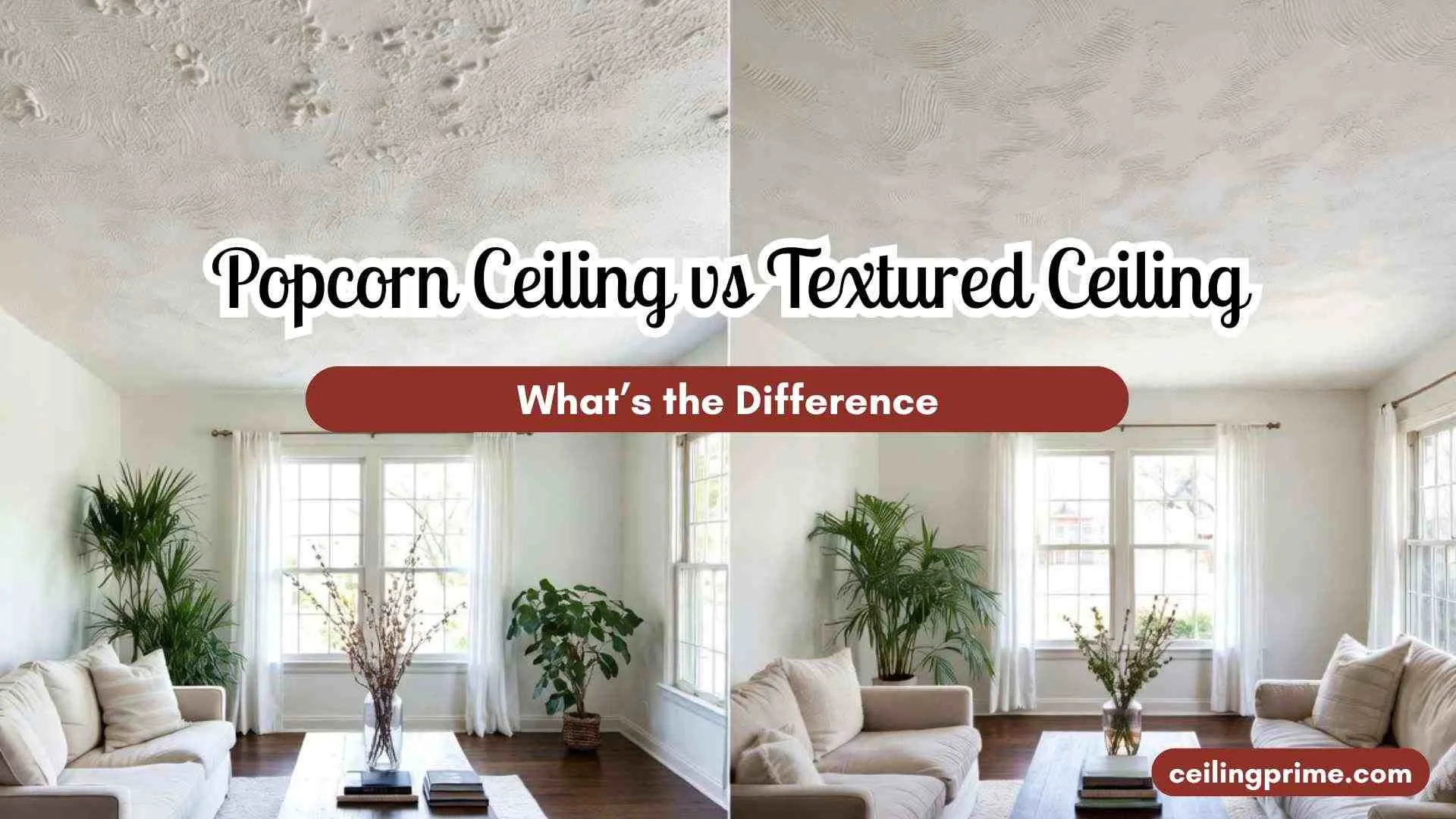
The popcorn ceiling vs textured ceiling debate comes up every time a homeowner stares at a bumpy overhead surface and wonders whether to scrape it, cover it, or replace it. Both are ceiling finishes applied over drywall. Both hide imperfections. But they look different, perform differently, and carry very different risks.
Popcorn ceilings — also called acoustic ceilings, cottage cheese ceilings, or stucco ceilings — use a thick spray-on compound with aggregate materials like Styrofoam beads or vermiculite. The result is a rough, deeply bumpy texture popular from the 1950s through the 1980s. Modern textured ceilings use drywall mud or joint compound applied with trowels, rollers, or sprayers to create subtler patterns like knockdown, orange peel, or swirl finishes.
This guide breaks down every difference that matters: appearance, health hazards, cleaning and repair, sound absorption, cost, and resale value. By the end, you will know exactly which ceiling finish fits your home, your budget, and your timeline.
What Is a Popcorn Ceiling?
Appearance and Common Names
A popcorn ceiling has a rough, raised, heavily bumpy texture that resembles cottage cheese or popcorn. The surface is covered in small, irregular peaks that cast micro-shadows across the room. Other names include acoustic ceiling, stucco ceiling, and sprayed ceiling finish. The look was standard in homes built between the 1950s and 1980s.
Materials and History
Builders sprayed a mix of paint, water, and aggregate materials onto drywall. Early versions used vermiculite or mineral fiber. Before the late 1970s, asbestos was a common ingredient because it added fire resistance and durability.
The Clean Air Act of 1970 banned spray asbestos, but existing stocks were used into the mid-1980s. Any popcorn ceiling installed before 1980 has a real chance of containing asbestos and should be tested before scraping or sanding.
Why Popcorn Ceilings Were Popular?
Popcorn texture covers flaws easily. It hides drywall seams, nail pops, and uneven joints without the labor of skim coating. The rough surface also provides sound absorption, making it common in bedrooms, hallways, and multi-story homes where noise between floors was a concern. And it was cheap — faster to spray than to finish by hand.
What Is a Textured Ceiling?
Popular Texture Types
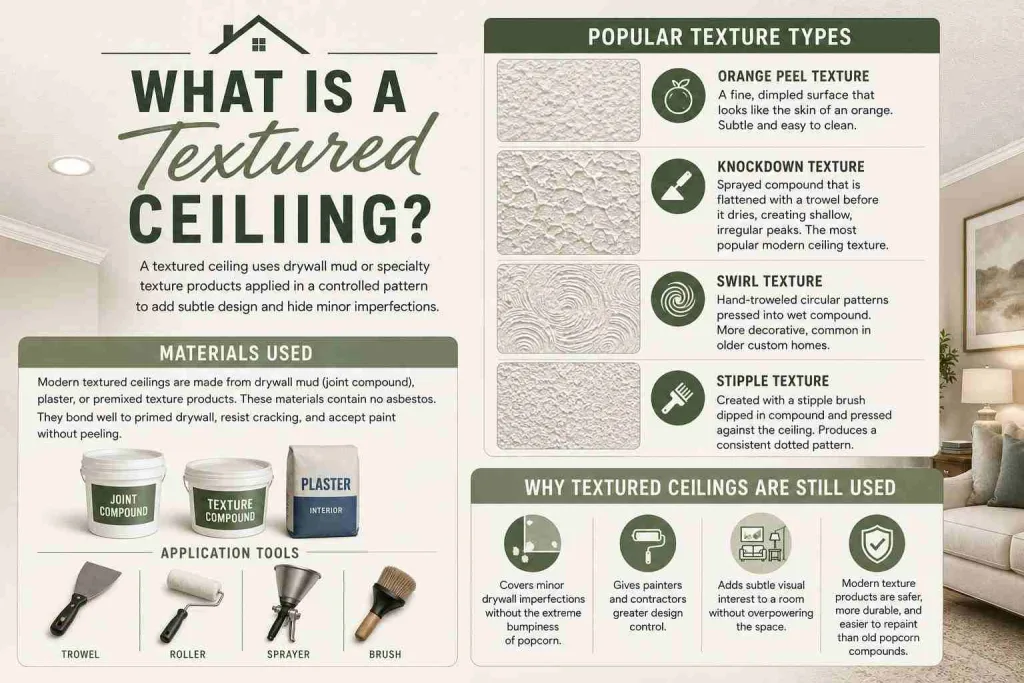
A textured ceiling uses drywall mud or specialty texture products applied in a controlled pattern. The most common styles in 2026 are:
- Orange peel texture: A fine, dimpled surface that looks like the skin of an orange. Subtle and easy to clean.
- Knockdown texture: Sprayed compound that is flattened with a trowel before it dries, creating shallow, irregular peaks. The most popular modern ceiling texture.
- Swirl texture: Hand-troweled circular patterns pressed into wet compound. More decorative, common in older custom homes.
- Stipple texture: Created with a stipple brush dipped in compound and pressed against the ceiling. Produces a consistent dotted pattern.
Materials Used
Modern textured ceilings are made from drywall mud (joint compound), plaster, or premixed texture products. These materials contain no asbestos. They bond well to primed drywall, resist cracking, and accept paint without peeling. Application tools include trowels, rollers, sprayers, and brushes depending on the desired pattern.
Why Textured Ceilings Are Still Used
Textured ceilings cover minor drywall imperfections without the extreme bumpiness of popcorn. They give painters and contractors greater design control. A light orange peel or knockdown finish adds visual interest to a room without overpowering it. And modern texture products are safer, more durable, and easier to repaint than the spray-on popcorn compounds from decades ago.
Popcorn Ceiling vs Textured Ceiling: Side-by-Side Comparison
| Feature | Popcorn Ceiling | Textured Ceiling |
| Appearance | Rough, deep, bumpy (cottage cheese) | Subtle — shallow peaks, dimples, or patterns |
| Materials | Spray compound + aggregate (Styrofoam, vermiculite) | Drywall mud, plaster, specialty texture products |
| Asbestos Risk | High in pre-1980 homes | Low — modern materials are asbestos-free |
| Cleaning | Traps dust; cannot be wiped or scrubbed | Resists dust buildup; can be wiped and repainted |
| Repair Difficulty | Hard to match — texture changes with age | Easier to blend, though pattern matching takes skill |
| Sound Absorption | Excellent — deep bumps absorb echo | Moderate — softens sound, less absorption |
| Style | Outdated — signals 1970s/1980s home | Modern and versatile — fits current design trends |
| Cost to Apply | $1–$2 per sq ft (cheap to spray) | $1–$3 per sq ft (varies by pattern) |
| Resale Value Impact | Lowers perceived value — buyer deterrent | Neutral to positive — accepted by modern buyers |
Appearance: How They Actually Look in a Room
When homeowners search popcorn ceiling vs textured ceiling, appearance is usually the first concern. A popcorn ceiling looks heavy. The deep, random bumps create textured ceiling shadows and make rooms feel darker and smaller. Recessed lights and flush-mount fixtures cast harsh, uneven shadows across the surface.
A knockdown or orange peel texture looks lighter. The pattern has visual interest without the visual clutter of popcorn. It reflects light more evenly, photographs better for real estate listings, and pairs well with modern ceiling fans, pendant lights, and recessed fixtures. The difference between popcorn ceiling vs stucco finishes and modern textures is most obvious under direct overhead lighting.
Asbestos: The Health Risk That Changes Everything
The popcorn ceiling vs textured ceiling question takes on a different weight when asbestos is involved. Popcorn ceilings installed before 1980 frequently contain asbestos fibers mixed into the spray compound. Intact asbestos is not dangerous.
But scraping, sanding, drilling, or even water damage can release fibers into the air. Inhaled asbestos causes lung cancer, mesothelioma, and asbestosis — diseases that develop years after exposure.
Modern textured ceilings use asbestos-free drywall compound and pose no fiber risk. If your home was built before 1980, test the ceiling before any renovation work. Home asbestos test kits cost $10 to $35. Professional inspections run $200 to $400. If the test is positive, hire a licensed asbestos abatement contractor — never attempt DIY removal.
Cleaning, Painting, and Repair Differences
Popcorn ceilings are dust-collecting surfaces. The deep bumps trap dust, pet dander, cobwebs, and cooking grease. You cannot wipe a popcorn ceiling without pulling the texture off. Vacuuming with a brush attachment loosens particles. Painting requires a thick-nap roller and extremely light pressure — press too hard and the bumps break or peel.
Modern textured ceilings resist dust buildup because the surface is shallower and smoother. A damp cloth removes surface dust. Repainting takes standard tools and technique. Repairs are still tricky — matching a knockdown or orange peel pattern takes practice — but the result blends far better than a popcorn patch ever does.
Sound Absorption: Popcorn vs Textured Ceiling Acoustics
Sound absorption is the one area where popcorn ceilings have a genuine advantage. The deep, irregular surface breaks up sound waves and reduces echo. This made popcorn popular in bedrooms, hallways, and multi-story homes where footstep noise transferred between floors.
Textured ceilings still improve overall room acoustics compared to flat drywall. The shallow pattern diffuses sound — it scatters waves instead of absorbing them. The difference is noticeable but modest.
For most residential rooms, a knockdown or orange peel finish provides enough sound softening. If sound dampening is a priority (home theaters, music rooms), modern acoustic panels outperform both ceiling types without the dust-trapping problems.
Popcorn Ceiling Pros and Cons
Pros:
- Conceals major drywall imperfections — seams, nail pops, and uneven joints disappear under the heavy texture.
- Cheap to apply — $1 to $2 per square foot, making it the lowest-cost ceiling finish.
- Strong sound absorption — reduces echo and dampens noise between floors.
Cons:
- Outdated appearance — looks like a 1970s home to every buyer.
- Traps dust, allergens, and cobwebs with no effective way to clean them.
- Hard to repair — matching the original texture after water damage or scraping is nearly impossible.
- Asbestos risk in pre-1980 homes — abatement adds $5 to $20 per square foot to removal costs.
- Lowers home resale value — buyers see it as a renovation cost they have to absorb.
When comparing popcorn ceiling vs textured ceiling, the cons outweigh the pros for most homeowners in 2026. The cost savings at installation do not offset the long-term problems with cleaning, repair, and resale.
Textured Ceiling Pros and Cons (Knockdown, Orange Peel, Swirl)
Pros:
- Modern look — fits current design trends and works with any paint color or fixture style.
- More durable than popcorn — resists chipping, flaking, and crumbling.
- Easier to clean — resists dust buildup and can be wiped with a damp cloth.
- Adds visual interest and depth without overwhelming the room.
- Neutral to positive impact on home resale value.
Cons:
- Intricate patterns can still catch some dust — though far less than popcorn.
- Professional texture matching during repairs takes skill. DIY patches can look uneven.
- Application costs slightly more than popcorn ($1–$3 per square foot) depending on the pattern.
Popcorn Ceiling vs Smooth: Is Flat Drywall the Better Option?
Many homeowners skip the popcorn ceiling vs textured ceiling debate entirely and go straight to smooth. A smooth, flat drywall ceiling with two coats of paint is the most popular ceiling finish in 2026. It reflects light evenly, photographs well, cleans with a damp cloth, and matches every interior design style from traditional to modern.
The trade-off: smooth ceilings require more drywall prep. Every seam, screw hole, and imperfection shows. Skim coating costs $1 to $3 per square foot on top of removal. But the result is a bright, clean surface that increases resale value and eliminates the dust, mold, and maintenance headaches of any textured finish.
When comparing popcorn ceiling vs smooth finishes, the smooth option wins on cleaning, aesthetics, and buyer appeal. The only downside is the higher prep cost.
2026 Cost Guide: Removal, Replacement, and New Texture
| Service | Cost Range (2026) |
| Popcorn ceiling removal (scrape only) | $1–$3 per sq ft |
| Removal + skim coat + paint (smooth finish) | $2–$6 per sq ft |
| Asbestos abatement (if positive) | $5–$20 per sq ft |
| New knockdown or orange peel texture | $1–$3 per sq ft |
| Average-sized room (150 sq ft) | $300–$900 (without asbestos) |
| Cover with drywall panels | $2–$5 per sq ft |
DIY popcorn scraping costs $100 to $300 in materials for a full room. Professional crews charge $15 to $50 per hour per worker. Covering a popcorn ceiling with new drywall panels or a skim coat is often cheaper and cleaner than full removal — especially if asbestos is present.
When to Choose Each Ceiling Finish?
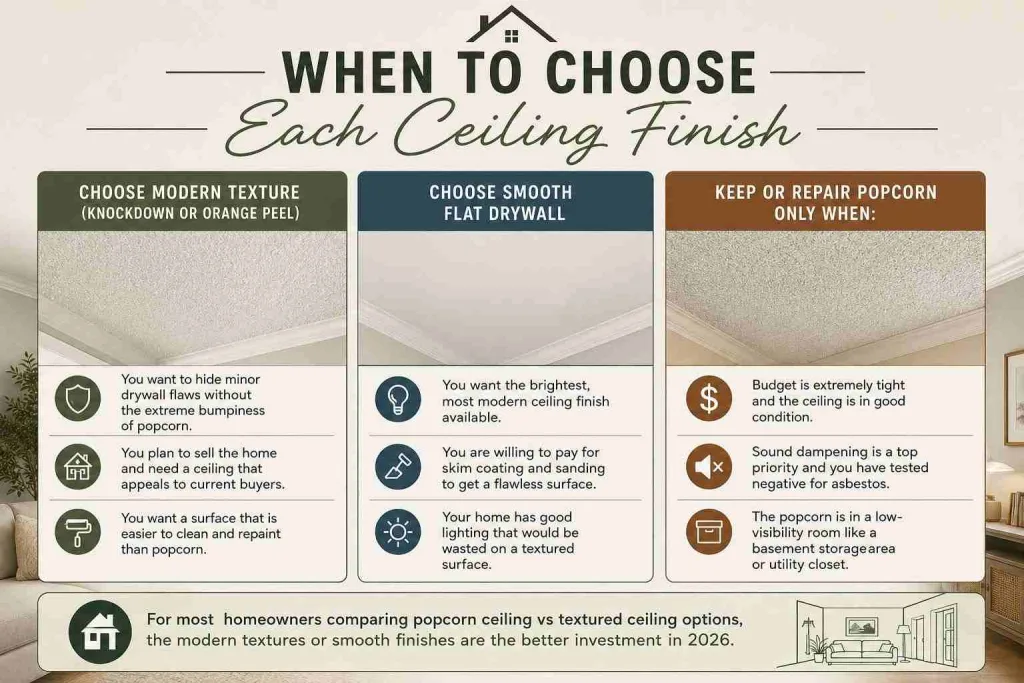
Choose modern texture (knockdown or orange peel) when:
- You want to hide minor drywall flaws without the extreme bumpiness of popcorn.
- You plan to sell the home and need a ceiling that appeals to current buyers.
- You want a surface that is easier to clean and repaint than popcorn.
Choose smooth flat drywall when:
- You want the brightest, most modern ceiling finish available.
- You are willing to pay for skim coating and sanding to get a flawless surface.
- Your home has good lighting that would be wasted on a textured surface.
Keep or repair popcorn only when:
- Budget is extremely tight and the ceiling is in good condition.
- Sound dampening is a top priority and you have tested negative for asbestos.
- The popcorn is in a low-visibility room like a basement storage area or utility closet.
For most homeowners comparing popcorn ceiling vs textured ceiling options, the modern textures or smooth finishes are the better investment in 2026.
Frequently Asked Questions
Q. Is textured ceiling the same as popcorn ceiling?
No. Popcorn ceiling is one specific type of ceiling texture — the heaviest and bumpiest. Textured ceilings include a range of finishes like knockdown, orange peel, swirl, and stipple. All popcorn ceilings are textured, but not all textured ceilings are popcorn.
Q. Are popcorn ceilings safe to paint over?
Yes, if they test negative for asbestos. Use a thick-nap roller with light pressure to avoid breaking the texture. Apply stain-blocking primer first, then two coats of flat ceiling paint. If the ceiling contains asbestos, painting over intact texture is generally safe — but scraping or sanding is not.
Q. What is the easiest way to cover a popcorn ceiling?
A skim coat of joint compound applied over the existing texture creates a smooth surface without full removal. Drywall panels screwed directly over the popcorn are another option. Both methods avoid the mess and asbestos risk of scraping.
Q. Does removing popcorn ceiling increase home value?
Yes. Popcorn ceilings lower perceived home value because buyers see them as dated and costly to update. Removal with a smooth or light texture finish often recovers 70% to 100% of the project cost in higher offers and faster sale time.
Q. Which finish is best for sound reduction?
Popcorn provides the most sound absorption of any standard ceiling finish. Knockdown and orange peel textures offer moderate sound diffusion. If acoustics are a priority, modern acoustic panels or ceiling tiles outperform both without the maintenance problems.
Q. What is the difference between popcorn ceiling and stucco ceiling?
In residential use, “stucco ceiling” is often another name for popcorn ceiling. The terms are used interchangeably. True stucco is a plaster-based exterior finish — different material, same bumpy look when applied to an interior ceiling. When homeowners search popcorn ceiling vs stucco, they are usually comparing the same product.