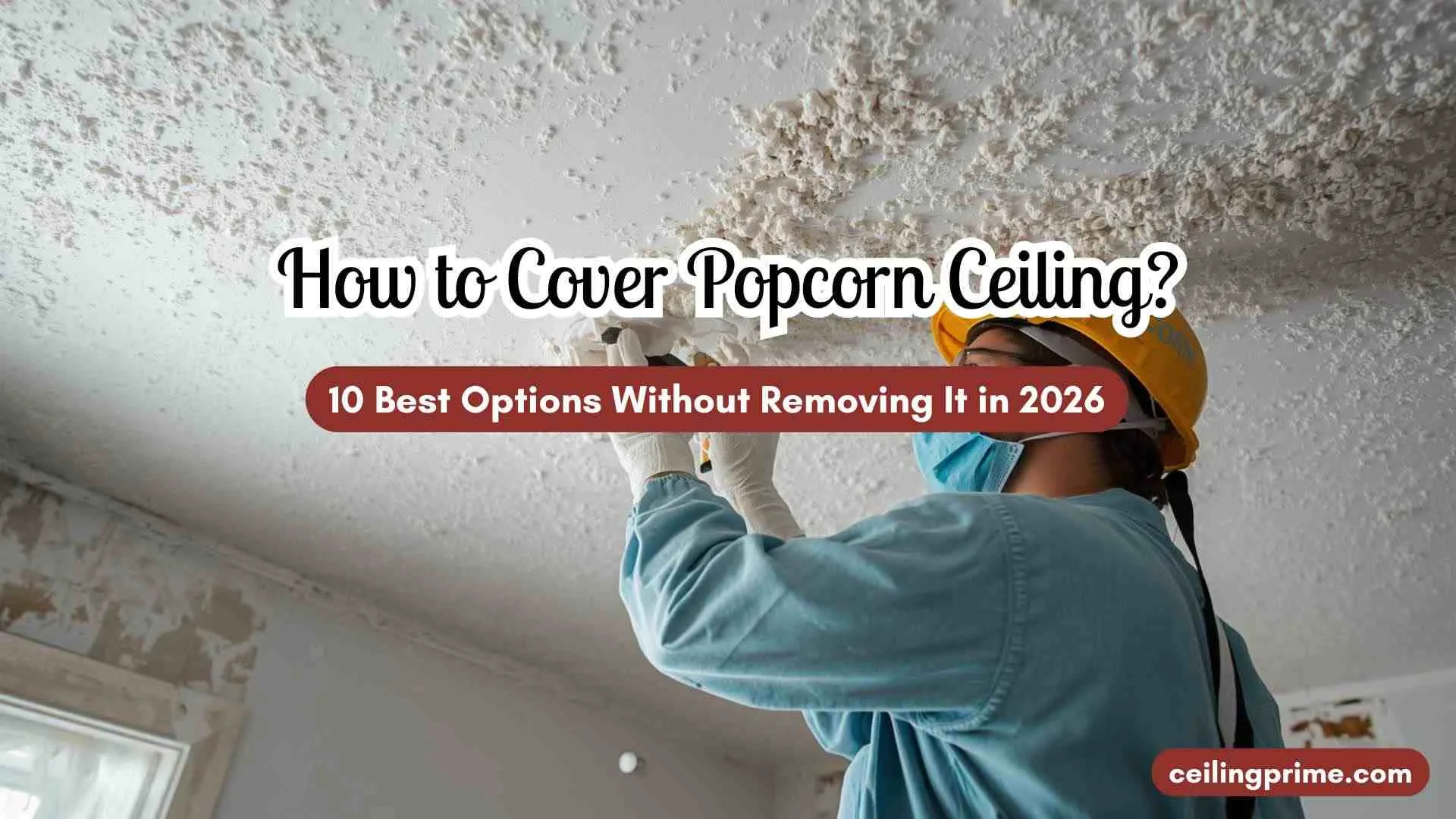
How to Cover Popcorn Ceiling: 10 Best Options Without Removing It in 2026
If you want to know how to cover popcorn ceiling without scraping, you have ten solid options that cost less, create less mess, and take less time than full removal. Covering saves $1 to $4 per square foot compared to removing popcorn ceiling texture, and in pre-1980s homes with potential asbestos, it is the safer choice.
Popcorn ceilings were a standard ceiling treatment from the 1950s through the 1980s. Builders sprayed a mix of gypsum board compound and aggregate materials like vermiculite onto drywall to hide imperfections and dampen sound. The texture was cheap. But it traps dust, darkens rooms, resists cleaning, and drops home resale value 5–12% in most markets.
This guide ranks all 10 methods by cost, difficulty, and best room fit. It covers safety testing, bathroom-specific options, vaulted ceiling challenges, rental-friendly solutions, and common mistakes — topics most guides skip.
Safety First: Test for Asbestos and Lead Paint
Any popcorn ceiling installed before 1980 may contain asbestos. Covering is safer than scraping, but methods that penetrate the surface (nailing planks, screwing drywall) can still disturb fibers. Test before doing any work.
- DIY asbestos test kit: $30–$80 at Home Depot or Amazon. Wet a small section, cut a quarter-sized sample, seal and mail to a certified lab.
- Professional asbestos inspection: $250–$850 depending on home size and number of samples.
- Lead paint: Homes built before 1978 may have lead paint on previously painted popcorn. A lead test swab costs $10–$20.
EPA rules require notification for asbestos disturbance over 160 square feet. Fines exceed $10,000 for improper handling. If the test is positive, covering methods that do not penetrate the surface — glue-up tiles, skim coat, paint — are safest without professional abatement.
Cover vs Remove Popcorn Ceiling: Which Saves More?
| Factor | Cover | Remove |
| Cost per sq ft | $0.50–$5 | $2–$10+ |
| Mess level | Low — no dust cloud | High — full room prep required |
| Time (one room) | 4–12 hours | 1–3 days |
| Asbestos risk | Low if non-penetrating method | High — fibers become airborne |
| Ceiling height loss | 0–1.5 inches | None |
Covering is the better choice for most homeowners. The only advantage of full removal is keeping the original ceiling height. For pre-1980s homes, covering with a non-penetrating method lets you encapsulate popcorn ceiling material safely.
The 10 Best Ways to Cover Popcorn Ceiling (Ranked by Ease + Cost)
| Method | DIY $/sq ft | Pro $/sq ft | Durability | Difficulty | Best Room |
| 1. Paint/Spray Texture | $0.20–$0.50 | $1–2 | 5–10 yrs | Easy | Any |
| 2. Skim Coat | $0.50–$1.50 | $2–3 | 15+ yrs | Medium | Bedroom |
| 3. Drywall Over | $2–4 | $5–9 | 30+ yrs | Hard | Any |
| 4. Beadboard Panels | $2–4 | $5–7 | 20 yrs | Medium | Bedroom |
| 5. Wood Planks/Shiplap | $1.50–3 | $4–6 | 25+ yrs | Medium | Living rm |
| 6. Faux Tin / PVC Tiles | $2–4 | $4–6 | 20+ yrs | Easy | Kitchen |
| 7. Track System (Armstrong Easy-Up) | $3–5 | $6–9 | 30+ yrs | Medium | Basement |
| 8. Wallpaper/Vinyl Decals | $1–3 | $3–5 | 5–10 yrs | Medium | Entryway |
| 9. Plywood Sheets | $1–2.50 | $3–5 | 20 yrs | Medium | Media rm |
| 10. Styrofoam Ceiling Tiles | $1–2 | $3–4 | 10–15 yrs | Easy | Hallway |
1. Paint Over the Texture or Add Spray Texture
Painting does not remove the bumps but freshens the surface, hides stains, and makes the texture less noticeable. This is the cheapest way to cover popcorn ceiling surfaces. Vacuum loose dust first. Apply stain-blocking primer (Kilz or Zinsser BIN) with a 3/4-inch thick-nap roller.
Roll gently. Apply two coats of flat ceiling paint. For more character, try a textured paint like Romabio Barefoot Dance for a subtle lime-wash effect over the bumps.
Total time: 2 to 4 hours per room.
Cost: $30–$70 for a 12×12 room.
2. Skim Coat with Joint Compound
A skim coat turns bumpy popcorn into a smooth ceiling. Spread thin layers of joint compound over the texture with a wide taping knife. Let each coat dry and sand between layers. Two to three coats is standard. Use setting-type joint compound (“hot mud”) for the first coat — it dries harder and faster.
Thin it to the consistency of thick pancake batter. Apply in long, smooth strokes. This is the best method when homeowners ask how to cover popcorn ceiling with joint compound.
Cost: $75–$225 for a 150 sq ft room.
3. Install 1/4-Inch Drywall or Gypsum Board Over Popcorn
Screw thin drywall sheets directly into ceiling joists through the existing popcorn. Tape seams with mesh tape, apply two coats of joint compound, sand, prime, and paint. The result is identical to new construction.
This method adds weight — confirm joists can support the load. Use drywall screws every 8 inches along each joist. A drywall lift ($40–$60 rental per day) makes solo installation possible.
Cost: $300–$600 DIY for a 150 sq ft room.
4. Beadboard Ceiling with Sheet Panels
Beadboard sheets (4×8 MDF panels, about $27 per sheet at Home Depot) install with construction adhesive and brad nails into ceiling joists. First, screw a grid of 1×4 furring strips to the joists for a flat, stable base. Nail beadboard panels into the furring strips.
Fill nail holes with wood filler. Prime and paint. The furring strip method produces a flatter result than nailing directly through the popcorn.
Cost: $300–$600 for a 12×12 bedroom.
5. Wood Planks or Shiplap (Farmhouse Style)
Tongue-and-groove cedar wood planks, pine boards, or MDF shiplap attach to joists through the popcorn using construction adhesive and a nail gun. Find joists with a stud finder. Apply a bead of PL Premium adhesive to each plank. Nail into the joist, not just the drywall.
Stagger end joints. Finish edges with trim or crown molding. Cedar runs $3–$8 per square foot. Cheaper hardboard underlayment planks (ripped into 6-inch strips) cost under $1 per square foot — a tip from farmhouse DIY bloggers.
Cost: $200–$450 for a 12×12 room.
Methods 6–10: More Ways to Cover Popcorn Ceiling
6. Pressed Tin Ceiling or Faux Tin Tiles (PVC)
Faux tin tile panels glue directly over popcorn with construction adhesive. PVC faux pressed tin tiles are waterproof, fire-rated (Class A), and easy to wipe clean. They add a vintage decorative look to kitchens and hallways. Start from the room center and work outward for symmetry.
Cost: $2–$6 per square foot depending on pattern complexity.
7. Armstrong Easy-Up Track System Ceiling
The Armstrong Easy-Up system installs metal tracks perpendicular to ceiling joists. Snap clips into the tracks, then click in WOODHAVEN planks or decorative panels. The track system creates a gap between the old popcorn and the new surface, hiding wiring and ductwork. Panels pop out for access to plumbing or electrical above. Ideal for basements and media rooms. This system accepts faux planked styles for a wood-look finish.
Cost: $3–$5 per square foot DIY.
8. Wallpaper or Vinyl Decals
Heavy-duty paintable wallpaper hides popcorn texture when smoothed over with a roller. Peel-and-stick vinyl decals create faux block print patterns in bedrooms and entryways — a popular idea from A Beautiful Mess. Thicker wallpaper conceals bumps better. Not recommended for bathrooms (steam causes peeling).
Cost: $1–$3 per square foot.
9. Plywood Sheets
Thin plywood (1/4-inch) nails over the popcorn surface. Sand, prime, and paint for a smooth finish. Plywood is heavier than beadboard but cheaper per square foot. Good for media rooms or basements where cost matters more than decorative style. A full room can be done for under $200 in materials.
Cost: $1–$2.50 per square foot.
10. Styrofoam or Decorative Glue-Up Ceiling Tiles
Lightweight polystyrene tiles glue directly over popcorn with no nailing, no dust, and no scraping. Each tile covers about 2.7 square feet. They are waterproof, paintable with latex paint, and available in flat or decorative patterns. If painted with flat ceiling paint, they look like plaster. Best for hallways and bedrooms where a quick, cheap cover popcorn ceiling solution is needed.
Cost: $1–$2 per square foot.
How to Cover Popcorn Ceiling in a Bathroom (Moisture-Resistant Options)
Bathrooms present a unique challenge: humidity and steam cause mold growth on popcorn texture and peel wallpaper, untreated wood, and standard drywall. The best bathroom ceiling covers are waterproof materials.
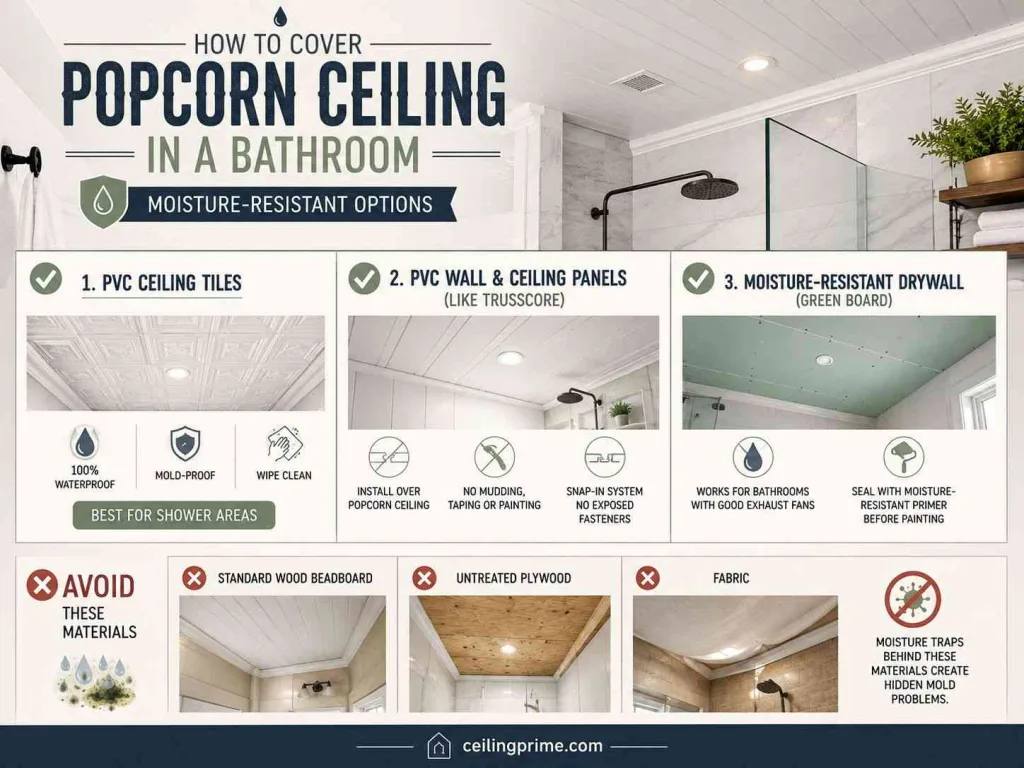
- PVC ceiling tiles: 100% waterproof, mold-proof, wipe clean. Best option for shower areas.
- PVC wall and ceiling panels (like Trusscore): Install directly over popcorn without mudding, taping, or painting. Snap-in system with no exposed fasteners.
- Moisture-resistant drywall (green board): Works for bathrooms with good exhaust fans. Seal with moisture-resistant primer before painting.
Avoid standard wood beadboard, untreated plywood, and fabric in bathrooms. Moisture traps behind these materials create hidden mold problems.
Covering Popcorn Ceiling on Vaulted or Sloped Ceilings
Vaulted and cathedral ceilings add height but make covering popcorn ceiling surfaces harder. You cannot use a drywall lift on a slope. Scaffolding rental ($100–$200 per day) is often necessary.
- Best methods for vaulted: Lightweight panels (beadboard, PVC tiles) or fabric stretch systems. These reduce weight on sloped surfaces.
- Furring strips are critical: Screw 1×4 strips into the joists along the slope to create a flat grid for panels or planks.
- Track systems work on slopes: Armstrong Easy-Up tracks bend to follow the angle. Clips adjust to maintain level.
Avoid heavy drywall on vaulted ceilings unless a structural engineer confirms the joist capacity. The extra weight plus the angle increases the risk of sagging.
How to Cover Popcorn Ceiling in a Rental (Reversible, No-Damage Methods)
Renters need solutions that come down without permanent damage. Three methods fit:
- Fabric stretch ceiling: Staple heavy cotton or PVC fabric to the wall perimeter (not the ceiling). Staple holes in walls are easy to patch with spackle when you move out.
- Peel-and-stick ceiling tiles: Lightweight foam tiles with adhesive backing. Press onto the popcorn surface. Remove cleanly with minimal residue.
- Command strip panels: Hang lightweight foam or fabric panels from adhesive strips along the ceiling perimeter. Fully removable.
These methods cost $0.50–$2 per square foot and install in a single afternoon. They are the best rental property solutions for hiding popcorn texture without losing your security deposit.
Common Mistakes When You Cover Popcorn Ceiling
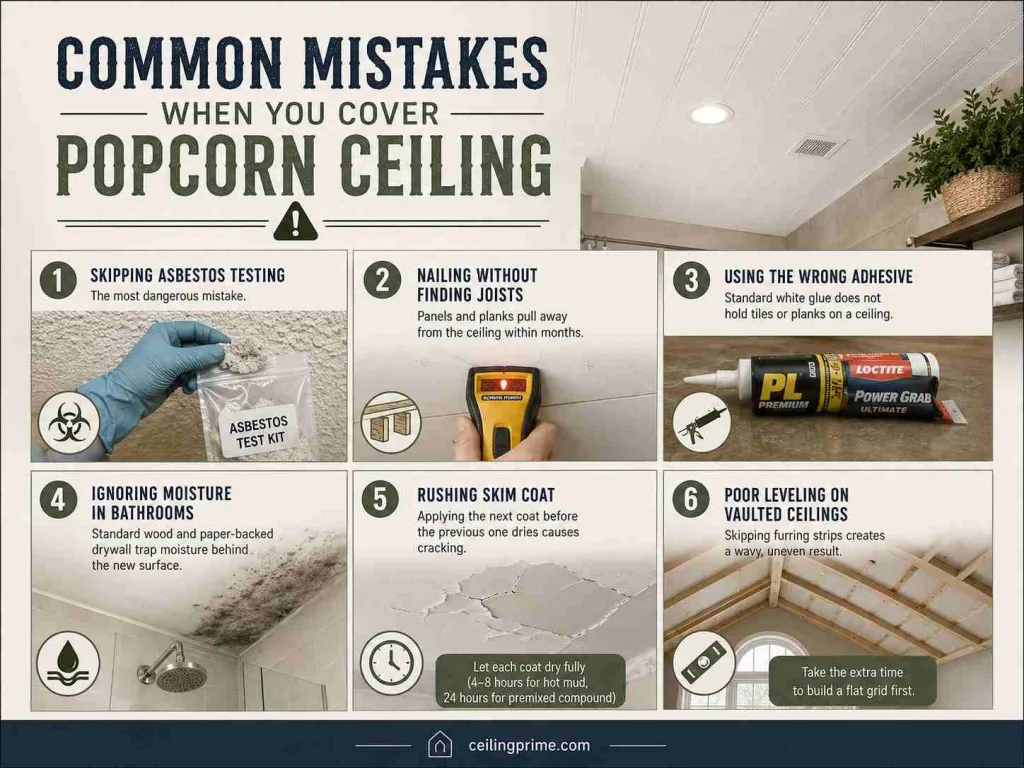
- Skipping asbestos testing: The most dangerous mistake. One afternoon of dry scraping in a pre-1980 home can release fibers that cause lung disease decades later.
- Nailing without finding joists: Panels and planks pull away from the ceiling within months if fastened only to the drywall. Always use a stud finder.
- Using the wrong adhesive: Standard white glue does not hold tiles or planks on a ceiling. Use construction adhesive rated for overhead applications (PL Premium, Loctite Power Grab).
- Ignoring moisture in bathrooms: Standard wood and paper-backed drywall trap moisture behind the new surface. Use PVC or moisture-rated materials in wet rooms.
- Rushing skim coat: Applying the next coat before the previous one dries causes cracking. Let each coat dry fully (4–8 hours for hot mud, 24 hours for premixed compound).
- Poor leveling on vaulted ceilings: Skipping furring strips creates a wavy, uneven result. Take the extra time to build a flat grid first.
How Covering Affects Room Acoustics?
Popcorn texture provides minor sound dampening. When you learn how to cover popcorn ceiling surfaces, the acoustic effect changes based on the material you choose. Wood planks and drywall reflect sound, increasing echo slightly.
Track system panels with acoustic backing absorb sound better than the original popcorn. PVC tiles are sound-neutral. For media rooms or noisy homes, add rigid foam insulation (R-30 value) behind panels before installing. This provides both thermal insulation and sound dampening — a benefit the original popcorn never delivered.
Frequently Asked Questions
Q. What is the cheapest way to cover a popcorn ceiling?
Paint is cheapest at $0.20–$0.50 per square foot. Styrofoam glue-up tiles cost $1–$2. A skim coat with joint compound runs $0.50–$1.50 and gives you a smooth ceiling finish.
Q. Can you cover popcorn ceiling without removing it?
Yes. All 10 methods in this guide install over the existing texture. Paint, skim coat, tiles, planks, beadboard, drywall, wallpaper, plywood, track systems, and fabric all go directly on top.
Q. How to cover popcorn ceiling in a bathroom?
Use waterproof materials only: PVC ceiling tiles, PVC wall panels, or moisture-resistant drywall sealed with mold-resistant primer. Avoid wood, fabric, and standard wallpaper.
Q. Does covering a popcorn ceiling increase home value?
Yes. Updated ceilings boost buyer interest and can add 7–10% to perceived value. Smooth or planked ceilings match what buyers expect in 2026.
Q. How to cover popcorn ceiling on a vaulted ceiling?
Use lightweight materials (beadboard panels, PVC tiles, or fabric stretch systems). Install furring strips to create a flat grid on the slope. Consider scaffolding for safe access.
Q. Is covering better than removing popcorn ceiling?
Covering is faster, cheaper ($1–$4 per square foot less), and safer for asbestos-containing ceilings. The only downside is a slight loss of ceiling height (0–1.5 inches).