
Homenumental House Infoguide by Homehearted: The Complete Guide to Practical Home Living
Most home improvement advice falls into 1 of 2 categories: aspirational Pinterest boards that look beautiful but cost $50,000 to replicate, or dense contractor-speak that assumes you already know the difference between load-bearing and partition walls. The Homenumental House Infoguide by Homehearted sits in the gap between those 2 extremes — a structured, practical guide that helps homeowners design, improve, maintain, and organize their living spaces without requiring professional expertise or an unlimited budget.
The Homenumental House Infoguide by Homehearted is a comprehensive home improvement and design resource covering interior design principles, renovation planning, room-by-room organization, maintenance scheduling, smart home upgrades, and budget-friendly improvements. The guide is built around 4 core principles: function before decoration, every space must have purpose, style should reflect the homeowner’s personality, and maintenance matters as much as creation.
Whether you’re a first-time homeowner learning basic upkeep, a renter making temporary improvements, or an experienced homeowner planning a renovation, the infoguide provides the structured framework that turns overwhelming home projects into manageable, sequential steps.
What Is the Homenumental House Infoguide by Homehearted?
The Homenumental House Infoguide by Homehearted is an organized, homeowner-centered system for planning improvements, managing maintenance, making design decisions, tracking home records, and executing upgrades — from a weekend room refresh to a full renovation.
The guide was created by Homehearted to solve a problem most homeowners face: too much contradictory information online and no clear system for deciding what to do, when to do it, and how to prioritize. The infoguide provides that system — a structured roadmap that covers every room, every season, and every budget level.
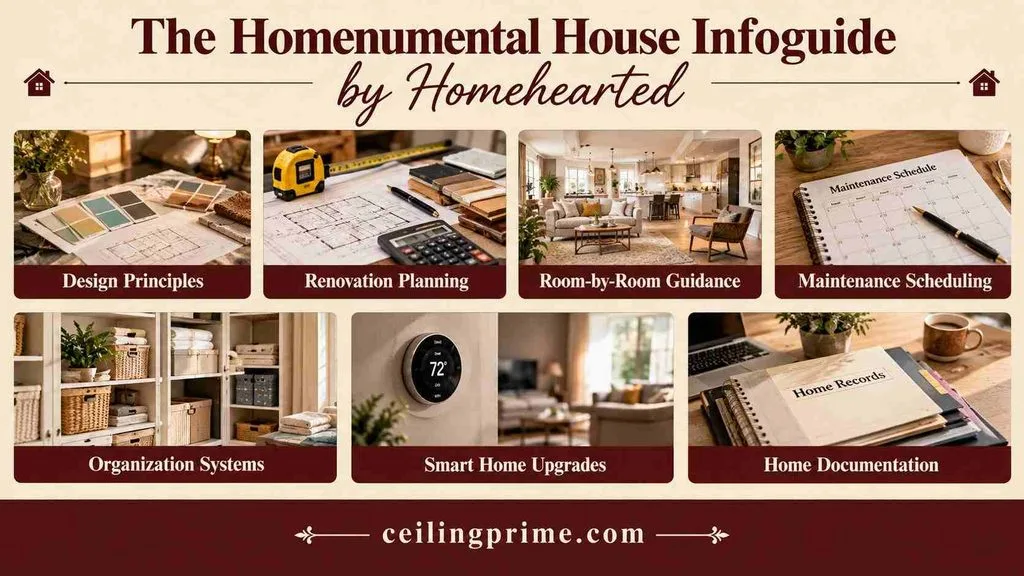
The Homenumental House Infoguide by Homehearted covers these core areas:
- Design principles — layout planning, color selection, lighting design, furniture placement
- Renovation planning — budgeting, material selection, contractor screening, permit awareness
- Room-by-room guidance — specific strategies for living rooms, kitchens, bathrooms, bedrooms, home offices, and outdoor spaces
- Maintenance scheduling — monthly, seasonal, and annual maintenance tasks organized into a calendar system
- Organization systems — storage solutions, decluttering methods, space optimization
- Smart home upgrades — technology integration, energy efficiency, adaptive living modifications
- Home documentation — creating a master document with measurements, paint colors, appliance models, warranty info, and contractor records.
Core Principles of the Homenumental House Infoguide
The Homenumental House Infoguide by Homehearted is built on principles that prioritize practical living over aesthetic perfection.
1. Function Before Decoration
A home should make daily life easier, not harder. Before choosing paint colors or buying furniture, the infoguide asks: what does this room need to do? A kitchen that doesn’t function well for cooking won’t be saved by a beautiful backsplash. A bedroom that lacks adequate storage will always feel cluttered regardless of how the bed is styled. Design serves usability first.
2. Every Space Must Have Purpose
A room without intention becomes wasted space — or worse, a dumping ground for things that don’t have a home elsewhere. The Homenumental House Infoguide by Homehearted encourages homeowners to define the purpose of every room, every corner, and every surface before making design decisions. A clear purpose leads to better furniture choices, storage solutions, and layout decisions.
3. Style Should Reflect the Homeowner
The best-designed home in the world feels wrong if it doesn’t reflect the person living in it. The infoguide emphasizes personal style over trend-chasing — using current design movements (warm minimalism, Japandi, organic modern) as inspiration rather than blueprints. The goal is a home that looks like you live there, not like a showroom staged for someone else.
4. Maintenance Matters as Much as Creation
A beautifully renovated kitchen that isn’t maintained falls apart within 5 years. The Homenumental House Infoguide by Homehearted treats ongoing maintenance as equal in importance to the initial design and renovation — providing seasonal checklists and calendar-based systems that prevent small problems from becoming expensive emergencies.

Room-by-Room Guide
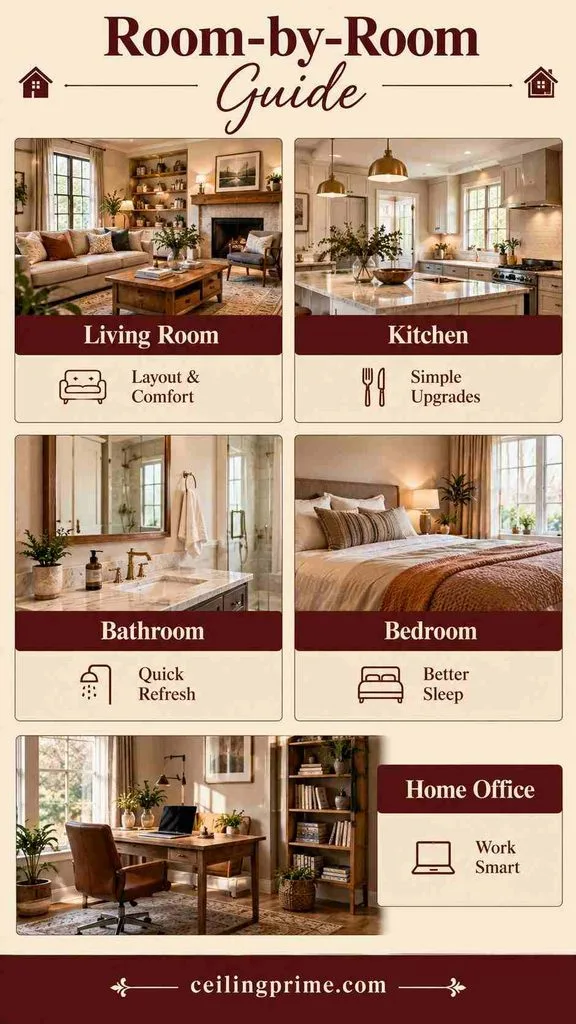
Living Room
The living room is where design decisions have the most visible daily impact. The Homenumental House Infoguide by Homehearted prioritizes layout, lighting, and comfort over decorative trends.
Key principles from the infoguide:
- Pull furniture away from walls — even a few inches behind a sofa creates breathing room and makes the space feel larger. Wall-hugging furniture makes rooms feel like waiting areas.
- Create conversation zones — angle seating toward each other rather than toward the TV. Place a coffee table within arm’s reach of all seats.
- Layer lighting in 3 tiers — ambient (overhead), task (reading lamps), and accent (candles, picture lights). No room should rely on a single overhead fixture.
- Choose a focal point — a fireplace, a large art piece, or a bookshelf. Everything else in the room supports it.
- Invest in 1 quality piece — a well-made sofa lasts 15 to 20 years. Ten cheap alternatives cost more over the same period and never feel right.
Kitchen
The kitchen is the most expensive room to renovate and the most important to get right — because it’s used more frequently than any other room in the house.
The infoguide recommends these high-impact, low-cost kitchen improvements:
- Replace cabinet hardware ($3 to $8 per pull) — new knobs and handles modernize dated cabinets instantly
- Add under-cabinet LED lighting ($15 to $25) — illuminates the workspace and transforms the room’s atmosphere
- Organize by frequency of use — daily items at eye level, weekly items on higher shelves, seasonal items in the back
- Upgrade the faucet ($100 to $200) — a single fixture replacement that changes the look and function of the entire sink area
- Declutter the countertops — store appliances you use less than weekly. Clear counters make a kitchen feel 50% larger.
Bathroom
Bathroom improvements deliver the highest return-on-investment of any room in the house — a $500 bathroom refresh can make a $150,000 home feel like a $175,000 home.
The Homenumental House Infoguide by Homehearted recommends:
- Replace the mirror — swap the builder-grade flat mirror for a framed mirror ($40 to $100). Single biggest aesthetic upgrade.
- Match your towels — a coordinated towel set ($20 to $40) makes a bathroom look intentional rather than assembled randomly
- Add a plant — pothos, snake plant, or a fern thrives in bathroom humidity and adds life to the space
- Re-caulk the tub and shower ($5 tube of caulk, 30 minutes of work) — fresh white caulk lines make everything look cleaner and newer
- Upgrade the showerhead ($25 to $60) — a rainfall or high-pressure showerhead changes the daily experience
Bedroom
The bedroom’s primary function is sleep — and every design decision should support that function.
- Invest in bedding before furniture — quality sheets and a layered duvet setup (the double-duvet trick) have more impact on daily comfort than a headboard
- Blackout curtains ($30 to $60) hung floor-to-ceiling and wider than the window frame — better sleep, larger-looking windows, added texture
- Minimize visual clutter — a clear nightstand with 1 to 3 items (lamp, book, phone charger) creates calm. A cluttered nightstand creates anxiety.
- Limit screens — the infoguide recommends keeping TVs out of the bedroom when possible (or at minimum, not visible from the bed)
Home Office
- Face natural light — position the desk so windows are in front or to the side, never behind the monitor
- Separate visually — use a bookshelf, rug, or paint color to define the workspace from the living area, even in a studio
- Cable management — a $10 cable tray under the desk eliminates visible wire clutter. Small investment, massive visual difference.
- Ergonomic basics — monitor at eye level, feet flat on the floor, arms at 90 degrees. These reduce fatigue and back pain for anyone working from home.
Home Maintenance Calendar
The Homenumental House Infoguide by Homehearted organizes maintenance into a calendar system — monthly, seasonal, and annual tasks that prevent small problems from becoming expensive emergencies.
| Season | Key Maintenance Tasks |
| Spring | Inspect roof for winter damage, test sump pump, check window seals, service AC, clean gutters, power wash exterior, inspect deck/patio |
| Summer | Clean dryer vent, flush water heater, check AC filters monthly, inspect irrigation system, treat wood decks/fences, check smoke detectors |
| Fall | Clean gutters (again), check weatherstripping, service heating system, insulate exposed pipes, test smoke/CO detectors, reverse ceiling fans |
| Winter | Monitor pipe insulation, check for ice dams, test GFCI outlets, inspect attic for leaks, replace HVAC filters, check battery backups |
Monthly tasks (year-round): Change HVAC filters, test smoke detectors, check for leaks under sinks, run garbage disposal with ice and lemon, inspect caulking in bathrooms, wipe dryer lint trap.
The key insight from the Homenumental House Infoguide by Homehearted: maintenance is cheaper than repair. A $5 HVAC filter changed monthly extends a $5,000 system’s lifespan by years. A $10 tube of caulk prevents $3,000 in water damage. A 10-minute gutter check in October prevents a $1,500 foundation repair in March.
Home Documentation System
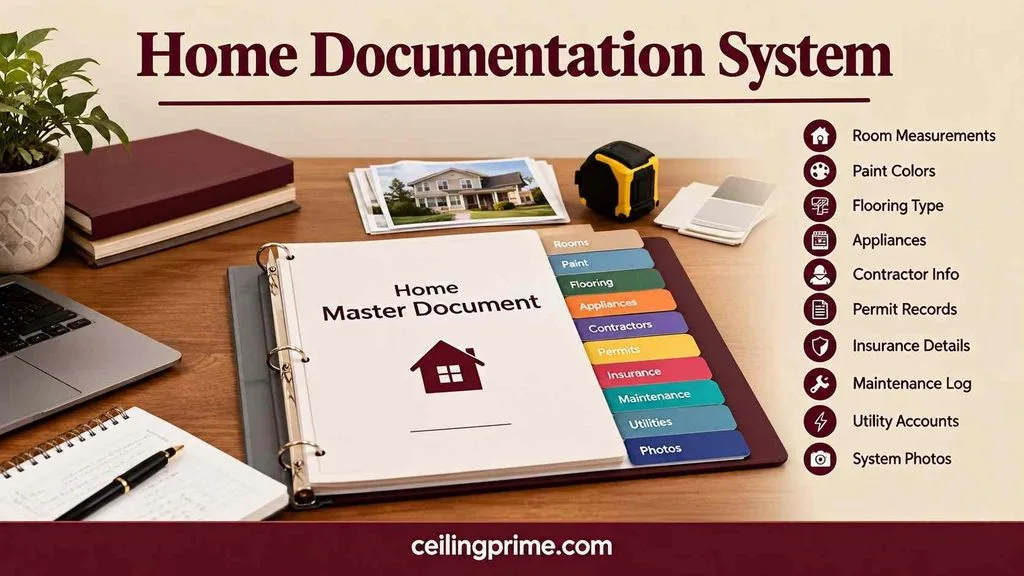
One of the most practical concepts in the Homenumental House Infoguide by Homehearted is the home master document — a single record containing everything you need to maintain, repair, and improve your home.
A complete home master document includes:
- Room measurements (length, width, ceiling height)
- Paint colors with brand, finish, and color code per room
- Flooring type and manufacturer per room
- Appliance model numbers, purchase dates, and warranty expiration dates
- Contractor contact information with past project records
- Permit records for any work requiring permits
- Insurance policy details and claim history
- Maintenance history log (dates of filter changes, inspections, repairs)
- Utility account numbers and contact information
- Photos of important systems (electrical panel, plumbing access points, HVAC units)
This document saves time during repairs (no searching for appliance model numbers), reduces costs during renovations (no re-measuring or re-purchasing), and simplifies insurance claims (documentation is already organized).
Budget-Friendly Improvements by Price
| Budget | Best Improvements | Impact |
| $0 | Rearrange furniture, declutter surfaces, clean and organize closets | High (layout changes are free and immediately noticeable) |
| $25–$50 | New throw pillows, fresh caulk in bathrooms, under-cabinet LED lights | Moderate (small details that create a “refreshed” feeling) |
| $50–$150 | New cabinet hardware, framed bathroom mirror, matching towel set, showerhead upgrade | High (targeted upgrades that change the look of a room) |
| $150–$500 | Paint 1 to 2 rooms (DIY), blackout curtains, new bedding, entry door refresh | Very high (paint is the single highest-impact improvement per dollar) |
| $500–$2,000 | New light fixtures, backsplash installation, closet system, smart thermostat | High (functional upgrades that improve daily life) |
| $2,000–$10,000 | Bathroom refresh, kitchen cabinet refacing, flooring replacement, deck/patio | Transformative (room-level changes visible to everyone) |
The Homenumental House Infoguide by Homehearted emphasizes that the most impactful improvements are often the cheapest — rearranging furniture ($0), painting a room ($50 to $100 DIY), and replacing cabinet hardware ($50 to $100) change a room’s appearance more than most $5,000 renovations.
2026 Design Trends Covered in the Infoguide
| Trend | Description |
| Warm minimalism | Clean lines + warm tones (beige, cream, wood). Minimal without feeling cold. |
| Organic modern | Natural materials (stone, wood, linen) + modern silhouettes. Nature meets structure. |
| Japandi | Japanese minimalism + Scandinavian warmth. Functional, calm, intentional. |
| Curved furniture | Rounded sofas, arched cabinets. Softens rooms and improves traffic flow. |
| Earth tones | Mocha, terracotta, olive, sage replacing cold grays. Pantone 2025: Mocha Mousse. |
| Biophilic design | Indoor plants, natural light, water features. Connecting indoors to nature. |
| Smart home integration | Thermostats, lighting, security — technology that disappears into the home’s design. |
Final Thoughts
The Homenumental House Infoguide by Homehearted works because it treats home improvement the way it actually happens — not as a single dramatic renovation but as a series of decisions made over months and years. Choosing paint for the bedroom. Replacing the bathroom mirror. Organizing the kitchen cabinets. Fixing the squeaky door. Cleaning the gutters before winter. Each decision is small. Together, they transform a house into a home that functions well, looks intentional, and doesn’t fall apart.
The 4 principles — function first, purpose for every space, style that reflects the homeowner, maintenance as important as creation — are simple enough to remember and broad enough to apply to any room, any budget, and any home. The maintenance calendar prevents emergencies. The documentation system saves time and money during repairs. The budget tiers ensure that progress happens at every spending level, including $0.
Start with the room that bugs you. Define what it needs to do. Fix 1 thing. Then fix another. That’s the Homenumental House Infoguide by Homehearted in practice — not a makeover, but a system for making your home a little better, a little more functional, and a little more yours, 1 decision at a time.
Homenumental House Infoguide by Homehearted: Frequently Asked Questions
What is the Homenumental House Infoguide by Homehearted?
It is a comprehensive home improvement and design guide that helps homeowners plan renovations, organize maintenance, make design decisions, and improve their living spaces with practical, budget-friendly advice. The guide covers design principles, room-by-room strategies, seasonal maintenance, smart home upgrades, and home documentation systems.
Who is the Homenumental House Infoguide for?
First-time homeowners, renters, families refreshing their spaces, and experienced homeowners planning renovations. The guide is written for everyday people — no design degree or construction experience required. Tips range from $0 furniture rearrangements to $10,000+ renovation planning.
Do I need a big budget to use this guide?
No. Many of the most impactful improvements in the Homenumental House Infoguide by Homehearted cost under $100 — rearranging furniture, painting a room, replacing cabinet hardware, adding under-cabinet lighting, and organizing storage. The guide includes a budget tier table showing effective improvements at every price point from $0 to $10,000.
What makes this guide different from other home improvement resources?
Structure and prioritization. The Homenumental House Infoguide by Homehearted provides a system — not just a collection of tips. The maintenance calendar tells you when to do what. The room-by-room guide tells you where to start. The budget tiers tell you what to prioritize at your price point. The home documentation system keeps everything organized. Most home improvement content gives you ideas. This guide gives you a plan.
How do I start improving my home using this guide?
Start with the room that bothers you most. Define its purpose (principle #2). Identify what isn’t working functionally (principle #1). Make 1 to 3 changes from the budget tier that matches your spending capacity. Then move to the next room. The Homenumental House Infoguide by Homehearted is designed for sequential, manageable progress — not a single overwhelming renovation weekend.
Does the guide cover home maintenance?
Yes — maintenance is 1 of the 4 core principles. The guide includes a seasonal maintenance calendar (spring, summer, fall, winter) with specific tasks per season, monthly recurring tasks, and a cost-of-prevention analysis showing how $5 to $50 in maintenance prevents $500 to $5,000 in repairs.






2 Comments