
Brown Spots on Ceiling: 6 Causes, What Each Color & Shape Means & How to Fix (2026)
Brown spots on ceiling surfaces are almost never cosmetic. A brown, yellow, or rust-colored stain on your ceiling means water has traveled through the drywall, picked up dissolved minerals or tannins, and left a visible trace behind. The stain itself is not the problem — the moisture source behind it is.
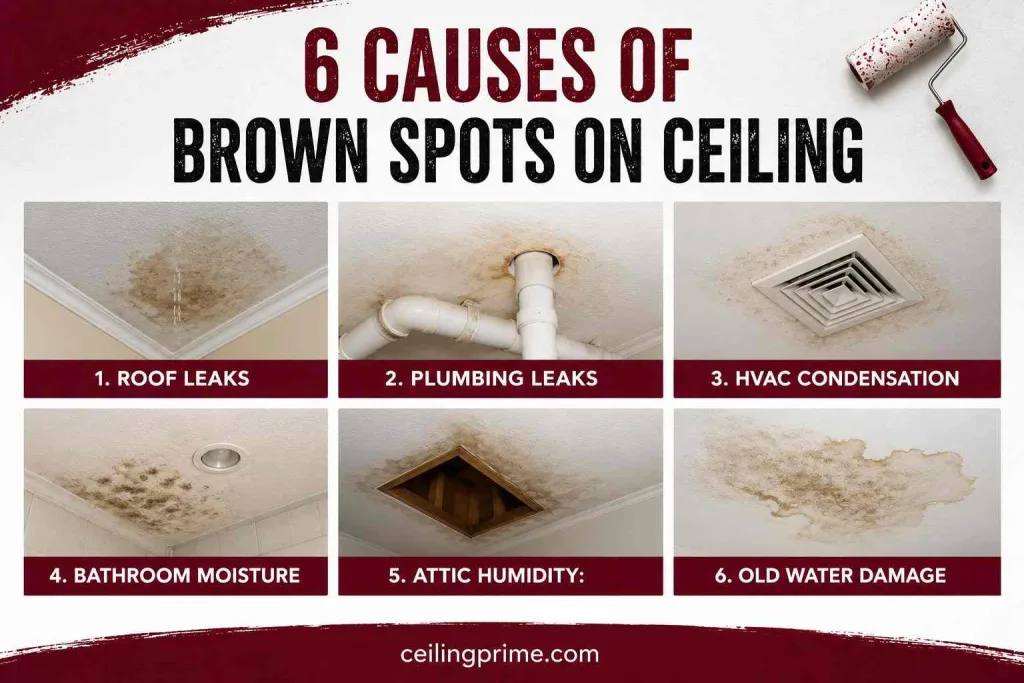
6 causes account for nearly every brown ceiling stain: roof leaks, plumbing leaks, HVAC condensation, bathroom moisture, attic humidity, and old water damage that never fully dried.
This guide covers all 6 causes, explains what the color and shape of the stain tell you about the source, shows you how to fix it step by step, and tells you when to call a professional water damage restoration company like ServiceMaster Restore.
6 Causes of Brown Spots on Ceiling
1. Roof leaks: Damaged shingles, failed flashing, cracked vent boots, clogged gutters, or ice dams let water into the attic. The water runs along rafters and joists before dripping onto the drywall below — sometimes far from the actual roof entry point. Ceiling stains that appear after rain or storms are almost always roof-related.
2. Plumbing leaks: Leaking supply pipes, drain pipes, toilet wax rings, shower pans, and cracked tile grout in bathrooms above the ceiling send water into the floor structure. The water soaks through the subfloor and saturates the drywall below. Circular brown spots directly under a bathroom, kitchen, or laundry room point to plumbing.
3. HVAC condensation: A clogged condensate line, overflowing AC drain pan, or sweating ductwork creates moisture inside the ceiling cavity. Brown spots near ceiling vents or registers — especially in rooms directly below the air handler — indicate an HVAC issue.
4. Bathroom moisture: Steam from hot showers rises and condenses on the cold ceiling. Without a functioning exhaust fan, this moisture soaks into the drywall and creates brown or yellow discoloration over time. Bathroom ceiling brown spots are the most common type in homes without proper ventilation.
5. Attic humidity: Poor attic insulation or ventilation allows warm, moist air from the living space to condense on the cold roof deck in winter. The condensation drips onto the insulation and drywall below, leaving brown stain patterns across the ceiling.
6. Old water damage: A leak was repaired months or years ago, but the drywall was never replaced. The stain persists and may darken when humidity rises. Old water damage stains are light brown and do not feel damp to the touch.
What the Color of Brown Ceiling Spots Tells You?
| Stain Color | What It Means | Likely Cause |
| Light brown / yellow | Fresh or recent moisture | Active plumbing leak, roof leak after rain, HVAC drip |
| Dark brown | Long-term or repeated moisture | Chronic leak, water running along metal ducts or pipes |
| Rust-colored | Water interacting with metal | Corroding nails, rusty pipes, metal ductwork contact |
| Brown rings / halos | Repeated wet-dry cycles | Recurring leak, seasonal roof moisture, intermittent plumbing drip |
| Faint brown lines (ghosting) | Thermal bridging + dust | Poor insulation at joist lines, not water — cosmetic |
Light brown and yellow stains mean the moisture is fresh or recent. Dark brown and rust tones mean the water has been in contact with the drywall for weeks or months. Brown rings — concentric circles like tree rings — mean the leak has turned on and off repeatedly, drying and rewetting the same area.
What the Shape of the Brown Spot Means?
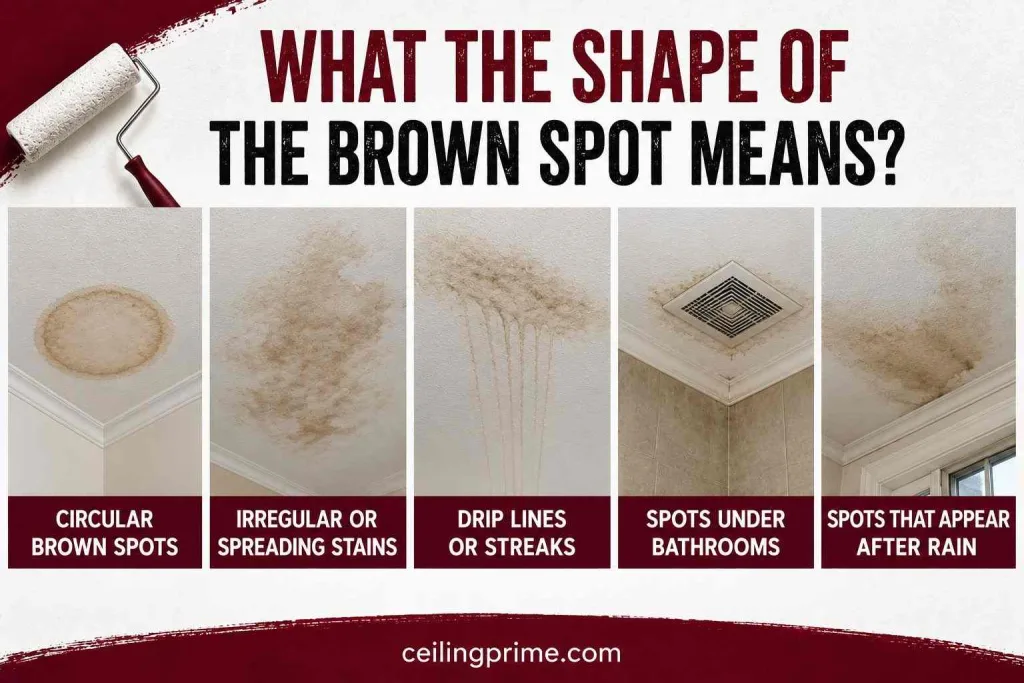
- Circular brown spots: A single, round stain points to a direct leak source above — a dripping pipe, a nail hole in the roof, or a small HVAC condensation drip. If the circle grows over time, the leak is active.
- Irregular or spreading stains: Jagged edges or puddle-like shapes mean water is flowing horizontally across insulation or along joists before dripping down. These these stains form after storms or from leaks with no clear single entry point.
- Drip lines or streaks: Faint streaks or “fingers” extending from the main stain mean water is traveling along a rafter, beam, or pipe before soaking the drywall. Roof leaks that follow rafters produce this pattern.
- Spots under bathrooms: Brown spots directly below a bathroom point to a failing toilet wax ring, leaking shower pan, cracked tile grout, overflowed fixtures, or leaking supply and drain pipes.
- Spots that appear after rain: Stains that show up only after rainfall point to roof penetrations, damaged shingles, failed flashing, vent boots, or ice dams.
How to Tell If the Brown Spots on Ceiling Signal an Active Leak?
Not every brown stain is an active leak. Use these 7 signs to determine whether water is still entering the ceiling.
- The stain is growing — it gets larger over days or weeks.
- The center is darker than the outer edge.
- The ceiling feels soft, spongy, or warm to the touch.
- Paint is peeling, bubbling, or cracking around the stain.
- You smell a musty or damp odor near the stain.
- Mold is visible — black, green, gray, or white spots on or around the brown area.
- The stain reappears after rain, showers, or running water.
If any of these signs are present, the moisture source is active and needs immediate attention. Old, dry stains that have not changed in months are likely cosmetic remnants of a previously repaired leak.
How to Fix Brown Spots on Ceiling (Step by Step)
Let’s discuss the easy way to fix the brown spots on ceiling.
Step 1 — Find and Stop the Moisture Source
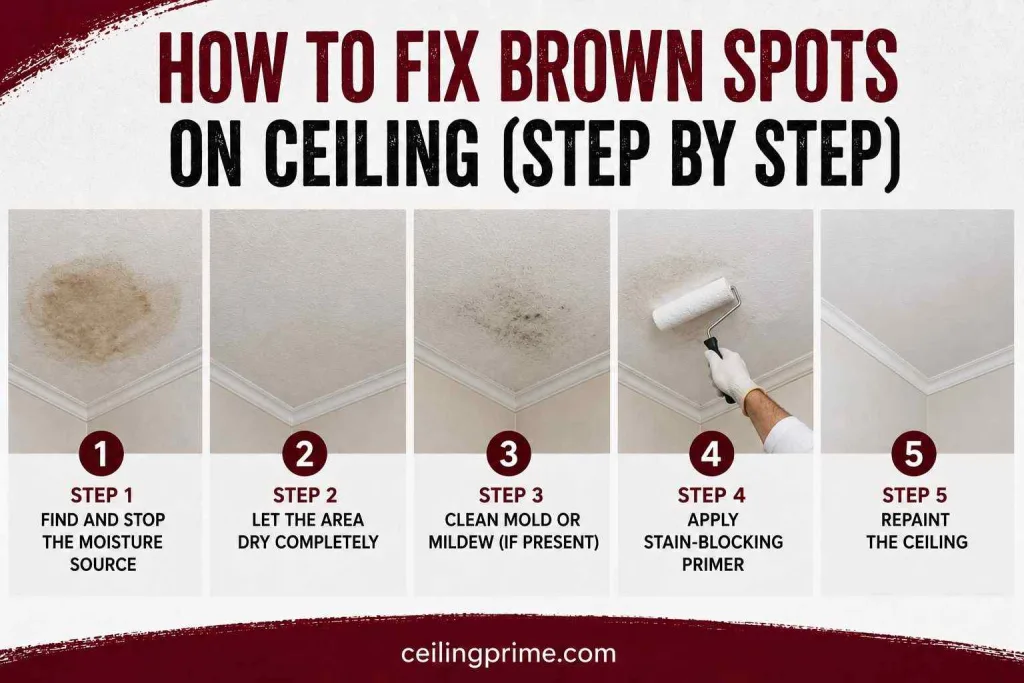
The repair starts above the stain, not at the stain itself. Check: plumbing fixtures above the ceiling, the roof for damaged shingles or flashing, HVAC condensate lines, and attic insulation and ventilation. Fix the source before touching the ceiling.
Step 2 — Let the Area Dry Completely
Run fans and a dehumidifier aimed at the stained area. Open windows for airflow. Wait at least 24 to 48 hours. Painting or priming a damp surface traps moisture behind the finish and causes mold.
Step 3 — Clean Mold or Mildew (If Present)
Mix 1 part bleach to 3 parts warm water in a spray bottle. Lightly mist the stained area. Wipe clean with a damp cloth. Let the surface air dry. Do not scrub popcorn texture — it crumbles under pressure.
Step 4 — Apply Stain-Blocking Primer
Cover the stain with an oil-based or shellac-based stain-blocking primer. Kilz Original and Zinsser BIN are the two most effective options for ceiling water stains. Extend the primer 2 to 3 inches beyond the stain edges so the repair blends into the surrounding ceiling. Regular latex primer does not block tannin stains — the brown mark bleeds through within days.
Step 5 — Repaint the Ceiling
Apply flat ceiling paint (Rust-Oleum Ceiling Paint or Benjamin Moore Waterborne Ceiling Paint) over the primed area. For the best color match, paint the entire ceiling — spot painting on a white ceiling often shows a visible patch line.
When to Replace the Drywall Instead
Replace the drywall if: the ceiling feels soft or spongy, the drywall is sagging, mold is visible on the back side, or the stain covers more than 2 to 3 square feet. Cut out the damaged section with a drywall saw, let the joist cavity dry, check for mold on the joists and insulation, and install a new drywall patch.
Brown Spots on Ceiling by Room Location
- Bathroom ceiling: The most common location. Causes: shower steam, leaking shower pan, toilet wax ring, cracked tile grout, overflowing fixtures. Run the exhaust fan during and 20 minutes after every shower.
- Kitchen ceiling: Cooking steam and grease vapor rise to the ceiling. Brown spots in kitchens are often a mix of moisture and smoke residue. Run the range hood during cooking.
- Bedroom ceiling: Brown spots on bedroom ceilings usually come from a roof leak or HVAC condensation — not a plumbing source. Check the attic directly above the stain.
- Living room ceiling: Roof leaks, HVAC issues, and second-floor bathroom leaks are the 3 most common causes. The stain may be far from the actual leak source because water travels along joists.
- Basement ceiling: Plumbing leaks from the floor above, HVAC condensation, and concrete slab vapor migration cause basement ceiling stains. Basement ceilings often lack drywall, making leaks easier to trace visually.
- Popcorn ceiling: Brown spots on popcorn ceiling surfaces are harder to repair because the texture absorbs water and cannot be wiped or sanded. Test for asbestos in pre-1986 homes before touching popcorn texture.
How to Prevent Brown Spots on Ceiling?
- Inspect the roof twice a year: Check shingles, flashing, vent boots, and gutters in spring and fall.
- Clean gutters every 6 months: Clogged gutters cause water backup under the roofline and into the soffits.
- Run bathroom exhaust fans during and 20 minutes after every shower.
- Check plumbing connections annually: Look under sinks, behind toilets, around water heaters, and at washing machine hoses.
- Service the HVAC system yearly: A technician cleans the condensate drain line and checks the AC drain pan for leaks.
- Install water leak detectors: Battery-powered sensors placed under sinks, near water heaters, and in the attic alert you to leaks before stains appear.
- Ensure proper attic ventilation and insulation: This prevents warm air from condensing on the cold roof deck in winter.

Frequently Asked Questions
Are brown ceiling spots always mold?
No. Most brown spots are mineral deposits and tannins left by water as it evaporates through the drywall. Mold is typically black, green, gray, or white — not brown. A musty smell near the stain is a stronger indicator of mold than the color alone.
Can I paint over brown spots on the ceiling?
Only after fixing the moisture source, drying the area completely, and applying stain-blocking primer (Kilz Original or Zinsser BIN). Regular paint without primer allows the brown tannin stain to bleed through within days.
How much does it cost to fix brown water stains on a ceiling?
$50–$200 for cosmetic stain repair (prime and paint). $200–$600 for drywall patch and repaint. $1,000–$5,000 for mold remediation. Source repair costs (roof, plumbing, HVAC) are separate.