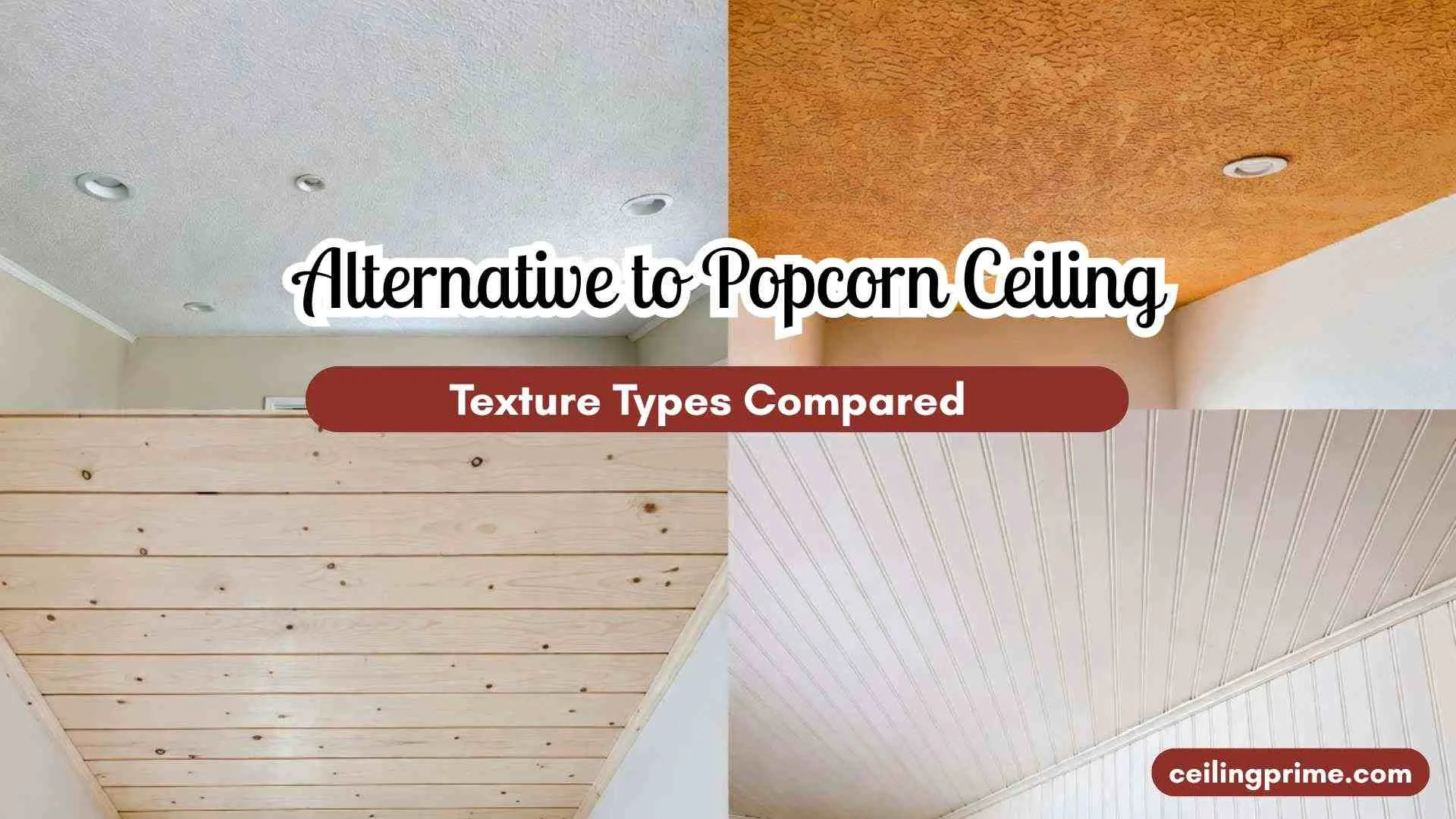
alternative to popcorn ceiling: Texture Types & Cost Comparison
If you are staring at a bumpy, dated ceiling and wondering what comes next, you already know the problem. Popcorn ceiling texture traps dust, kills light reflection, and makes any room feel stuck in a different decade. The good news: there is a real alternative to popcorn ceiling for every budget, home style, and situation — including several that require zero scraping.
This guide covers every option, what each costs, how it performs, and which one fits your home.
Test for Asbestos Before You Touch Anything
Homes built before 1980 often used asbestos in popcorn ceiling texture for fireproofing and acoustics. Disturbing it without testing creates a genuine health risk and may violate Texas DSHS rules. A lab test runs $25–$75.
A licensed inspector costs $250–$350. If asbestos comes back positive, you have two legal options: hire a certified abatement contractor, or cover the ceiling and leave the material intact. Encapsulation is often the safer and cheaper path.
Non-asbestos ceilings give you the full range of options below.
Remove It or Cover It?
Most homeowners assume removal is the only way forward. It is not. Covering the existing texture is often faster, cleaner, and significantly cheaper — especially when asbestos is involved.
- Remove if: the test comes back clean, you want the thinnest possible ceiling, and you can handle dust containment and drying time.
- Cover if: asbestos is present, your budget is tighter, or you want to add warmth with wood planks or tiles rather than a flat surface.
Both paths produce a finished, modern ceiling. The right one depends on what is inside your texture.
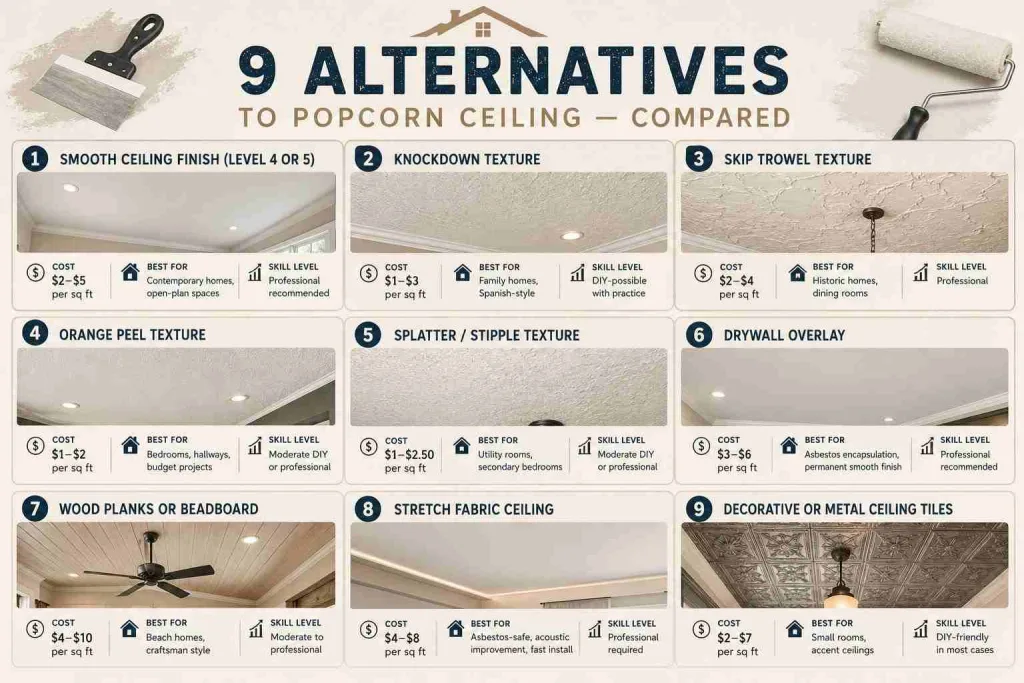
9 Alternatives to Popcorn Ceiling — Compared
These ceiling texture types range from flat and contemporary to warm and architectural. Each section covers what it looks like, what it costs, and where it works best.
1. Smooth Ceiling Finish (Level 4 or Level 5)
A smooth ceiling is the gold standard in modern and contemporary homes. The process — called skim coating — layers thin applications of joint compound over the existing surface until it is perfectly flat. Level 5 is the highest drywall finish standard and delivers the cleanest paint base you can get.
Smooth ceilings reflect light better than any textured option, making rooms feel larger and brighter. They work especially well in master bedrooms, dining rooms, and offices where recessed lighting rakes across the surface. The trade-off: they show drywall imperfections more than texture does, so prep work cannot be skipped.
- Cost: $2–$5 per sq ft
- Best for: Contemporary homes, open-plan spaces, recessed lighting setups
- Skill level: Professional recommended for a true Level 5 result
2. Knockdown Texture
Knockdown is one of the most popular ceiling texture types across Texas. A contractor applies joint compound through a hopper gun, then uses a knockdown knife to flatten the peaks before the compound sets. The result is a low-profile, random pattern that hides drywall imperfections while still looking clean and intentional.
Knockdown vs popcorn ceiling: knockdown sits far flatter, resists dust better, and repaints without issue. It suits Mediterranean and Spanish architecture as well as transitional and family homes.
- Cost: $1–$3 per sq ft
- Best for: Family homes, high-traffic rooms, Spanish-style architecture
- Skill level: DIY-possible with practice; pros deliver more consistent results
3. Skip Trowel Texture
Skip trowel is a hand-applied technique that produces a plaster-like, artisan surface. Finishers drag a trowel across joint compound in overlapping passes, leaving behind a natural, irregular pattern with depth. It suits historic homes, transitional styles, and any room where you want texture with a crafted feel rather than heavy bumps.
- Cost: $2–$4 per sq ft
- Best for: Historic homes, dining rooms, transitional interiors
- Skill level: Professional
4. Orange Peel Texture
Orange peel vs popcorn ceiling is one of the most searched comparisons. Orange peel gets its name from the fine, dimpled surface it creates — similar to citrus skin. It is applied with a hopper gun and compressed air, then painted once dry. The result is far subtler than popcorn and much easier to patch. If a section gets damaged, you spray a small area and blend it in minutes.
- Cost: $1–$2 per sq ft
- Best for: Bedrooms, hallways, budget-conscious projects
- Skill level: Moderate DIY or professional
5. Splatter / Stipple Texture
Splatter sits between orange peel and knockdown in weight and visual presence. Finishers apply it quickly with a brush flick or roller, then leave it or lightly flatten it. It works in rooms where you want more texture than orange peel without the randomness of skip trowel.
- Cost: $1–$2.50 per sq ft
- Best for: Utility rooms, secondary bedrooms, quick refreshes
6. Drywall Overlay
A drywall overlay installs new 1/4-inch or 3/8-inch drywall sheets directly over the existing popcorn ceiling. No scraping. No dust. No disturbed asbestos. The new surface gets taped, mudded, and finished to whatever texture level you want. It is one of the most reliable cover methods because the result is identical to a brand-new ceiling.
The trade-off is a slight ceiling height reduction — roughly 1/4 inch — which is rarely noticeable in standard 8-foot rooms.
- Cost: $3–$6 per sq ft
- Best for: Asbestos encapsulation, permanent smooth finish
- Skill level: Professional installation recommended
7. Wood Planks or Beadboard
Tongue-and-groove wood planks or beadboard panels install directly over the existing popcorn surface. This is a popular alternative to popcorn ceiling in beach homes, craftsman bungalows, and transitional interiors where a flat smooth ceiling would feel too cold or sterile. Pine planks, shiplap, and beadboard all work. Seal them properly to protect against moisture. This option adds visual weight, so it reads best in rooms with higher ceilings or strong natural light.
- Cost: $4–$10 per sq ft
- Best for: Beach homes, craftsman style, covered porches
- Skill level: Moderate to professional
8. Stretch Fabric Ceiling
Stretch fabric systems mount a rigid perimeter track to the walls, then stretch a PVC membrane across the frame. The membrane clips into place under tension, creating a seamless surface about one inch below the original ceiling.
Installation typically takes one day. The air gap between the old ceiling and the membrane adds acoustic dampening — useful in bedrooms and home offices. The surface resists moisture and cleans easily.
- Cost: $4–$8 per sq ft
- Best for: Asbestos-safe encapsulation, acoustic improvement, fast turnaround
- Skill level: Professional installation required
9. Decorative or Metal Ceiling Tiles
Foam, plastic, or tin tiles glue or clip directly over existing popcorn ceiling without any scraping or compound work. Tin tiles create a vintage or industrial feel. Foam tiles are lightweight and easy to handle. Both hide the original surface and deliver a finished look quickly. Best in non-asbestos rooms where you want a fast, no-demo upgrade — kitchens, dining rooms, and statement areas.
- Cost: $2–$7 per sq ft
- Best for: Small rooms, accent ceilings, quick upgrades
- Skill level: DIY-friendly in most cases
Cost Comparison: Ceiling Texture Types at a Glance
All estimates include labor and basic paint. Asbestos testing and crown molding are separate.
| Smooth / Level 5 Skim Coat | $2–$5 | $1,000–$2,500 | Modern / contemporary |
| Knockdown Texture | $1–$3 | $500–$1,500 | Family homes, Spanish style |
| Skip Trowel | $2–$4 | $1,000–$2,000 | Historic / transitional |
| Orange Peel | $1–$2 | $500–$1,000 | Budget-friendly, easy repair |
| Drywall Overlay | $3–$6 | $1,500–$3,000 | Permanent cover, no scraping |
| Wood Planks / Beadboard | $4–$10 | $2,000–$5,000 | Coastal / beach homes |
| Stretch Fabric Ceiling | $4–$8 | $2,000–$4,000 | Asbestos-safe encapsulation |
| Decorative Ceiling Tiles | $2–$7 | $1,000–$3,500 | Quick statement upgrade |
Match the Finish to Your Home Style
- Contemporary or modern home: Level 5 smooth ceiling with recessed lighting and flat paint.
- Mediterranean or Spanish architecture: Knockdown or skip trowel with warm-toned flat paint.
- Beach or coastal transitional: Orange peel, wood planks, or stretch fabric ceiling.
- Historic or craftsman bungalow: Skip trowel, beadboard panels, or tongue-and-groove planks.
- Rental property or investment: Orange peel or knockdown — low cost, easy to patch between tenants.
For paint: flat or matte paint works on every ceiling texture type. Avoid semi-gloss on ceilings — it catches light at the wrong angles and highlights every imperfection. Add crown molding for a polished edge at the wall joint.
DIY vs. Professional: What the Results Actually Look Like
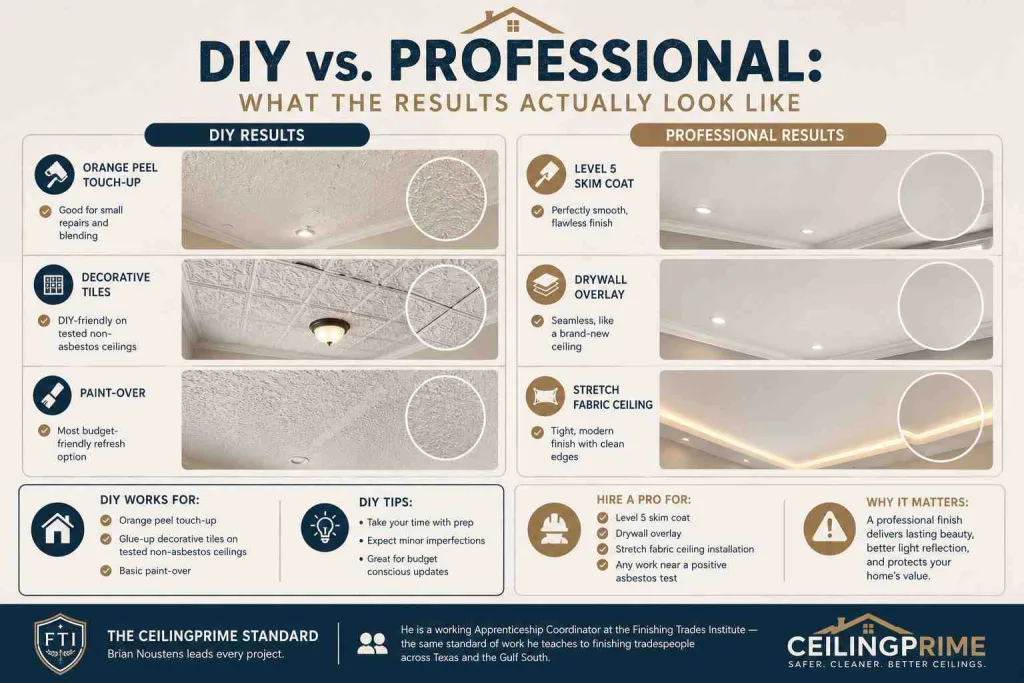
Some of these ceiling options are genuinely DIY-friendly. Others need a professional if you want a clean result.
DIY works for: orange peel touch-up, glue-up decorative tiles on tested non-asbestos ceilings, and basic paint-over. These are forgiving techniques where minor inconsistencies are part of the aesthetic.
Hire a pro for: Level 5 skim coat, drywall overlay, stretch fabric ceiling installation, and any work near a positive asbestos test. Skim coating to a true flat surface is one of the most skill-dependent tasks in the finishing trades. Waves in the compound become obvious under paint — especially with recessed lighting raking across the ceiling.
How to Plan Your Project?
- Test for asbestos if the home was built before 1980.
- Decide between removal, cover, or encapsulation based on the test result and your budget.
- Choose a ceiling texture type based on your home style and room use.
- Get quotes from at least two local contractors — ask them to specify the drywall finish level in writing.
- Select flat or matte paint in a ceiling-specific formula for the finish coat.
- Add crown molding to frame the new ceiling and hide the edge at the wall joint.
Frequently Asked Questions
Q. What is the best cheap alternative to popcorn ceiling?
Orange peel texture or a skim coat over the existing surface runs $1–$3 per sq ft and delivers a clean, modern look without demo costs. Glue-up foam tiles are another budget option for small rooms.
Q. Can you cover popcorn ceiling without removing it?
Yes. Drywall overlay, skim coat, stretch fabric ceiling, wood planks, and decorative tiles all install directly over existing popcorn ceiling. Covering is often faster and cheaper than scraping — especially when asbestos is a factor.
Q. Knockdown vs popcorn ceiling — what is the difference?
Popcorn ceiling uses a spray-on aggregate texture in chunky, irregular peaks. Knockdown applies joint compound that gets partially flattened before drying, leaving a much lower-profile pattern. Knockdown resists dust better, repaints cleanly, and looks far more current.
Q. Orange peel vs popcorn ceiling — which is better?
Orange peel creates a subtle, fine dimple pattern. Popcorn is heavier, harder to repaint, and often contains asbestos-era materials. Orange peel is cheaper to apply, easier to repair, and a better long-term finish for any room.
Q. How long does a ceiling alternative project take?
Stretch fabric and tile installations typically finish in one day per room. Skim coating and drywall overlay take one to three days depending on room size and drying time between coats.
Q. Do new ceiling textures improve lighting or sound?
Smooth and Level 4 finishes reflect more light, improving the performance of recessed lighting. Stretch fabric ceilings and knockdown texture add meaningful acoustic dampening — useful in bedrooms and open-plan living areas.
Q. Is painting over popcorn ceiling a real fix?
Paint over popcorn ceiling seals the surface and refreshes the color, but does not hide the texture or solve the dust-collection problem. Treat it as a short-term measure, not a permanent solution.