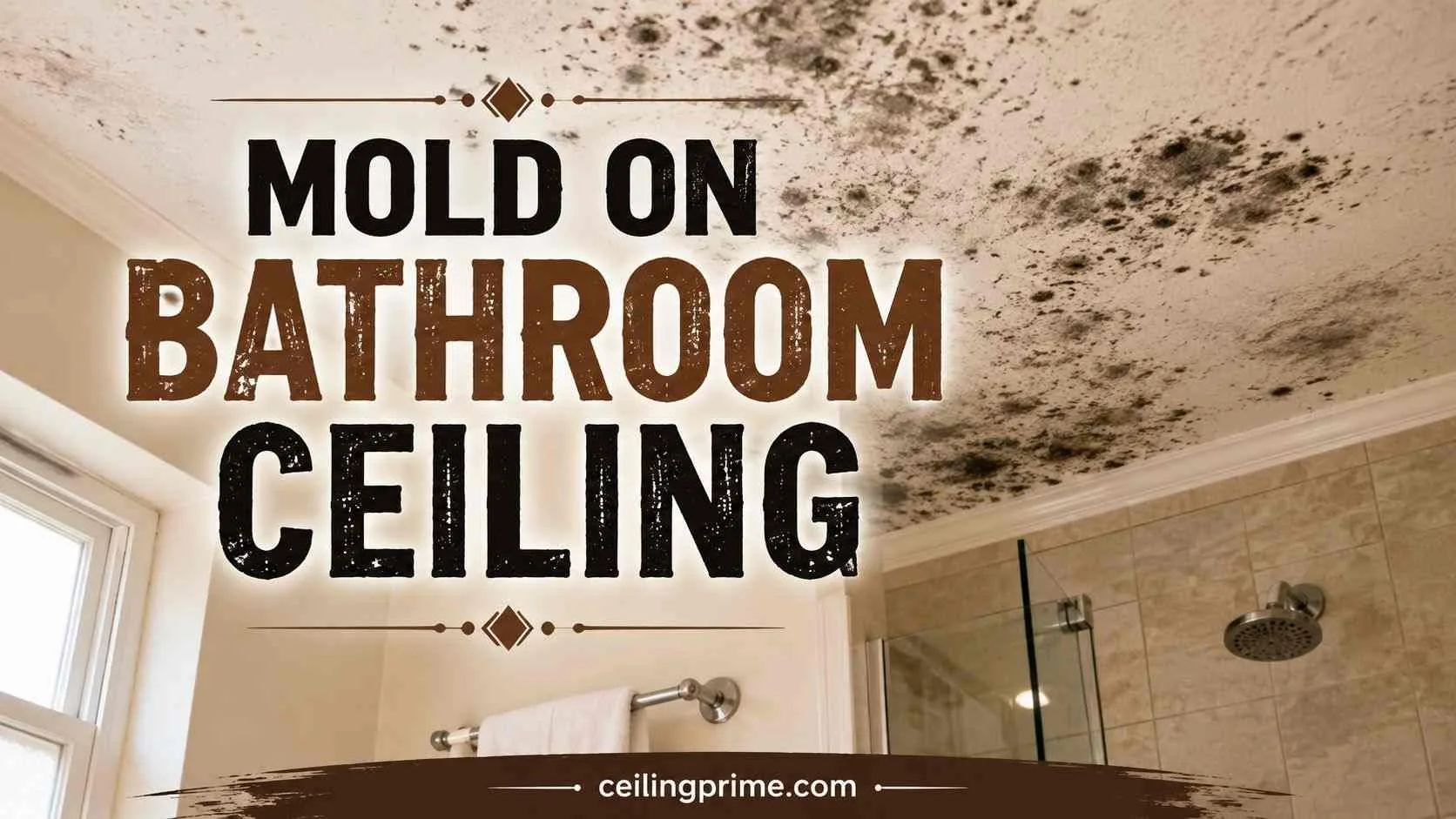
Mold on Bathroom Ceiling: Causes, How to Remove & How to Stop It
Mold on bathroom ceiling surfaces is the most common household mold problem in the United States. The bathroom creates the perfect conditions: warm air, moisture, and an enclosed space. Steam from hot showers rises to the ceiling. It condenses on the cold drywall. That moisture feeds mold spores within 48 to 72 hours.
This guide covers the 6 causes, how to identify the mold type, where it appears most (above showers, near vents, around exhaust fans), step-by-step removal with vinegar and bleach, why mold keeps coming back, health risks, prevention, and when to call a professional. Every LSI question is answered in order.
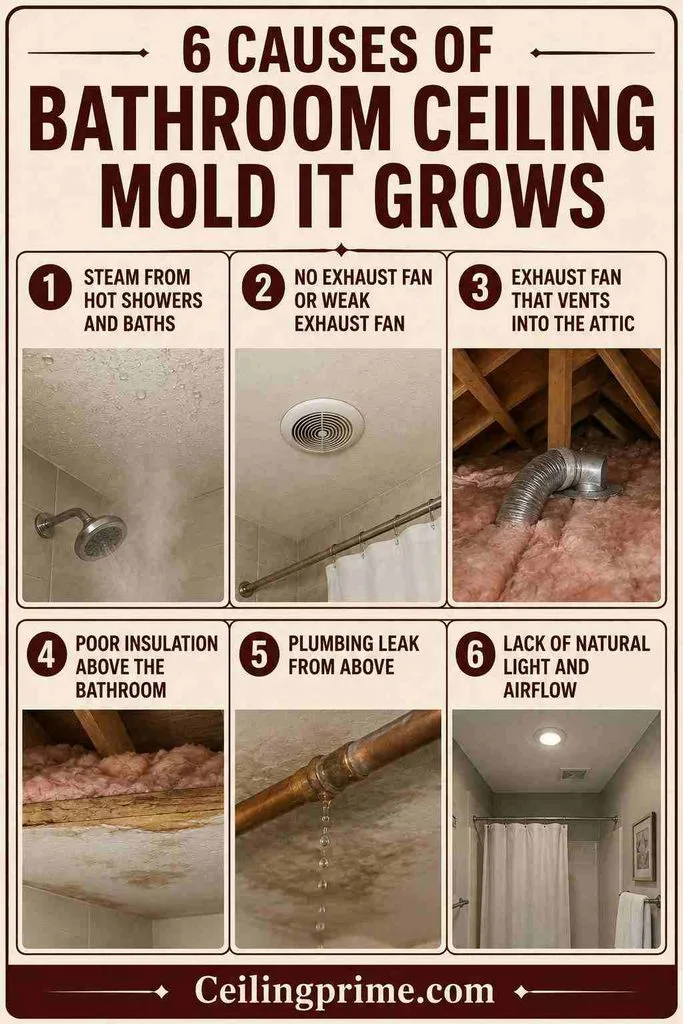
6 Causes of Bathroom Ceiling Mold It Grows
1. Steam from hot showers and baths: Hot water produces steam. The steam rises to the ceiling. It condenses on the cool drywall surface. The moisture soaks into the paint and drywall paper. Mold grows on damp drywall within 48 to 72 hours. This is the primary cause of ceiling mold in most homes.
2. No exhaust fan or weak exhaust fan: A bathroom without an exhaust fan traps all moisture inside the room. A weak fan (under 50 CFM) moves too little air to clear the steam. The humidity stays above 60%. Mold thrives above 50% relative humidity.
3. Exhaust fan that vents into the attic: Some homes have exhaust fans that dump moist air into the attic instead of venting to the outside. The moisture condenses on the cold roof deck. It drips onto the ceiling below. Mold grows on both the attic side and the bathroom side of the drywall.
4. Poor insulation above the bathroom: Thin or missing attic insulation creates a cold ceiling surface. Warm bathroom air condenses on the cold spot. The condensation feeds mold. This is especially common in bathrooms on the top floor directly below the attic.
5. Plumbing leak from above: A leaking pipe, shower pan, or toilet supply line in an upstairs bathroom sends water through the ceiling. Chronic dampness from a slow leak provides constant moisture for mold growth.
6. Lack of natural light and airflow: Interior bathrooms with no windows get no sunlight and no natural ventilation. UV light kills surface mold spores. Airflow dries moisture. Bathrooms without either are the most mold-prone rooms in the house.
Where Mold on Bathroom Ceiling Appears Most?
Mold on Bathroom Ceiling Above Shower
The area directly above the shower or bathtub gets the most steam. It is the wettest, warmest zone on the ceiling. Mold appears here first. It starts as small black or dark gray dots. The dots spread outward if moisture continues. Ceiling mold above the shower is a ventilation problem 90% of the time.
Mold on Bathroom Ceiling Near Vent
Mold around the exhaust fan vent is counterintuitive. The fan should remove moisture. But if the fan is undersized, rarely used, or vents into the attic, moisture collects around the vent opening. Condensation forms on the cool metal duct ring. The dampness feeds mold in a ring pattern around the vent grille.
Mold on Bathroom Ceiling Around Vent
Mold in a ring pattern around the vent means the ductwork above the ceiling is not insulated. Cold air from the attic travels down the uninsulated duct. The cold metal chills the drywall around the vent opening. Moisture condenses on that cold spot. Mold grows in a circle. Insulating the duct and the vent boot stops this pattern.
Mold in Ceiling Corners and Edges
Corners where the ceiling meets two walls are the coldest points in any room. Cold air settles in corners. The moisture condenses there first. Mold appears as dark patches in the ceiling corners nearest the shower.
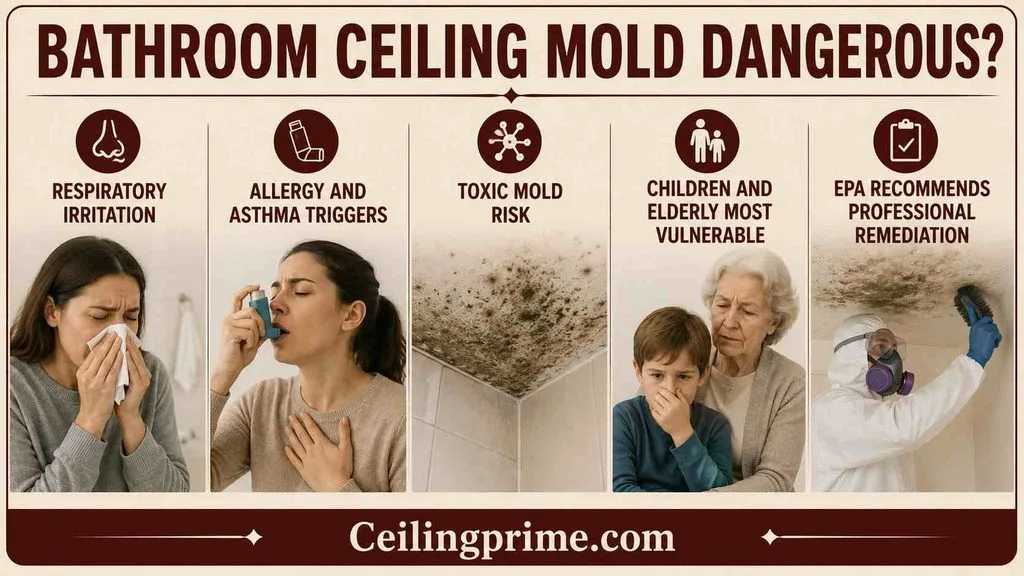
Is Bathroom Ceiling Mold Dangerous?
Yes, bathroom ceiling mold poses real health risks. The danger depends on the mold type, the size of the colony, and how long you are exposed.
- Respiratory irritation: Mold spores irritate the nose, throat, and lungs. Symptoms include sneezing, coughing, runny nose, and sore throat. Exposure during showers — when steam is airborne — makes symptoms worse.
- Allergy and asthma triggers: Mold is a known allergen. People with mold allergies experience itchy eyes, skin rashes, and difficulty breathing. Bathroom ceiling mold can trigger asthma attacks in sensitive individuals.
- Toxic mold risk: Most bathroom mold is non-toxic surface mold. But prolonged moisture can invite toxic varieties. If the mold is extensive (over 10 square feet) or you see fuzzy, deeply embedded growth, call a professional for testing.
- Children and elderly are most vulnerable: Young children, older adults, and people with weakened immune systems are at higher risk from mold exposure.
The EPA recommends professional mold remediation for any mold area larger than about 10 square feet (roughly a 3×3 foot patch).
How to Clean Bathroom Ceiling Mold Safely?
Safety gear: Wear an N95 respirator mask, safety goggles, and rubber gloves. Open the bathroom window if there is one. Run the exhaust fan during cleaning. Mold spores become airborne when disturbed.
Method 1: White Vinegar (Mild to Moderate Mold)
- Fill a spray bottle with undiluted white distilled vinegar.
- Spray the moldy area liberally. Cover every dark spot.
- Let the vinegar sit for 60 minutes. Do not wipe yet.
- Scrub gently with a soft-bristle brush or sponge.
- Wipe clean with a damp cloth. Let air dry.
- Repeat if staining remains. Vinegar kills 82% of mold species on contact.
Method 2: Bleach Solution (Heavy Mold or Stubborn Stains)
- Mix 1 cup liquid bleach with 1 gallon of water. Pour into a spray bottle.
- Spray the moldy area. Let sit 15 to 20 minutes.
- Scrub with a soft brush. Wipe clean with a damp cloth.
- Rinse the area with clean water. Let dry completely.
- Open the window and run the fan during and after. Bleach fumes are strong.
Method 3: Hydrogen Peroxide (Low Odor Alternative)
Spray 3% hydrogen peroxide directly on the mold. Wait 10 minutes. Wipe clean. Peroxide kills mold without the strong smell of bleach. It is safer for enclosed bathrooms without windows.
After Cleaning: Prime and Paint
Cleaning removes surface mold. But staining often remains. Apply mildew-resistant primer after the ceiling is fully dry. Paint with bathroom-rated paint that contains mildewcide. This seals the surface and resists future growth.
Why Bathroom Ceiling Mold Keeps Coming Back: 5 Reasons Why
You cleaned the mold. You painted over it. Three weeks later it returned. Here is why bathroom ceiling mold keeps coming back.
- The exhaust fan is too weak. A fan under 50 CFM cannot clear bathroom steam. Upgrade to 80+ CFM with a humidity sensor that runs automatically.
- You are not running the fan long enough. Run it during and 20 minutes after every shower. A timer switch automates this.
- The fan vents into the attic, not outside. Moisture dumps into the attic space. It condenses and drips back down. Reroute the duct to an exterior wall or roof vent.
- You painted over mold without killing it first. Paint does not kill mold. The colony grows underneath. It pushes through the paint within weeks. Always clean and prime before painting.
- The ceiling insulation is inadequate. A cold ceiling surface attracts condensation every time you shower. Adding attic insulation above the bathroom warms the ceiling and stops the moisture cycle.
What to Do About Bathroom Ceiling Mold (Action Plan)
- Step 1: Identify the mold size. Small area (under 10 sq ft) = DIY safe. Large area (over 10 sq ft) = call a professional.
- Step 2: Put on safety gear. N95 mask, goggles, gloves.
- Step 3: Clean the mold with vinegar, bleach solution, or hydrogen peroxide.
- Step 4: Let the ceiling dry completely. Run fans. Open windows. Wait 24 hours.
- Step 5: Apply mildew-resistant primer. Let dry.
- Step 6: Paint with bathroom-rated paint containing mildewcide.
- Step 7: Fix the ventilation. Upgrade the exhaust fan. Verify it vents to the outside. Run it every shower.
- Step 8: Check attic insulation above the bathroom. Add insulation if thin or missing.
- Step 9: Monitor monthly. Check the ceiling for new spots. Catch regrowth early.
This action plan addresses both the mold on bathroom ceiling and the moisture source behind it. Skipping steps 7 and 8 guarantees the mold returns.
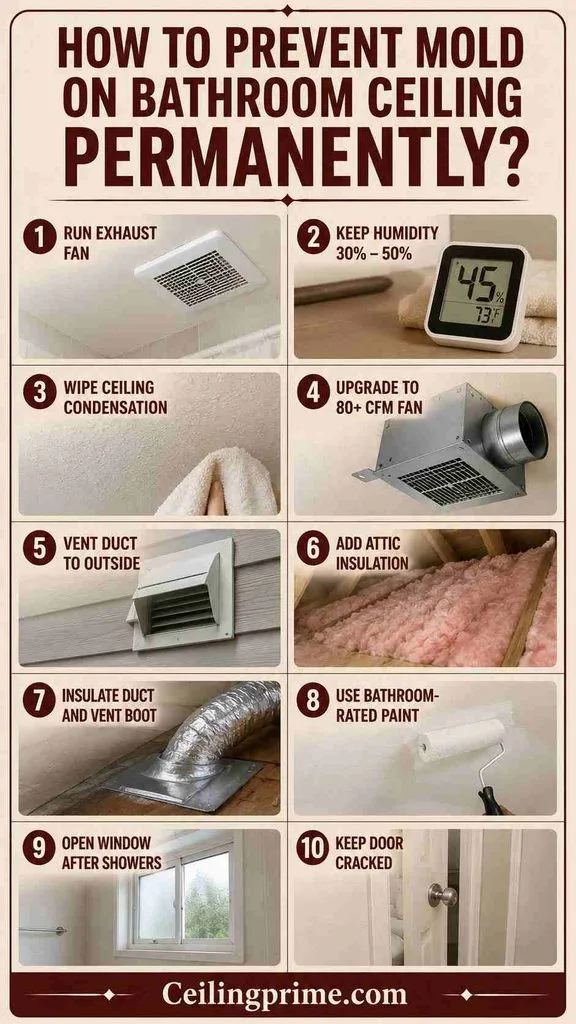
How to Prevent Mold on Bathroom Ceiling Permanently?
- Run the exhaust fan during every shower and 20 minutes after. A humidity-sensing fan automates this.
- Keep indoor humidity between 30% and 50%. Use a hygrometer to monitor.
- Wipe ceiling condensation with a dry towel after steamy showers.
- Upgrade to an 80+ CFM exhaust fan if the current one is weak.
- Verify the exhaust duct vents to the outside, not into the attic.
- Add attic insulation above the bathroom to R-38 or higher.
- Insulate the exhaust duct and vent boot to stop condensation rings.
- Use bathroom-rated paint with built-in mildewcide on the ceiling.
- Open the bathroom window after showers when weather permits.
- Keep the bathroom door cracked during showers to let steam escape.
Bathroom Ceiling Mold Repair Costs in 2026
| Repair | 2026 Cost |
| DIY mold cleaning (vinegar/bleach + paint) | $20–$60 |
| Exhaust fan upgrade (80+ CFM installed) | $150–$400 |
| Reroute exhaust duct to exterior | $200–$500 |
| Add attic insulation above bathroom | $300–$1,000 |
| Professional mold remediation (ceiling) | $500–$3,000 |
| Drywall replacement (severe mold damage) | $300–$800 |
Kill It, Fix the Source, and Keep It Gone
Mold on bathroom ceiling surfaces grows because moisture is present. Remove the mold with vinegar or bleach. Prime with mildew-resistant primer. Paint with bathroom-rated paint. Then fix the real problem: upgrade the exhaust fan, verify it vents outside, insulate the attic above the bathroom, and run the fan every single shower. The mold stays gone when the moisture stops.
Frequently Asked Questions
Can I just paint over mold on my bathroom ceiling?
No. Paint does not kill mold. The colony grows underneath and pushes through the new coating within weeks. Clean the mold first. Let the surface dry. Apply mildew-resistant primer. Then paint with bathroom-rated paint.
Why does mold grow near my bathroom exhaust vent?
The duct is not insulated. Cold attic air chills the metal duct. Condensation forms on the drywall around the vent ring. That moisture feeds mold in a circle pattern. Insulating the duct and vent boot stops it.
Is black mold on a bathroom ceiling always toxic?
No. Most black-colored bathroom mold is non-toxic surface mold. Toxic black mold requires prolonged wet conditions and typically grows inside walls or behind drywall, not on painted surfaces. However, all mold causes respiratory irritation. Treat any visible mold promptly.
How often should I check for mold on my bathroom ceiling?
Monthly. A quick visual check after a shower takes 10 seconds. Catch new spots when they are small (a few dots) instead of waiting until the colony covers a square foot.
Does a dehumidifier help prevent bathroom ceiling mold?
Yes. A portable dehumidifier in the bathroom keeps humidity below 50%. But an exhaust fan running during and after showers is the more effective solution. The fan removes moisture at the source.
When should I call a mold remediation professional?
When the mold covers more than 10 square feet (EPA guideline). When you see fuzzy, deeply embedded growth. When you smell mold but cannot see it (mold may be inside the drywall or above the ceiling). When symptoms like coughing, wheezing, or skin irritation persist.






One Comment