How to Get Rid of Mold on Bathroom Ceiling: 6 Methods That Work
Learning how to get rid of mold on bathroom ceiling surfaces permanently requires two things: kill the mold and fix the moisture source. Killing the mold without fixing the moisture means it returns within weeks. Fixing the moisture without killing the mold means the colony keeps growing.
This guide covers 6 removal methods ranked from mildest to strongest. It includes home remedies that work without bleach. It covers mold on drywall, mold in paint, mold above showers, mold on walls and ceilings together, and the right way to prep the ceiling for painting after removal. Every method lists the exact supplies, steps, and drying times.
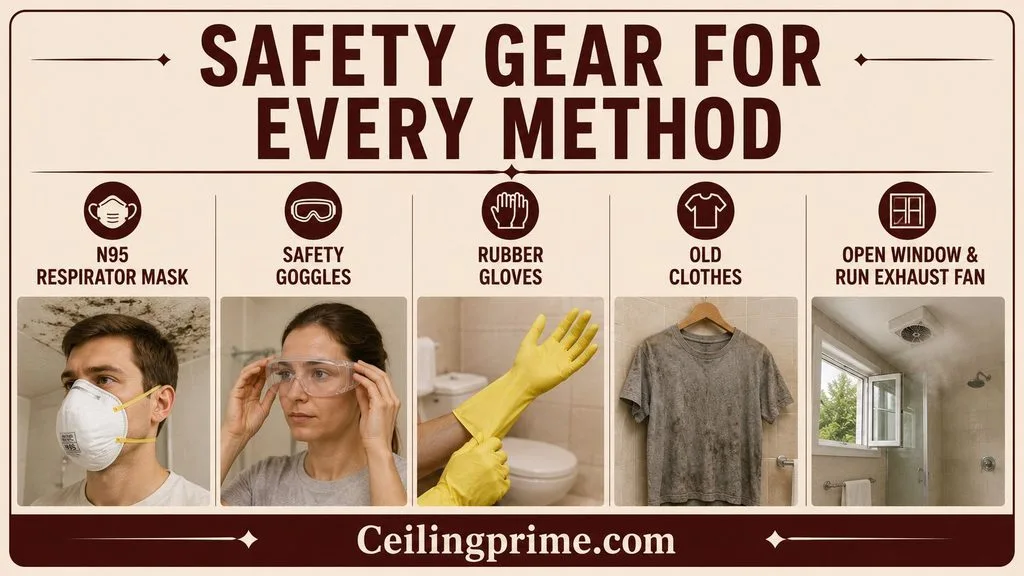
Safety Gear for Every Method
Mold spores go airborne when disturbed. Protect yourself before any cleaning.
- N95 respirator mask — blocks mold spores from entering your lungs.
- Safety goggles — prevents spores and cleaning solution from reaching your eyes.
- Rubber gloves — protects skin from cleaning chemicals and mold contact.
- Old clothes that you can wash immediately after. Spores cling to fabric.
- Open the window if the bathroom has one. Run the exhaust fan during and after cleaning.
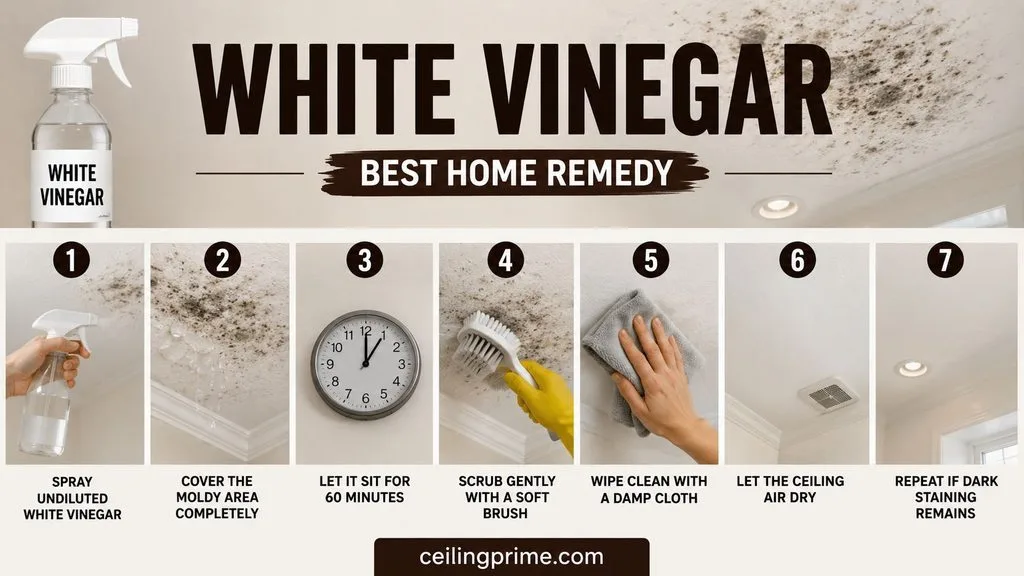
Method 1: White Vinegar (Best Home Remedy)
Vinegar kills 82% of mold species on contact. It is the best first-choice method for how to get rid of mold on bathroom ceiling with vinegar. No mixing required. Safe on painted drywall. No harsh fumes.
- Fill a spray bottle with undiluted white distilled vinegar. Do not dilute.
- Spray the moldy area until it is thoroughly wet. Cover every dark spot.
- Let it sit for 60 full minutes. The acetic acid needs time to kill the root structure.
- Scrub gently with a soft-bristle brush. Work in small circles.
- Wipe clean with a damp microfiber cloth. Rinse the cloth frequently.
- Let the ceiling air dry. Run the exhaust fan. Do not rinse with water.
- Repeat if dark staining remains. Two applications handle most cases.
Vinegar leaves a mild smell that fades within 2 to 3 hours. It is the safest option for bathrooms used by children and pets.
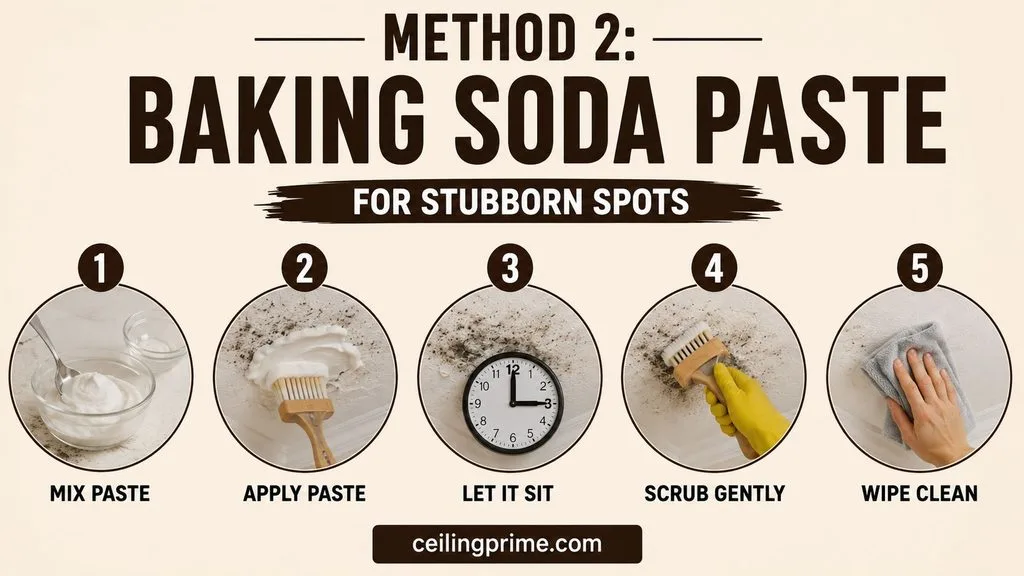
Method 2: Baking Soda Paste (For Stubborn Spots)
Baking soda is a mild alkaline cleaner. It kills mold and absorbs moisture from the surface. Use it after vinegar for stubborn spots that need physical scrubbing.
- Mix 1/2 cup baking soda with 1 tablespoon of dish soap and enough water to form a thick paste.
- Apply the paste to the moldy area with a brush or sponge.
- Let it sit for 15 minutes.
- Scrub with a soft brush. The grit in the baking soda lifts embedded spores.
- Wipe clean. Let it dry.
Baking soda and vinegar can be used together. Apply vinegar first. Wait 60 minutes. Then apply the baking soda paste. The combination handles moderate mold without any harsh chemicals.
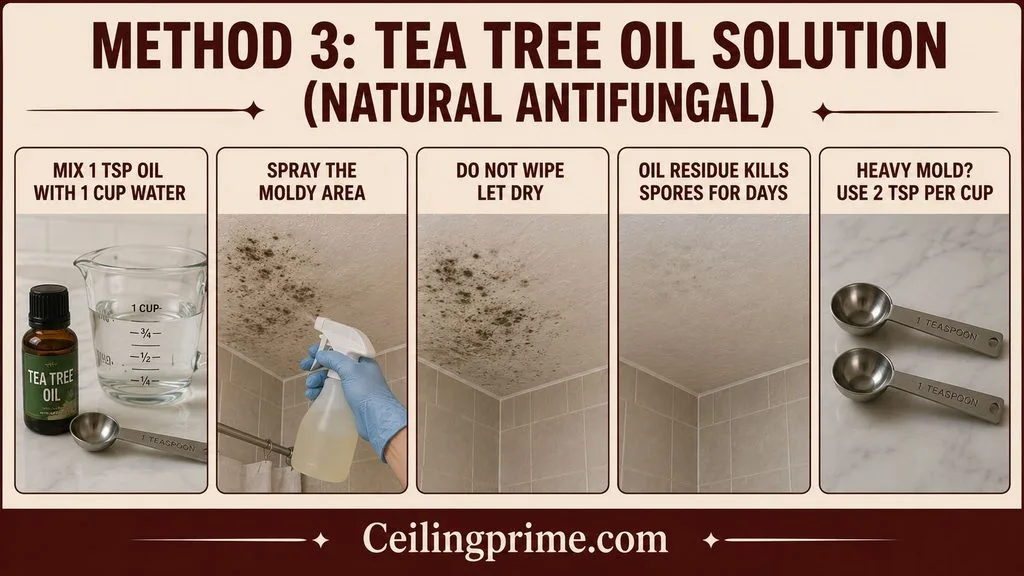
Method 3: Tea Tree Oil Solution (Natural Antifungal)
Tea tree oil is a natural antifungal and antibacterial. It kills mold spores and prevents regrowth for weeks. The smell is strong but dissipates within a day. This is a top home remedy for getting rid of bathroom ceiling mold without bleach.
- Mix 1 teaspoon of tea tree oil with 1 cup of water in a spray bottle. Shake well.
- Spray the moldy area. Do not wipe. Let the solution dry on the surface.
- The oil residue continues killing spores for days after application.
- For heavy mold, increase to 2 teaspoons per cup of water.
Tea tree oil is more expensive than vinegar. But it provides the longest residual antifungal protection of any home remedy.
Method 4: Hydrogen Peroxide (No Bleach, Low Odor)
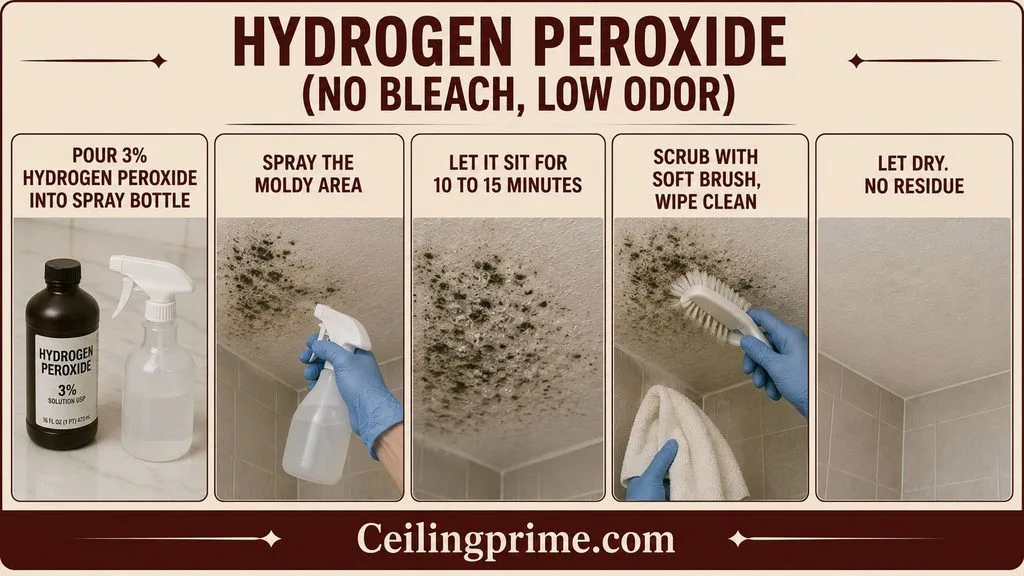
Hydrogen peroxide at 3% concentration (the standard drugstore bottle) kills mold on contact. It is the best choice for how to get rid of mold on the bathroom ceiling without bleach when vinegar alone is not strong enough.
- Pour 3% hydrogen peroxide into a spray bottle. Do not dilute.
- Spray the moldy area. Saturate the surface.
- Let it sit for 10 to 15 minutes. You will see light fizzing as the peroxide reacts with the mold.
- Scrub with a soft brush. Wipe clean with a damp cloth.
- Let dry. The peroxide evaporates into water and oxygen. No residue.
Peroxide is safe for painted surfaces. It may lighten colored paint slightly. Test a small area first on non-white ceilings.
Method 5: Bleach Solution (Heavy Mold, Last Resort)
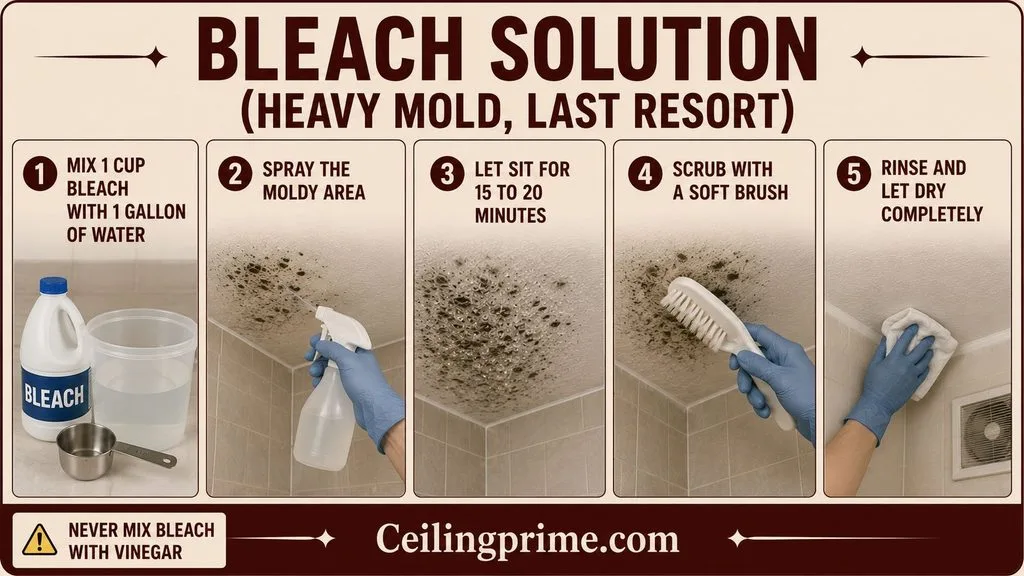
Bleach kills surface mold instantly. It whitens stained drywall. But it does not penetrate porous surfaces like drywall paper. For surface mold on painted ceilings, bleach works well. For mold that has grown into the drywall, bleach kills the surface but the roots survive.
- Mix 1 cup liquid bleach with 1 gallon of water.
- Spray the moldy area. Let sit for 15 to 20 minutes.
- Scrub with a soft brush.
- Rinse with clean water using a damp cloth.
- Let dry completely with the fan running and window open.
Never mix bleach with vinegar. The combination creates toxic chlorine gas. Use one method or the other, not both on the same surface.
Method 6: Cut and Replace Moldy Drywall (Severe Cases)
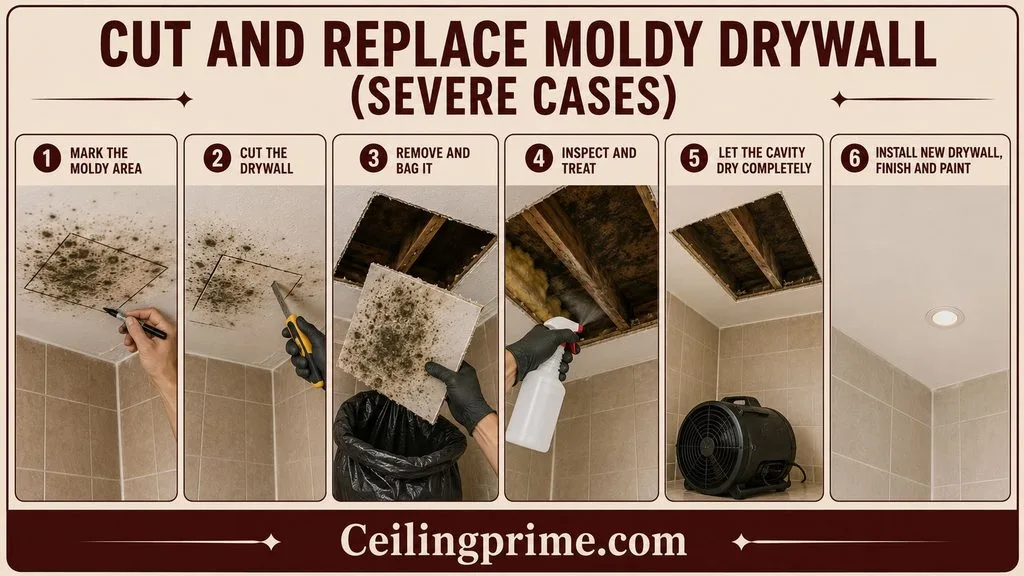
When mold has penetrated the drywall itself, surface cleaning does not work. The mold grows inside the gypsum core. No spray reaches it. The only fix is removal. Here is how to get rid of mold on bathroom ceiling drywall that is deeply infected.
- Mark the moldy area. Extend the cut line 12 inches beyond the visible mold on all sides. Mold roots spread further than the visible colony.
- Cut the drywall with a utility knife or keyhole saw. Cut back to the nearest ceiling joists.
- Remove the damaged section. Bag it in heavy plastic. Seal the bag.
- Inspect the joist cavity. Check the joists, insulation, and the back of surrounding drywall for mold. Treat any affected wood with a mold-killing solution.
- Let the cavity dry completely. Run fans for 24 to 48 hours.
- Install new drywall. Screw into the joists. Tape, mud, sand. Apply mildew-resistant primer. Paint with bathroom-rated paint.
Replace the drywall if: the mold covers more than 2 square feet, the drywall feels soft or crumbly, or the mold returns within a month after surface cleaning.
6 Mold Removal Methods Compared
| Method | Kills Mold? | Odor | Safe on Paint | Penetrates? | Cost |
| Vinegar | 82% species | Mild, fades | Yes | Partially | $3–$5 |
| Baking soda | Mild | None | Yes | No | $2–$4 |
| Tea tree oil | Yes + residual | Strong, 24 hr | Yes | Partially | $8–$15 |
| Peroxide 3% | Yes | None | Yes (may lighten) | Partially | $2–$4 |
| Bleach | Surface only | Strong | Yes | No | $3–$5 |
| Drywall replace | 100% | None | N/A | Full removal | $50–$200 |
Start with vinegar. Move to peroxide or tea tree oil if vinegar is not enough. Use bleach only as a last resort before drywall replacement. Choosing the right method for the severity means choosing the right method for the severity.
How to Get Rid of Mold on Bathroom Ceiling Above Shower?
The area above the shower is the hardest spot to treat because steam hits it daily. Removal alone is not enough. You must reduce the moisture that feeds regrowth.
- Step 1: Clean the mold using vinegar or peroxide (methods 1 or 4 above).
- Step 2: Let the ceiling dry 24 hours with the fan running.
- Step 3: Apply mildew-resistant primer to the cleaned area.
- Step 4: Paint with bathroom-rated paint containing mildewcide.
- Step 5: Upgrade the exhaust fan to 80+ CFM with a humidity sensor. This is the permanent fix for mold above showers.
- Step 6: Run the fan during every shower and 20 minutes after.
Without fixing the ventilation, mold above the shower returns within 3 to 6 weeks regardless of which cleaning method you use.
How to Get Rid of Mold on Bathroom Ceiling and Walls?
When mold covers both the ceiling and the upper walls, the bathroom has a systemic moisture problem. The exhaust fan is failing or absent. Humidity stays above 60% for extended periods. Treat both surfaces the same way.
- Spray vinegar on all moldy areas — ceiling and walls. Let sit for 60 minutes.
- Scrub and wipe both surfaces. Let it dry.
- Prime both surfaces with mildew-resistant primer.
- Paint with bathroom-rated paint.
- Fix the ventilation: upgrade fan, verify it vents outside, run it every shower.
Ceiling and wall mold together is a sign that the entire bathroom environment needs better airflow, not just spot treatment.
How to Get Rid of Mold on Bathroom Ceiling Before Painting?
Painting over mold without killing it first is the most common mistake homeowners make. The mold grows underneath. It pushes through the new paint within weeks. Here is the correct approach before painting.
- Step 1: Kill the mold with vinegar, peroxide, or bleach. Let sit at the recommended time. Scrub and wipe.
- Step 2: Let the ceiling dry completely. 24 hours minimum. 48 hours is safer.
- Step 3: Sand lightly with 120-grit to remove any loose paint or residue.
- Step 4: Apply mildew-resistant primer. One coat. Let dry for 2 hours. This primer seals any remaining staining and prevents tannin bleed.
- Step 5: Apply two coats of bathroom-rated paint with built-in mildewcide. Wait 2 to 4 hours between coats.
Mold-resistant primer and paint do not kill mold. They prevent new growth from taking hold on the painted surface. The mold must be dead and the surface dry before either product is applied.
Complete Home Remedies for Bathroom Ceiling Mold
| Remedy | How to Use | Best For |
| White vinegar | Spray undiluted, 60 min, scrub | First-line treatment, safe for all |
| Baking soda paste | Apply paste, 15 min, scrub | Stubborn spots after vinegar |
| Tea tree oil | 1 tsp per cup water, spray, no rinse | Long-term prevention, antifungal |
| Hydrogen peroxide 3% | Spray undiluted, 10 min, scrub | No-bleach alternative, low odor |
| Grapefruit seed extract | 10 drops per cup water, spray, no rinse | Odorless natural option |
| Borax solution | 1 cup per gallon water, scrub, no rinse | Heavy mold on hard surfaces |
All home remedies work on surface mold. None penetrate deeply infected drywall. If the mold returns within a month after any home remedy, the drywall itself is compromised and needs replacement.
Mold Removal Costs in 2026
| Repair | 2026 Cost |
| DIY cleaning (vinegar/peroxide/baking soda) | $5–$20 |
| DIY cleaning + prime + repaint | $30–$80 |
| Drywall section replacement (DIY) | $50–$200 |
| Exhaust fan upgrade (80+ CFM installed) | $150–$400 |
| Professional mold remediation | $500–$3,000 |
Kill the Mold, Fix the Moisture, Paint It Right
Now you know how to get rid of mold on bathroom ceiling using 6 proven methods. Start with vinegar for mild mold. Move to peroxide or tea tree oil for moderate growth. Use bleach only on heavy surface mold. Replace drywall when the mold has gone inside the material. Prime with mildew-resistant primer. Paint with bathroom-rated paint. And fix the exhaust fan — because the mold comes back every time the moisture stays.
Frequently Asked Questions
Does vinegar kill black mold on bathroom ceilings?
Vinegar kills 82% of mold species including most common bathroom mold. It penetrates partially into porous surfaces. For deeply embedded mold inside drywall, vinegar kills the surface growth but may not reach the roots. Replace the drywall if mold returns within a month.
Can I use baking soda and vinegar together?
Yes. Apply vinegar first. Let it sit for 60 minutes. Wipe clean. Then apply baking soda paste for stubborn spots. Do not mix them in the same bottle — the acid-base reaction neutralizes both.
Is bleach or vinegar better for bathroom ceiling mold?
Vinegar is better for porous surfaces like drywall. It partially penetrates the material. Bleach kills surface mold instantly but does not penetrate porous drywall. Bleach is better for non-porous surfaces like tile and glass.
How do I know if the mold has gone into the drywall?
Press the moldy area. If the drywall feels soft, spongy, or crumbly, mold has penetrated the core. If the surface is firm and the mold wipes off with cleaning, the infection is surface-level only.
When should I call a professional?
When the mold covers more than 10 square feet. When it returns within a month after cleaning. When you see mold inside the drywall cavity after cutting. When anyone in the home has respiratory symptoms, allergies, or asthma flares near the bathroom.
How long after cleaning can I paint?
Wait 24 to 48 hours. The surface must be completely dry. Apply mildew-resistant primer first. Then two coats of bathroom-rated paint. Painting over a damp surface traps moisture and feeds new mold growth.






One Comment