Crack in Ceiling: What It Means, When to Worry & How to Fix It
A crack in ceiling drywall or plaster is one of the most common problems in residential homes. Some cracks are cosmetic. They come from normal settling. They cost $20 to fix with a putty knife and paint. Other cracks are warnings. They signal water damage, foundation movement, or structural failure. Those cracks cost thousands if ignored.
This guide covers every type of ceiling crack. It explains what each pattern means. It tells you when to worry and when to relax. It walks through step-by-step repair for drywall and plaster. It covers cracks from water damage, cracks under bathrooms, cracks in new houses, and cracks that leak. Every LSI topic is covered in order.
Types of Ceiling Cracks: What Each Pattern Means
Below you can check out the details about types of ceiling cracks.
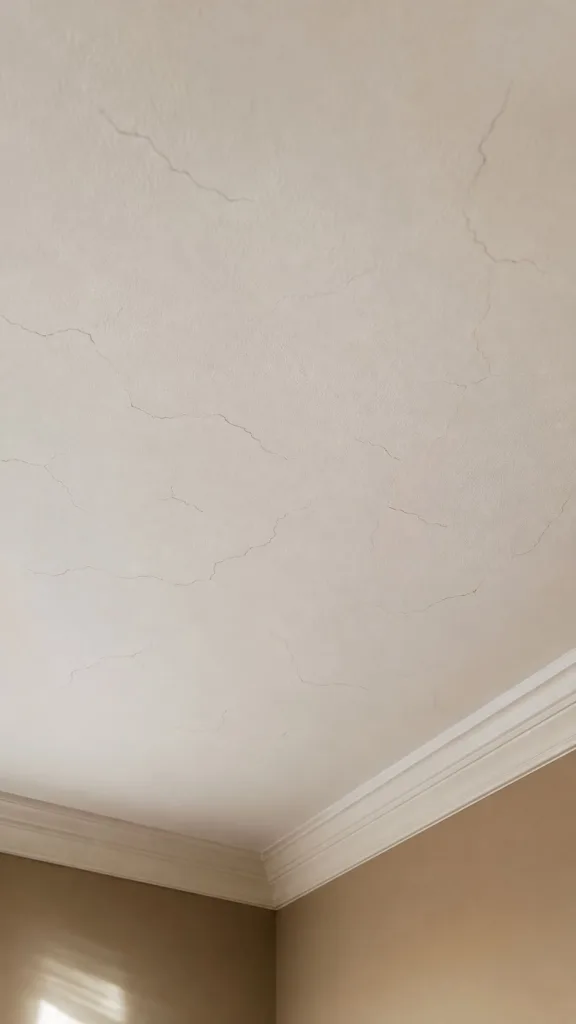
Hairline Cracks in Ceiling
Thin lines less than 1/16 inch wide. Random direction. Shallow. These are the most common ceiling crack type. Normal house settling causes them. New homes develop them in the first 1 to 3 years. They are cosmetic. They do not indicate structural problems. Sand, fill with spackling compound, prime, and paint.
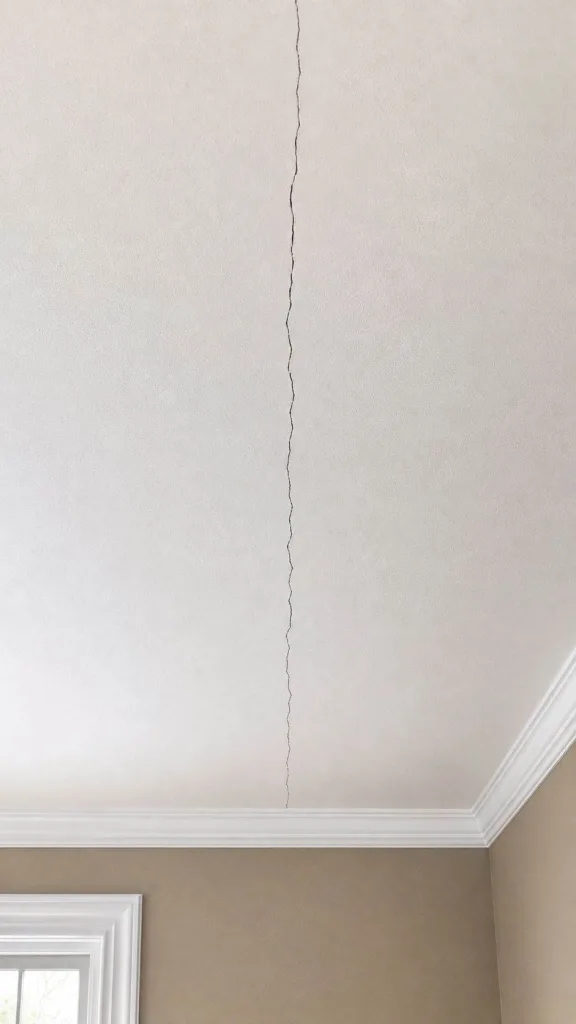
Straight Crack in Ceiling
A single straight line running across the ceiling. It follows the seam between two drywall panels. This is a drywall seam crack. The tape joint failed. The paper tape lost adhesion. Or the original installer used too little compound. This is a finishing defect. Retape the seam with paper tape and joint compound. Sand. Prime. Paint.
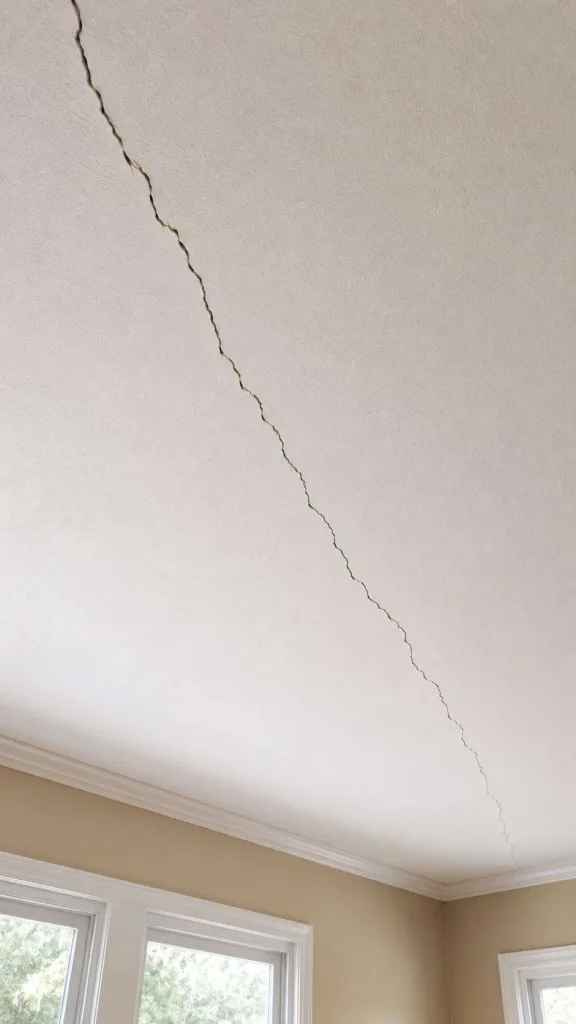
Long Ceiling Crack
A crack that extends several feet across the ceiling. If it follows a straight line, it is a drywall seam issue. If it wanders in a random path, it may indicate truss uplift or joist movement. Mark the ends with pencil. Check again in 30 days. If it has grown, call a contractor for inspection.
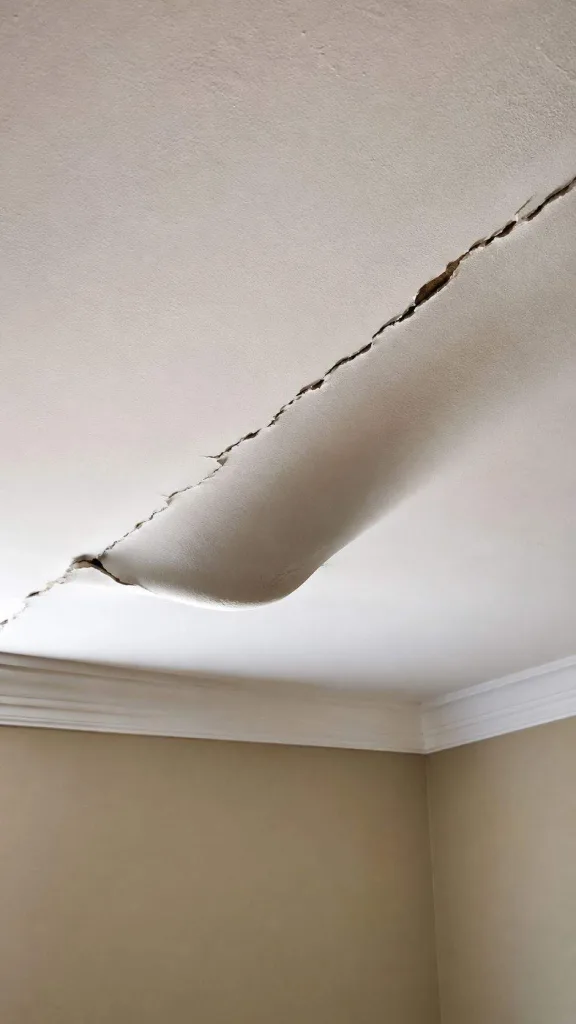
Ceiling Crack with Sagging
A crack surrounded by a drooping or bowing section. The drywall is pulling away from the joists. This is not cosmetic. The ceiling panel may be water-saturated. It may have lost its fasteners. A crack combined with sagging means the panel can fall. Clear the area underneath. Do not stand under a sagging section. Check for water from above.
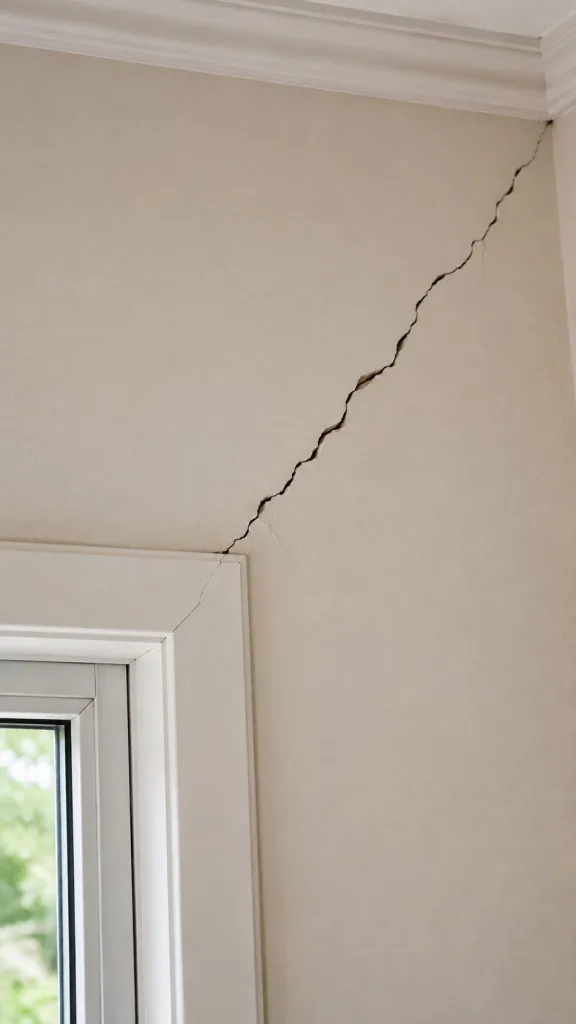
Diagonal Crack from Door or Window Corner
A crack running at a 45-degree angle from the upper corner of a door or window frame toward the ceiling. This is a foundation crack indicator. The building frame is shifting unevenly. Stress concentrates at wall openings. If the crack is wider than 1/8 inch, call a foundation repair contractor.
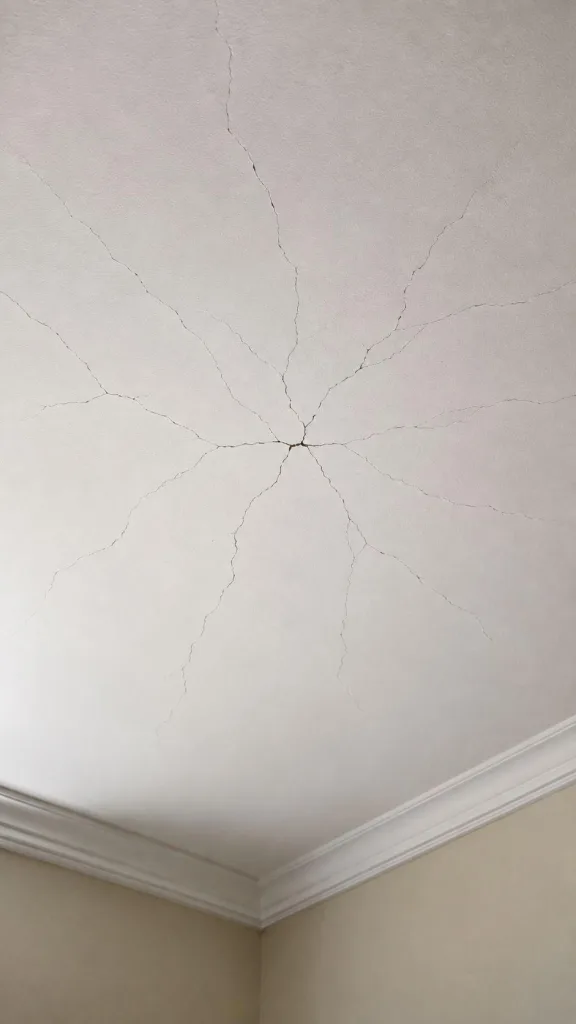
Spider Web Cracks
Fine lines radiating from a central point. Surface-deep only. Caused by multiple paint layers shrinking over decades. This is a paint issue, not a structural issue. Sand and repaint.
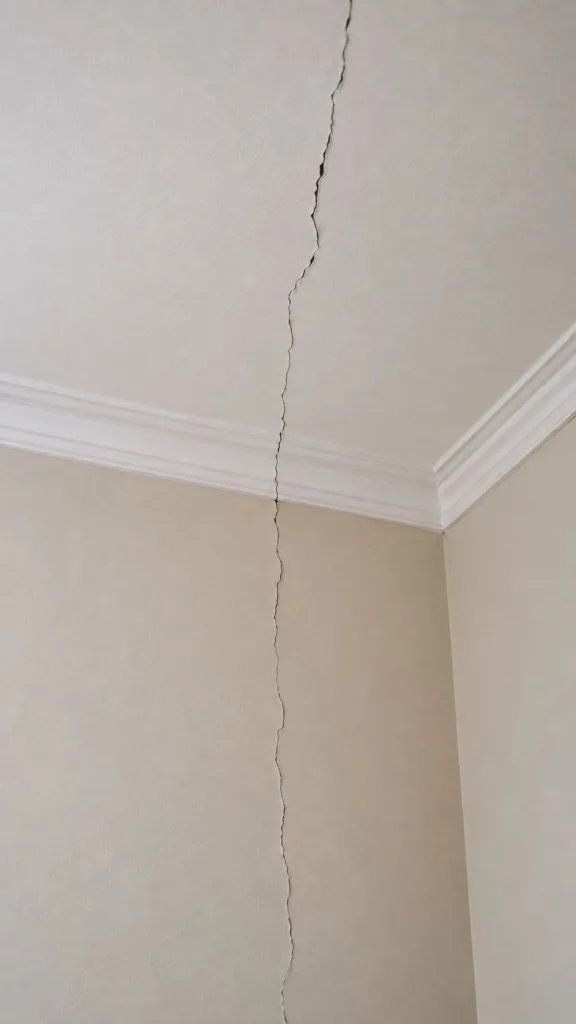
Cracks That Run Ceiling to Wall
A single crack that crosses from the ceiling surface down onto the wall. This means the building frame is under stress. Foundation movement, severe settling, or earthquake damage cause this. Call a structural engineer. Do not patch until the cause is resolved.
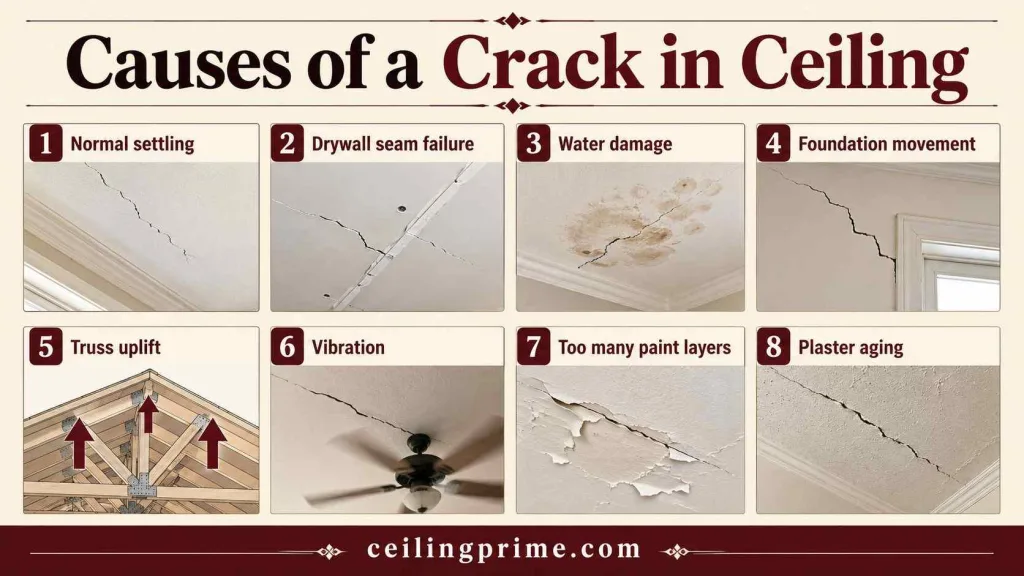
8 Causes of a Crack in Ceiling
1. Normal settling: Every home settles into the ground over time. Seasonal temperature and humidity changes cause wood framing to expand and contract. This produces hairline cracks in the first few years. It is the most common cause of ceiling cracking.
2. Drywall seam failure: Paper tape loses adhesion at the joint between panels. The compound dries, shrinks, and cracks along the seam line. This creates a straight crack along the drywall seam.
3. Water damage: A roof leak or plumbing leak sends moisture through the drywall. The wet drywall weakens and cracks around the water stain. Brown discoloration surrounds the crack.
4. Foundation movement: Uneven settlement, soil erosion, or hydrostatic pressure shifts the building frame. Diagonal cracks from door and window corners are the classic sign. Cracks wider than 1/8 inch indicate active movement.
5. Truss uplift: Roof trusses expand with humidity and pull the ceiling center upward. The movement creates cracks where the ceiling meets the interior walls. The cracks open and close with the seasons.
6. Vibration: Heavy foot traffic on the floor above, nearby construction, or slamming doors create vibration that loosens drywall tape and compound. Cracks appear along joints and at stress points.
7. Too many paint layers: 5 to 10 coats of paint add weight and thickness. The combined coating cracks in spider web patterns as it shrinks and ages.
8. Plaster aging: Plaster ceilings in pre-1950s homes lose their bond to the wood lath behind them over decades. Map-like cracks appear across the surface following the lath pattern.
Ceiling Cracks: When to Worry
Not every crack in ceiling drywall needs professional attention. Use this checklist.
| Do Not Worry | Worry and Call a Pro |
| Hairline width (less than 1/16 inch) | Width greater than 1/8 inch |
| Follows a straight drywall seam | Runs diagonally from door/window corners |
| Has not changed in months | Has grown longer or wider in 30 days |
| No discoloration or dampness | Accompanied by brown stains or wet surface |
| Ceiling feels firm when pressed | Ceiling sags, feels soft, or is spongy |
| Only on the ceiling surface | Continues from ceiling down onto the wall |
Mark both ends of any concerning crack with pencil and date. Measure the width. Check again in 30 and 60 days. Growth means the cause is active.
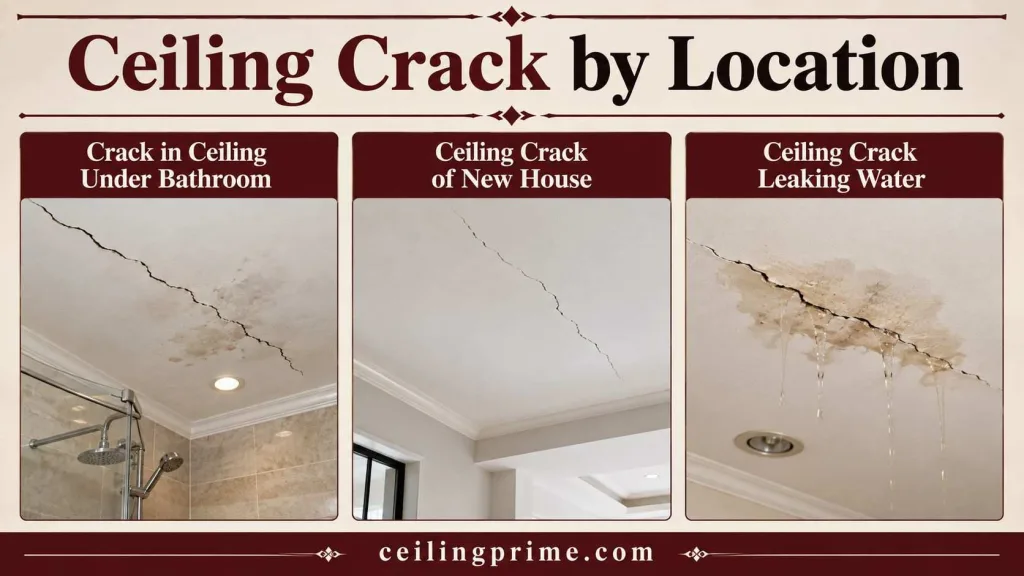
Ceiling Crack by Location
Crack in Ceiling Under Bathroom
A ceiling crack directly below a bathroom points to a plumbing leak. Shower pans, toilet wax rings, cracked tile grout, and supply pipe joints are the most common sources. The crack usually appears with brown or yellow discoloration. Fix the plumbing source first. Let the drywall dry. Then patch. Check for mold in the ceiling cavity before closing the surface.
Ceiling Crack of New House
New homes crack during the first 1 to 3 years. The foundation settles into the soil. Wood framing dries out and shrinks. Drywall compound contracts. This produces hairline cracks along seams and at corners. These are normal and cosmetic. Most builders will address them under warranty at the 1-year mark. A ceiling crack in a new house wider than 1/8 inch warrants a builder callback.
Ceiling Crack Leaking Water
Active water dripping through a ceiling crack is an emergency. Turn off the water supply if plumbing is the source. Place a tarp over the roof if it is raining. Put a bucket under the drip. Poke a small drain hole if the ceiling is bulging to relieve water pressure. Do not stand under a wet sagging ceiling. Call a plumber or roofer immediately.
Drywall Ceiling Cracks vs Plaster Ceiling Cracks
| Feature | Drywall Crack | Plaster Crack |
| Common in | Homes built after 1950s | Homes built before 1950s |
| Typical pattern | Straight along seams | Map-like grid following lath |
| Cause | Tape failure, settling | Age, key bond failure |
| Repair method | Retape with compound | Skim coat or replace with drywall |
| DIY difficulty | Easy to moderate | Moderate to hard |
A plaster ceiling crack is harder to repair than drywall. Plaster is rigid. Joint compound does not bond to it as well. Calcimine paint (common in pre-1950s homes) makes adhesion worse. Use a shellac-based primer on plaster before patching.
How to Fix a Ceiling Crack (Step by Step)
Fix a Hairline or Seam Crack in Drywall
- Step 1: Scrape loose material from the crack with a putty knife.
- Step 2: If the old tape is lifting, pull it off. Apply new paper tape over a thin bed of joint compound.
- Step 3: Apply a second coat of compound. Feather 4 to 6 inches past the crack on each side.
- Step 4: Let dry. Sand with 120-grit. Apply a third coat if needed.
- Step 5: Final sand with 220-grit. Prime with stain-blocking primer. Paint with two coats of flat ceiling paint.
Fix a Crack with Water Damage
- Step 1: Stop the water source. Let the area dry completely (24 to 48 hours with fans).
- Step 2: If the drywall is soft, cut the damaged section back to the nearest joists. Replace with new drywall.
- Step 3: If the drywall is firm, scrape the crack clean. Apply stain-blocking primer to seal the water stain.
- Step 4: Tape, compound, sand, prime, and paint.
Fix a Crack in Plaster Ceiling
- Step 1: Scrape loose plaster from the crack. Widen the crack slightly with a utility knife for compound to grip.
- Step 2: Apply self-adhesive fiberglass mesh tape over the crack.
- Step 3: Cover with 2 to 3 coats of joint compound. Feather each coat wider than the last.
- Step 4: Sand smooth. Prime with shellac-based primer. Paint.
- Step 5: If the plaster around the crack feels hollow when tapped, the plaster has lost its bond to the lath. The section needs removal and replacement with drywall.
Fix a Crack in Ceiling Paint Only
If the crack is only in the paint layer (spider web pattern, surface-only), sand the area to remove loose paint. Prime. Repaint. No taping or compound needed. This is the simplest ceiling crack repair.
Who to Call for Ceiling Cracks?
- Hairline or seam cracks: DIY repair. No professional needed.
- Water stain cracks: Call a plumber (if under a bathroom or kitchen) or a roofer (if on the top floor or after rain).
- Diagonal corner cracks or ceiling-to-wall cracks: Call a foundation repair contractor or structural engineer.
- Sagging ceiling with cracks: Call a drywall contractor or general contractor.
- Plaster ceiling cracks covering large areas: Call a plastering specialist or drywall contractor.
- Cracks in pre-1986 popcorn ceiling: Call an asbestos testing company before any repair.
- A ceiling crack that keeps returning after repair: Call a structural engineer to find the root cause.
Ceiling Crack Repair Costs in 2026
| Repair Type | 2026 Cost |
| DIY hairline/seam crack (putty + paint) | $15–$40 |
| DIY retape + compound + paint | $25–$60 |
| Professional crack repair | $100–$400 |
| Water damage crack + drywall replacement | $200–$800 |
| Plaster ceiling skim coat | $200–$800 |
| Foundation inspection | $300–$800 |
| Foundation repair (if needed) | $2,000–$15,000+ |
Identify, Monitor, and Fix the Right Way
A ceiling crack tells you something about your home. Hairline cracks tell you the house settled. Seam cracks tell you the tape failed. Brown cracks tell you water is getting in. Diagonal cracks tell you the foundation shifted. Sagging cracks tell you the ceiling is failing. Match the crack pattern to the cause. Fix the cause first. Then fix the crack.
Frequently Asked Questions
Are ceiling cracks normal in old houses?
Yes. Settling, plaster aging, and paint buildup cause cosmetic cracks over decades. Hairline cracks and map-pattern plaster cracks are expected in homes over 30 years old. Diagonal cracks and sagging are not normal at any age.
Should I worry about a crack in ceiling of my new home?
Hairline cracks along drywall seams are normal in the first 1 to 3 years. Report them to your builder at the 1-year warranty mark. Cracks wider than 1/8 inch or diagonal patterns are not normal and warrant immediate inspection.
Can I just paint over a ceiling crack?
Only if the crack is in the paint layer only. If the crack is in the drywall or plaster, painting over it without taping and compound means the crack shows through the new paint within weeks.
How do I stop ceiling cracks from coming back?
Fix the root cause. Settling cracks stop after the first few years. Tape joint cracks need proper retaping. Water cracks need the leak fixed. Foundation cracks need the foundation repaired. Without addressing the cause, the crack returns.
Is a crack in ceiling covered by insurance?
Insurance covers cracks from sudden events (burst pipe, storm damage). It does not cover cracks from normal settling, age, or deferred maintenance. Document the crack with photos and contact your insurer within 24 hours for covered events.
How can I tell if a ceiling crack is structural?
3 signs: (1) the crack is wider than 1/8 inch, (2) the crack runs diagonally from a door or window corner, (3) the crack continues from the ceiling down onto the wall. Any of these means call a professional.





2 Comments