Ceiling Paint Peeling: 7 Causes, How to Fix & Repair It
Ceiling paint peeling starts with a small crack. A bubble forms next to it. Then a strip lifts away. Within weeks, paint flakes drop onto furniture. The ceiling looks worse than before you painted.
This problem has 7 common causes. Each one needs a different fix. Painting over peeling paint without fixing the cause makes it peel again. This guide covers all 7 causes. It covers the step-by-step repair process. It covers primer selection, prevention tips, room-specific advice, and when to call a professional.
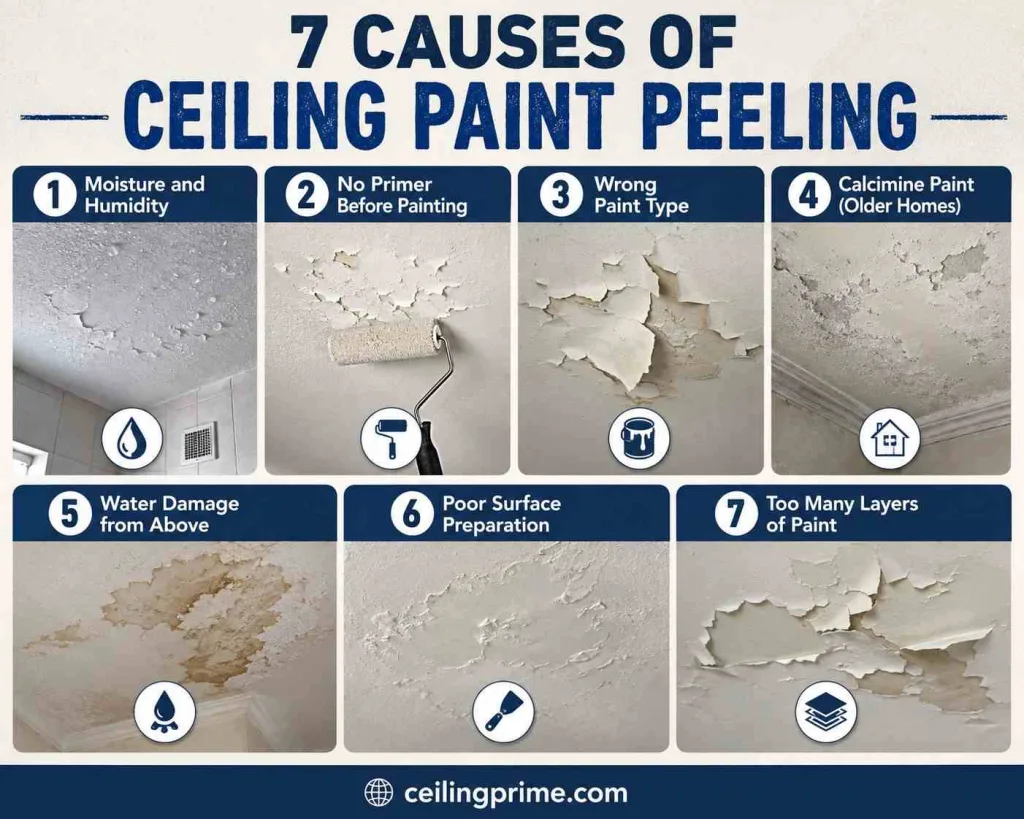
7 Causes of Ceiling Paint Peeling
1. Moisture and Humidity
Moisture is the number one cause. Steam from showers rises to the ceiling. It soaks into drywall behind the paint. The paint film loses adhesion to the surface. It bubbles first, then peels in sheets. Bathrooms without exhaust fans suffer the most. Kitchens above stoves are the second worst spot. Paint peeling on bathroom ceilings almost always means humidity.
2. No Primer Before Painting
Paint needs primer to stick to drywall. Without primer, the paint bonds poorly. It peels within months or after one moisture event. New drywall absorbs the first coat unevenly. Joint compound absorbs differently than paper-faced drywall. Primer seals and unifies the surface before paint.
3. Wrong Paint Type
Latex paint over oil-based paint peels. The two chemistries do not bond together. Older homes often have oil-based ceiling paint. A new coat of latex peels right off. Test the existing paint with denatured alcohol. If the paint softens, it is latex. If it does not, it is oil-based.
4. Calcimine Paint (Older Homes)
Calcimine is a chalky coating used in homes before the 1950s. It was cheap and easy to apply. Modern paint does not stick to calcimine. The heavier modern coating pulls the calcimine away. The result is large sheets of paint falling off. Rub the ceiling with a damp finger. If white chalk comes off, it is calcimine.
5. Water Damage from Above
A roof leak or plumbing leak sends water through the drywall. The water dissolves the paint bond. Brown stains appear first. Peeling follows the stain line. The paint lifts in patches around the wet area. Fixing the leak is step one. Painting is step two.
6. Poor Surface Preparation
Painting over dirt, dust, or grease causes peeling. Kitchen ceilings collect cooking grease over years. Dust settles on every ceiling over time. Paint does not bond to a dirty surface. The bond fails within weeks or months. Cleaning before painting is not optional.
7. Too Many Layers of Paint
Each layer of paint adds weight. After 5 to 10 coats, the combined weight exceeds the bond strength. The bottom layers let go of the drywall. Paint peels in thick, multi-layer sheets. This is common in older rental properties. Scraping down to bare surface is the only fix.
How to Identify the Cause of Ceiling Paint Peeling?
Peeling ceiling paint can have several causes. Check the signs around the damaged area to find the main problem.
- Check for Moisture: Brown stains, bubbles, soft spots, or damp areas often indicate a leak or water damage.
- Look for High Humidity: Peeling in bathrooms, kitchens, or laundry rooms may result from excess moisture and poor ventilation.
- Check Paint Preparation: Peeling on dry ceilings can happen when the surface was not cleaned or primed properly.
- Check for Incompatible Paint: Different paint types may peel when applied together without the right primer.
- Inspect Older Ceilings: Older homes may have calcimine paint, which can cause new paint to lose adhesion.
- Examine the Layers: Thick or separating paint layers usually point to poor adhesion or improper application.
How to Tell Why Your Ceiling Paint Is Peeling?
| What You See | Most Likely Cause | What to Check |
| Bubbling near shower | Moisture | Exhaust fan and condensation |
| Brown/yellow stain | Water leak | Plumbing or roof |
| Large sheets peeling | Poor adhesion/calcimine | Older paint layers |
| Chalky white residue | Calcimine | Wet-finger test |
| Peeling around cooking area | Grease | Ceiling cleanliness |
| Peeling over entire ceiling | Multiple layers/poor prep | Older coatings |
| Paint lifts when recoating | Incompatible coating | Existing paint type |
What Does Peeling Ceiling Paint Look Like?
- Peeling: paint separates from the surface in strips or sheets.
- Flaking: small chips or flakes break away.
- Bubbling: raised pockets form under the paint.
- Blistering: larger bubbles caused by moisture or heat.
- Cracking: paint film develops lines before separating.
- Chalking: powdery residue appears on the surface.
How to Fix Ceiling Paint Peeling on Drywall?
This 7-step process works for drywall ceilings in most homes. Stop the moisture source first if moisture is the cause.
- Step 1: Scrape all loose and peeling paint. Use a 6-inch drywall knife held at a low angle. Scrape until you reach paint that is firmly bonded. Remove every flake.
- Step 2: Sand the edges. Use 120-grit sandpaper to feather the edges where good paint meets bare drywall. This prevents a visible ridge after repainting.
- Step 3: Clean the surface. Wipe the scraped area with a damp cloth. Remove all dust, grease, and debris. Let it dry completely.
- Step 4: Apply stain-blocking primer. One coat. Let dry 1 to 2 hours.
- Step 5: Skim coat if needed. Apply a thin layer of joint compound over the scraped area. Let dry. Sand smooth with 150-grit sandpaper. This levels the surface where paint was removed.
- Step 6: Prime the skim coat. Apply another coat of primer over the patched area. Let dry.
- Step 7: Paint two coats. Apply flat ceiling paint with a thick-nap roller or airless sprayer. Let the first coat dry 2 to 4 hours. Apply the second coat. The peeling cycle is broken when adhesion is solid from primer through topcoat.
Before Fixing Peeling Ceiling Paint
Here are some of the precautions you need to follow before fixing the ceiling paint.
- Check for active leaks.
- Turn off nearby electrical fixtures if water may have reached them.
- Wear safety glasses.
- Wear a dust mask/respirator appropriate for the material.
- Protect furniture and flooring.
- Test old paint for lead before aggressive scraping.
- Stop if the drywall is soft, swollen, or badly damaged.
- Check for mold before repainting.
How to Fix Ceiling Paint Peeling on Plaster?
Plaster ceilings need extra steps. Calcimine under the paint is common. The plaster surface is harder and less absorbent than drywall.
- Step 1: Test for calcimine. Wet your finger. Rub the ceiling surface. White chalk on your finger means calcimine is present.
- Step 2: If calcimine is present, scrape all peeling paint down to bare plaster. Use a wide scraper.
- Step 3: Wash the bare plaster with a mixture of warm water and TSP (trisodium phosphate). This removes calcimine residue. Rinse with clean water. Let dry overnight.
- Step 4: Apply Zinsser BIN shellac primer. This is the only primer that reliably bonds to calcimine-affected plaster. One to two coats.
- Step 5: Skim coat any rough areas with joint compound. Sand smooth.
- Step 6: Prime the skim coat areas again.
- Step 7: Paint with two coats of flat ceiling paint.
If peeling returns after this process, the calcimine has penetrated too deep. The permanent fix is installing drywall over the plaster surface. That is the only guaranteed long-term solution.

Which Primer Stops Ceiling Paint Peeling?
| Primer | Type | Best For |
| Zinsser BIN | Shellac-based | Calcimine, water stains, smoke, tannin bleed |
| Kilz Original | Oil-based | Water stains, odor, smoke damage |
| Zinsser Guardz | Acrylic sealer | Fragile drywall, damaged surfaces, popcorn texture |
| Zinsser Bulls Eye 1-2-3 | Water-based | General purpose, low odor, quick dry |
| INSL-X Stix | Bonding primer | Glossy surfaces, latex over oil paint |
Regular latex primer does not fix peeling. It does not block stains. It does not bond to calcimine or oil-based paint. Always use a specialty primer for peeling paint problems.
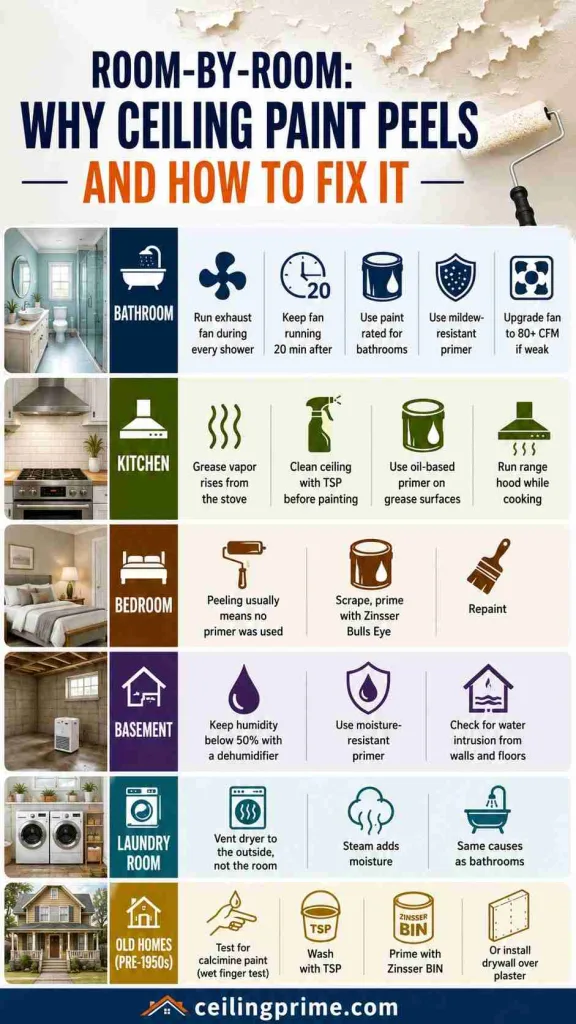
Room-by-Room: Why Ceiling Paint Peels and How to Fix It?
- Bathroom: Steam causes 90% of bathroom ceiling peeling. Run the exhaust fan during every shower. Keep it running 20 minutes after. Use a paint rated for bathrooms. Use a mildew-resistant primer. If the fan is weak, upgrade to 80+ CFM.
- Kitchen: Grease vapor rises from the stove. It coats the ceiling over years. New paint does not stick to grease. Clean the ceiling with TSP before painting. Use an oil-based primer on grease-heavy surfaces. Run the range hood while cooking.
- Bedroom: Peeling in bedrooms usually means no primer was used. The original painter skipped the primer coat. Or the drywall was painted before the joint compound dried. Scrape, prime, and repaint.
- Basement: Humidity and condensation cause basement ceiling peeling. Run a dehumidifier to keep humidity below 50%. Use moisture-resistant primer. Check for water intrusion from walls and floors before repainting.
- Laundry room: Steam from the dryer and washer adds moisture. Vent the dryer to the outside, not the room. Paint peeling in laundry rooms mirrors the same causes as bathrooms.
- Old homes (pre-1950s): Calcimine paint is the most likely cause. Test for it with the wet finger method. Wash with TSP. Or install drywall over the plaster for a permanent fix.
How to Prevent Ceiling Paint Peeling?
- Always prime before painting. No exceptions. Even over previously painted surfaces.
- Use flat ceiling paint. Flat finish hides imperfections. It also breathes better than gloss or satin.
- Run exhaust fans during and after showers and cooking. Twenty minutes minimum after the water or stove is off.
- Keep indoor humidity below 50% with dehumidifiers.
- Fix roof and plumbing leaks immediately. Do not paint over water damage without fixing the source.
- Clean the ceiling before repainting. Use TSP or a degreaser on kitchen ceilings.
- Do not apply latex paint directly over oil-based paint. Use a bonding primer first.
- Scrape all loose paint before repainting. New paint over loose paint peels faster.
Repair Costs for Peeling Ceiling Paint in 2026
| Repair | 2026 Cost |
| DIY scrape, prime, and repaint (one room) | $50–$150 (materials) |
| Professional scrape and repaint | $200–$600 per room |
| Skim coat and repaint | $300–$800 per room |
| Calcimine removal + BIN primer + paint | $400–$1,000 per room |
| Drywall over plaster ceiling (permanent fix) | $800–$2,500 per room |
| Water damage repair + repaint | $300–$1,500 |
DIY saves $150–$500 per room compared to professional work. The biggest cost is your time: scraping and prepping takes longer than painting. Budget 1 to 2 days per room for a DIY peeling paint repair.
When Is Peeling Paint Too Bad to Repair?
Here are the explanations about when you need to repair the peeling paint.
Repair is usually reasonable when:
- Only small areas are peeling.
- Drywall is firm.
- There is no active leak.
- The remaining paint is well bonded.
- Damage is superficial.
Consider replacing the ceiling when:
- Drywall is sagging.
- The drywall is soft or swollen.
- Large sections have water damage.
- Mold has affected the material.
- Multiple layers are failing.
- Nearly the entire ceiling has detached paint.
Where Is the Moisture Coming From?
Ceiling paint usually peels when moisture gets behind the paint. The main causes are:
- Roof or plumbing leaks: Look for brown stains, dripping, or sagging drywall.
- Poor ventilation: Bathrooms and kitchens can trap steam and cause bubbling or peeling.
- Attic problems: Poor insulation, condensation, or leaking ducts can add moisture.
- No active moisture: Poor surface preparation, missing primer, or incompatible paint can also cause peeling.
Finding the source is important before repainting the ceiling. When repairing or repainting a ceiling, proper protective equipment is essential to guard against falling paint chips, dust, and other debris. Wearing suitable safety eyewear from SafeStyle can help protect your eyes while working on ceiling maintenance and home improvement projects
Fix the Cause, Then Fix the Paint
Ceiling paint peeling is a symptom. The cause is moisture, bad prep, wrong paint, calcimine, water damage, grease, or too many layers. Fix the cause first. Scrape all loose paint. Prime with the right specialty primer. Then repaint. The paint stays on when the surface underneath is clean, dry, and properly primed.
If you live in Austin and need ceiling painting, popcorn removal, or a smooth-finish upgrade, CeilingPrime handles it all. Call (512) 000-0000 or visit ceilingprime.com for a free estimate.
Frequently Asked Questions
Why does my ceiling paint keep peeling after I fix it?
The cause was not fixed. If moisture is the cause, priming and painting without fixing the moisture source makes paint peel again. If calcimine is underneath, regular primer does not bond to it.
Can I just paint over peeling ceiling paint?
No. New paint over peeling paint peels faster. The loose paint underneath pulls the new coat off. Scrape all loose paint first. Sand the edges. Prime. Then paint.
Is ceiling paint peeling dangerous?
In most cases, no. But lead paint in homes built before 1978 is a hazard. Peeling lead paint creates toxic dust. Test for lead before scraping in older homes. Call a certified lead abatement contractor if lead is present.
What is the best paint for bathroom ceilings?
Use a paint labeled for bathrooms or high-moisture areas. Benjamin Moore Aura Bath and Spa, Sherwin Williams Duration, or Behr Premium Plus are popular choices. Always prime with a mildew-resistant primer first.
How do I know if my ceiling has calcimine paint?
Wet your finger. Rub the ceiling. If white chalk comes off on your finger, calcimine is present. It feels like rubbing a dusty chalkboard. Common in homes built before the 1950s.
Should I hire a professional for peeling ceiling paint?
DIY works for single rooms with minor peeling. Hire a pro if the peeling covers more than 50% of the ceiling. Hire a pro for calcimine removal, plaster ceilings, and lead paint testing. Professional work is faster and more durable.



One Comment