
High Ceiling: Heights, Types, Pros, Cons & How to Decorate
A high ceiling starts at 9 feet and goes up from there — 10, 12, 16, even 20+ feet in two-story great rooms. Standard ceiling height in the United States is 8 feet. Anything above 9 feet qualifies as a high ceiling in residential construction. Homes built since the early 2000s default to 9-foot ceilings on the main floor, and many new builds push to 10 or 12 feet in living rooms, entryways, and kitchens.
High ceilings look dramatic, flood rooms with natural light, and increase perceived square footage. But they also cost more to heat and cool, create echo, and make rooms feel cold or uninviting if not decorated correctly. This guide covers the standard heights, 4 types of tall ceilings, the full list of pros and cons, 8 proven decorating tips from interior design experts like Kylie M Interiors, and the real cost impact on energy bills and home value.
Standard High Ceiling Heights
| Height | Classification | Where It Is Common |
| 8 feet | Standard (low by modern standards) | Pre-2000 homes, basements |
| 9 feet | New standard for main floors | Most new construction since 2000s |
| 10 feet | High ceiling (entry level) | Living rooms, kitchens, tray ceilings |
| 12 feet | High ceiling (mid-range) | Great rooms, open-concept layouts |
| 16–20+ feet | Very high (vaulted/cathedral) | Two-story foyers, great rooms, entryways |
An 8-foot ceiling feels compact. A 9-foot ceiling feels comfortable. At 10 feet and above, the room starts to feel open and airy — and the decorating challenges begin.
4 Types of High Ceiling
Let’s discuss different types of High Ceiling.
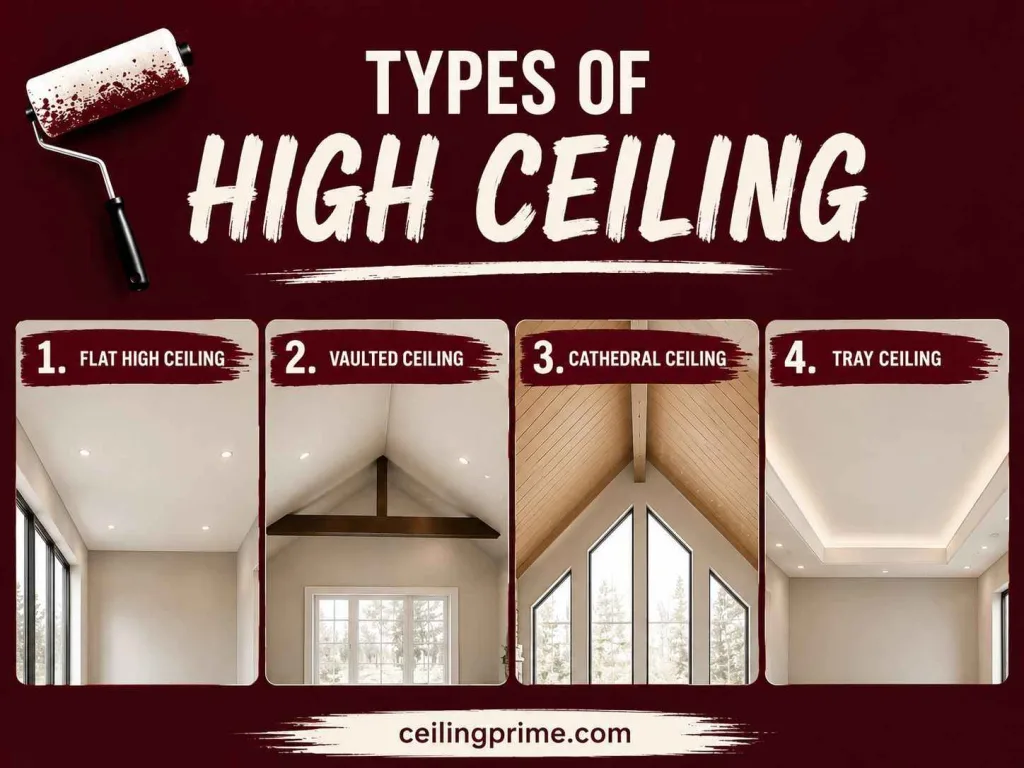
1. Flat high ceiling: A standard flat drywall ceiling at 10+ feet. The simplest high ceiling type. Common in modern open-concept homes. Clean, uniform, and easy to paint.
2. Vaulted ceiling: The ceiling slopes upward following the angle of the roof pitch. One side may be higher than the other, or both sides angle to a center peak. Vaulted ceilings create dramatic vertical space in living rooms and bedrooms.
3. Cathedral ceiling: Both sides of the ceiling follow the roof pitch and meet at a center ridge. The ceiling mirrors the shape of a church interior. Cathedral ceilings use exposed beams or tongue-and-groove wood as design features.
4. Tray ceiling: A recessed center section that sits higher than the perimeter. The standard perimeter height is 9 feet with the center tray at 10 or 11 feet. Tray ceilings add architectural interest without the full cost of raising an entire ceiling.
7 Pros of a High Ceiling
- Rooms feel larger: Vertical space creates the perception of more square footage. A 300 sq ft room with a 12-foot ceiling feels bigger than the same room with 8-foot ceilings.
- More natural light: Taller walls accommodate bigger windows, clerestory windows, and skylights. More glass means more daylight.
- Better ventilation and air circulation: Warm air rises and spreads across a larger volume. Ceiling fans on high ceilings circulate air through the full room.
- Design flexibility: A high ceiling provides wall space for tall bookcases, floor-to-ceiling fireplaces, gallery walls, oversized artwork, and statement chandeliers.
- Increased home value: Homes with tall ceilings sell for more per square foot than comparable homes with 8-foot ceilings. Buyers perceive them as premium features.
- Loft and mezzanine potential: Ceilings above 16 feet can accommodate a loft, reading nook, or mezzanine walkway — adding usable square footage to the vertical space.
- Dramatic architectural presence: A room with a high ceiling creates a grand first impression. Entryways, great rooms, and dining rooms benefit the most from this effect.
5 Cons of a High Ceiling
- Higher energy costs: Heat rises and pools at the ceiling, making rooms colder in winter and harder to cool in summer. High ceiling rooms cost 20–40% more to heat and cool than standard-height rooms.
- Echo and noise: Tall, open spaces amplify sound. Conversations echo. TV audio bounces off the walls. Hard surfaces (wood floors, drywall, glass) make the problem worse.
- Hard to decorate: Empty wall space above 8 feet is difficult to fill. Furniture can look undersized. The room can feel cold, impersonal, and institutional if not styled correctly.
- Maintenance difficulty: Changing light bulbs, painting, cleaning ceiling fans, and repairing drywall all require tall ladders or scaffolding. A simple task that takes 5 minutes on an 8-foot ceiling takes 30 minutes and safety gear on a 16-foot ceiling.
- Higher construction cost: Building with high ceilings uses more drywall, framing, paint, and HVAC capacity. A 10-foot ceiling adds 10–15% to construction costs compared to a standard 8-foot ceiling.
8 Ways to Make a High Ceiling Room Feel Cozy
A high ceiling creates drama, but it can also make a room feel cold or uninviting. These 8 decorating strategies bring warmth, intimacy, and visual balance to tall spaces.
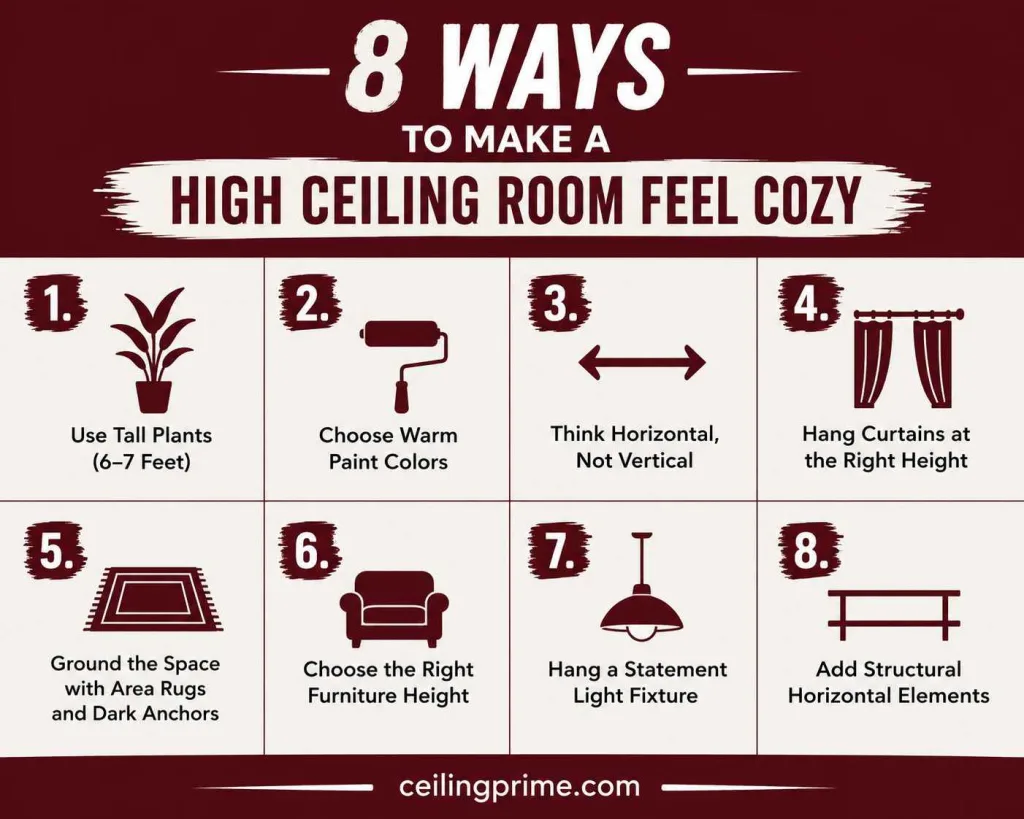
1. Use Tall Plants (6–7 Feet)
A tall fiddle leaf fig, olive tree, or ficus tree fills vertical space naturally and stops the eye at a comfortable height. The foliage absorbs echo — a common problem in rooms with high ceilings. Keep plant height under 8 feet. Taller plants draw the eye up instead of anchoring it.
2. Choose Warm Paint Colors
In color psychology, warm colors advance and cool colors recede. A warm wall color like Sherwin Williams Natural Linen or Benjamin Moore Edgecomb Gray makes a room with tall ceilings feel closer and more intimate. Cool grays and whites make the same room feel larger and colder. For the ceiling itself, a warm neutral one shade darker than the walls can make it feel lower without looking heavy. Sherwin Williams Aesthetic White and Benjamin Moore Manchester Tan are popular ceiling choices for vaulted rooms.
3. Think Horizontal, Not Vertical
Horizontal lines draw the eye side to side and make a room feel wider. Vertical lines draw the eye up and make the ceiling feel taller. Use horizontal artwork (landscape orientation, not portrait). Choose furniture with horizontal proportions — long low consoles, wide sofas, and rectangular coffee tables. Avoid tall, narrow bookcases and vertical tile patterns.
4. Hang Curtains at the Right Height
Mount curtain rods 4 to 6 inches above the window frame — not at the ceiling line. Hanging drapes from the ceiling on a 12-foot or taller wall makes the furniture below look tiny and the room feel out of proportion. Heavy drapery fabric adds warmth and absorbs echo.
5. Ground the Space with Area Rugs and Dark Anchors
Give the eye a low-lying anchor. A large area rug defines the seating area and pulls the visual weight down. Dark furniture pieces, a stained wood coffee table, or a painted kitchen island ground the room and stop the eye from drifting upward.
6. Choose the Right Furniture Height
Furniture in a room with tall ceilings should have slightly higher backs than standard pieces. A sofa with a 36-inch back looks more proportional under a 12-foot ceiling than one with a 28-inch back. Low-profile furniture makes the ceiling look taller and the room feel emptier.
7. Hang a Statement Light Fixture
A large chandelier or oversized pendant fills the upper void and creates a warm glow at human level. The bottom of the fixture should hang 7 to 8 feet above the floor in living rooms, or 30 to 36 inches above the table in dining rooms. A horizontal light fixture (wide, not tall) keeps the eye from traveling up.
8. Add Structural Horizontal Elements
Wood beams, shiplap panels, crown molding, a board and batten wainscot, or a belly band installed at 8 to 9 feet create a visual break that stops the eye below the ceiling line. These elements add texture, warmth, and architectural character.
Temperature and Sound in High Ceiling Rooms
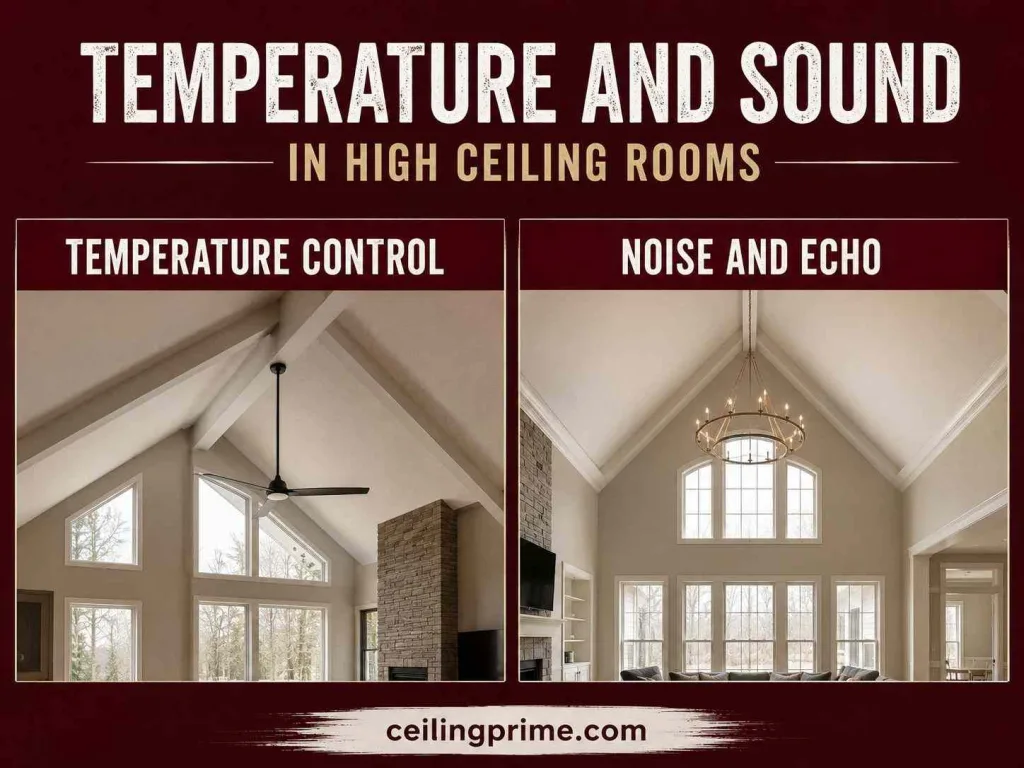
Temperature Control
Heat rises. In a room with a high ceiling, warm air pools at the top while the living zone stays cold. A large-diameter ceiling fan set to reverse (clockwise in winter) pushes warm air back down. In summer, the fan runs counterclockwise to create a cooling breeze. Zoned HVAC systems, which direct heating and cooling to specific rooms, are the most efficient solution for homes with tall ceilings.
Noise and Echo
Hard surfaces in a tall room create echo. Sound bounces off drywall, glass, and wood floors with nothing to absorb it. Reduce echo by adding soft materials: upholstered furniture, heavy curtains, area rugs, throw pillows, and acoustic panels hidden behind artwork. Plants with dense foliage (fiddle leaf fig, olive tree, ficus) help diffuse sound.
Does a High Ceiling Increase Home Value?
Yes. Homes with tall ceilings sell for more per square foot than comparable homes with 8-foot ceilings. Buyers perceive open, airy rooms as more luxurious. A 10-foot ceiling is expected in modern mid-range homes. A 12-foot ceiling or vaulted great room is a premium feature that commands 5–10% higher sale prices in many markets.
The tradeoff: higher construction costs ($15–$25 per linear foot of additional wall height), higher energy bills (20–40% more for heating and cooling), and higher maintenance costs for painting and repairs. Most homeowners recover the extra construction cost at resale. Homes with a high ceiling sell faster because the visual impact creates a strong first impression during showings.
Frequently Asked Questions
What is the standard high ceiling height?
Anything above 9 feet is considered a high ceiling in residential construction. The most common high ceiling heights are 10, 12, and 16 feet. The new standard for main floors in U.S. homes is 9 feet.
What is the difference between a vaulted ceiling and a cathedral ceiling?
A vaulted ceiling can have any angled shape — one slope, two slopes, or an asymmetric pitch. A cathedral ceiling has two equal slopes that meet at a center ridge, mirroring the shape of a church roof. Both create dramatic vertical space.
Are high ceilings more expensive to heat and cool?
Yes. Rooms with tall ceilings hold more air volume. Heat rises and concentrates at the top while the living area stays cold. Energy costs run 20–40% higher than rooms with 8-foot ceilings. Ceiling fans and zoned HVAC systems reduce the gap.
What paint color is best for a room with high ceilings?
Warm neutrals like Sherwin Williams Natural Linen, Benjamin Moore Edgecomb Gray, or Sherwin Williams Aesthetic White make tall rooms feel cozier. Cool colors (gray, blue-white) make the room feel larger and colder. Painting the ceiling a shade darker than the walls can make it feel lower.
How do you clean a high ceiling?
Use an extension pole with a soft brush or duster. For cobwebs, a telescoping vacuum attachment works without a ladder. For painting, an airless sprayer with a tip extension reaches 20+ feet from the floor. Never stand on furniture — use a proper aluminum step ladder or scaffolding.
Do high ceilings make rooms echo?
Yes. Sound bounces off hard surfaces in tall, open rooms. Reduce echo with soft furnishings: heavy curtains, upholstered furniture, area rugs, acoustic panels, and plants with dense foliage.






One Comment