Termites in Ceiling: Signs, Sounds, Treatment & How to Fix the Damage
Ceiling termite infestations are harder to detect than termites in walls or floors. The damage happens above your head, behind drywall, inside joist cavities, and around wooden structural members you never see. By the time visible signs appear on the ceiling surface, the colony has been feeding for months or years.
This guide covers the 8 early warning signs, what termites in ceiling areas sound like, how they reach the ceiling in the first place, treatment options for active infestations, damage repair for drywall and structural framing, and prevention strategies. Every section covers a different aspect with no repeated details.
How Do Termites Reach the Ceiling?
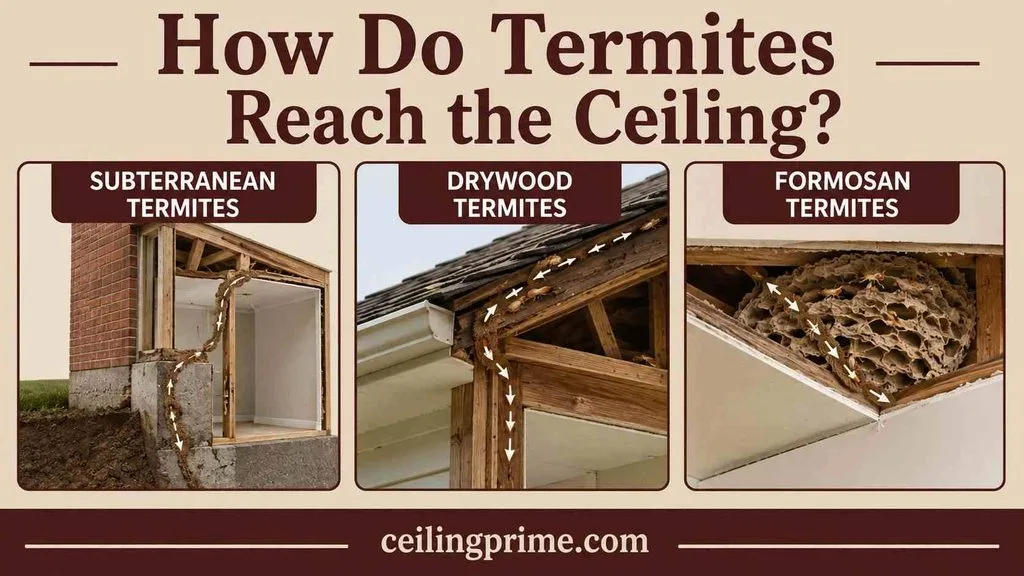
Termites do not fly directly to the ceiling. They work upward from the ground through the building structure. Understanding their path explains why termites in ceiling spaces are a sign of a large, established colony.
- Subterranean termites: Enter through the foundation. Build mud tubes from the soil up through cracks in the slab, along foundation walls, through crawlspaces, and inside wall cavities. They travel upward through wood framing — studs, headers, joists — until they reach the ceiling structure. By the time they are in the ceiling, they have passed through every floor below.
- Drywood termites: Enter through exposed wood at the roofline. They fly to the roof, eaves, or attic vents during swarming season. They colonize the roof framing and attic joists first, then work downward into the ceiling drywall and joists.
- Formosan termites: A subterranean species but far more aggressive. They build aerial nests (carton nests) inside wall and ceiling cavities without maintaining a connection to the ground. A mature Formosan colony can consume a foot of 2×4 lumber per month.
If you see termites behind ceiling drywall, the infestation is not limited to the ceiling. The colony has a path through the building structure. Treatment must address the entire path, not just the ceiling.
8 Early Warning Signs of Ceiling Termites
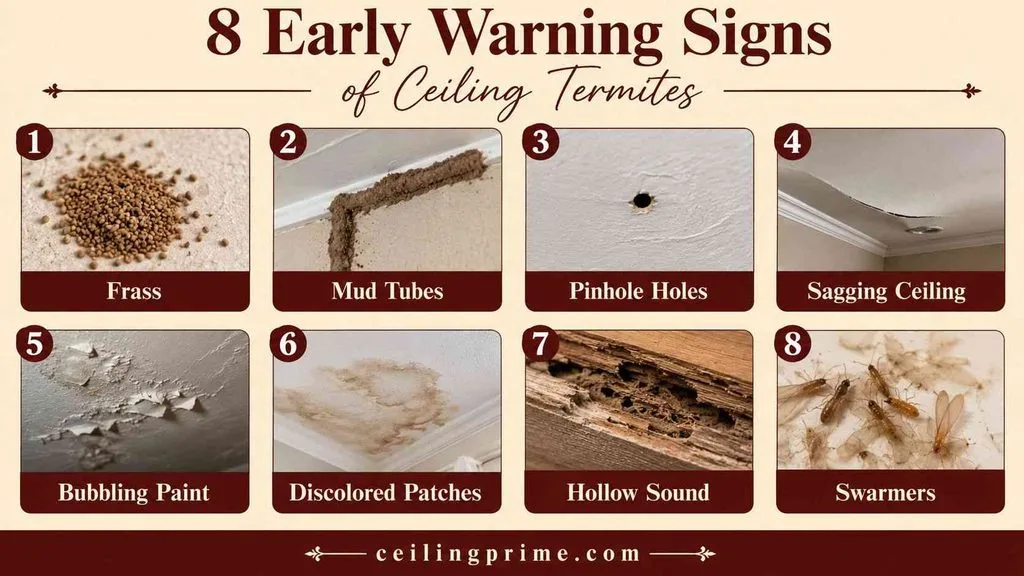
Catching termites early saves thousands in structural repair. Here are the 8 signs in order from earliest to most advanced.
1. Frass (droppings): Tiny wood-colored pellets accumulate below the infested area. Drywood termites push frass out of small kick-out holes in the ceiling surface. The pellets are 1 millimeter long, oval, and have six concave sides. A small pile of frass on a shelf, countertop, or floor directly below the ceiling is one of the earliest visible signs of termite activity in the ceiling.
2. Mud tubes on walls or ceiling surface: Subterranean termites build pencil-width tubes made of soil, saliva, and frass. The tubes protect them from air and light. Mud tubes running up a wall toward the ceiling or across a ceiling surface are a definitive sign of active subterranean termites.
3. Pinhole exit holes: Small round holes (1 to 2 millimeters) in the ceiling drywall or wood trim. These are kick-out holes where drywood termites expel frass. The holes may have a small discoloration ring around them.
4. Sagging or bowing ceiling: Termites hollow out ceiling joists from the inside. The weakened joists deflect under load. The drywall between the joists bows downward. A ceiling that sags in specific joist-width sections (not across the entire surface) may indicate joist damage from termites in the ceiling framing.
5. Bubbling or peeling paint: Termites produce moisture as they consume wood. The moisture migrates to the drywall surface and causes the paint to bubble or peel. This looks identical to water damage. Many homeowners discover termites only after opening the ceiling to fix what they thought was a plumbing leak.
6. Discolored patches: Brown or dark spots on the ceiling surface where termite moisture has stained the drywall from behind. The staining follows the joist lines because the moisture originates inside the wood.
7. Hollow-sounding wood: Tap the ceiling joists, beams, or wood trim with a screwdriver handle. Solid wood produces a sharp knock. Termite-damaged wood sounds hollow or papery. The termites eat the interior and leave a thin shell.
8. Swarmers or discarded wings: Winged termites (alates) emerge from the colony in spring or early summer to start new colonies. Finding live swarmers or piles of discarded translucent wings on windowsills, floors, or in ceiling light fixtures means a mature colony is nearby.
What Ceiling Termites Sound Like?
Termites are not silent. In a quiet room, you can hear them working inside the ceiling. Here is what to listen for.
- Clicking: Soldier termites bang their heads against the wood when the colony is disturbed. The clicking sounds like quiet, rhythmic tapping inside the ceiling. You hear it most clearly at night when background noise is low.
- Rustling: Worker termites chewing through wood create a faint papery rustling. Press your ear against the ceiling surface or hold a glass against it. The rustling is continuous and soft.
- Crunching: In severe infestations, you may hear a faint crunching as large sections of hollowed wood collapse under their own weight.
These sounds are easiest to hear in bedrooms at night. If you hear clicking or rustling from the ceiling above your bed, call a pest control professional for an inspection.
Where Termites Appear in Ceilings?
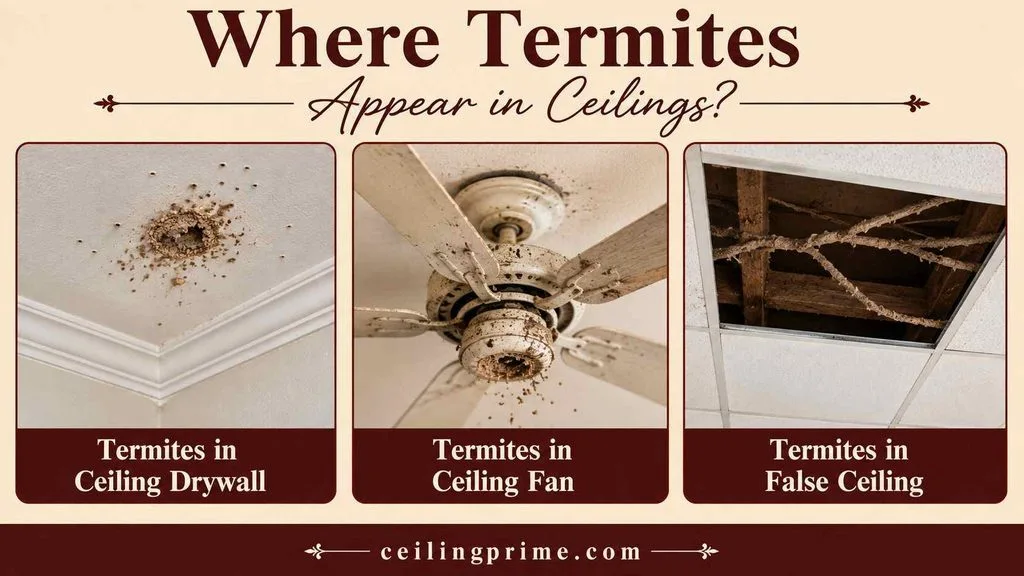
Termites in Ceiling Drywall
Termites do not eat drywall. They eat the wood framing behind it. But they tunnel through drywall to reach wood on the other side. You see the evidence as pinhole exit holes, bubbling paint, soft spots, and mud tubes on the drywall surface. This means the infestation is behind the surface in the joists.
Termites in Ceiling Fan
Ceiling fans mount to electrical boxes attached to the joists. If the joist is infested, termites may emerge around the fan base. Frass falls from the fan canopy. The fan may wobble as the supporting joist weakens. Swarmers are attracted to the light and heat of the fan motor. Finding wings or live insects around a ceiling fan is a common discovery point.
Termites in False Ceiling
False ceilings (suspended grid ceilings, drop ceilings) create a hidden cavity between the tiles and the structural ceiling above. This cavity is dark, enclosed, and rarely inspected. Termites build mud tubes across the suspended grid wires and infest the joists above without any visible signs on the tiles below. Lift a tile and inspect the cavity annually in termite-prone regions.
Are Ceiling Termites Dangerous?
Termites in ceiling areas are not directly dangerous to human health. They do not bite, sting, or transmit disease. But the structural damage they cause creates serious safety risks.
- Ceiling collapse: Hollowed joists lose load-bearing capacity. A severely damaged joist can crack under the weight of insulation, stored items in the attic, or foot traffic on the floor above. The drywall below drops.
- Electrical hazard: Termites chew through wire insulation as they tunnel through framing. Exposed wiring creates short circuit and fire risk inside the ceiling cavity.
- Structural failure: In advanced infestations, termites hollow out multiple joists, headers, and rafters. The roof structure weakens. Repairs escalate from ceiling patching to full structural reconstruction.
- Financial damage: The average termite damage repair in the United States costs $3,000 to $8,000. Severe structural damage can exceed $25,000. Termite damage is not covered by standard homeowner insurance.
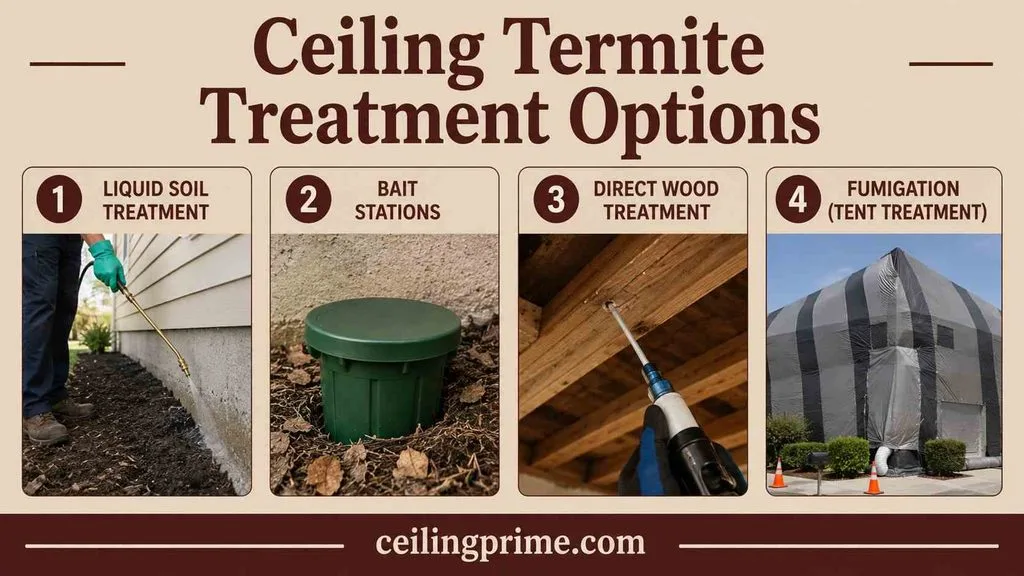
Ceiling Termite Treatment Options
Ceiling termite treatment requires a licensed pest control professional. DIY termite treatment is not effective for ceiling infestations because the colony path extends through the entire building structure. Here are the 4 treatment methods.
1. Liquid soil treatment (barrier): The professional applies liquid termiticide around the foundation perimeter. The chemical creates a barrier that kills termites as they travel between the soil and the building. This treats subterranean species. The barrier lasts 5 to 10 years. Cost: $800 to $2,500 for an average home.
2. Bait stations: Monitoring stations are placed in the soil around the foundation. Termites find the bait, carry it back to the colony, and share it. The active ingredient slowly kills the entire colony over 2 to 6 months. Cost: $1,500 to $3,500 for installation plus $200 to $400 per year for monitoring.
3. Direct wood treatment: The professional drills small holes into infested ceiling joists and injects termiticide foam or borate solution directly into the wood. This kills termites inside the framing. It works for localized infestations where the colony has not spread widely. Cost: $500 to $1,500.
4. Fumigation (tent treatment): The entire home is sealed under a tent. A gas fumigant fills every cavity, crack, and void. This is the only treatment that reaches every termite inside the structure. Required for widespread drywood termite infestations. The home must be vacated for 2 to 3 days. Cost: $1,200 to $5,000 depending on home size.
Repairing Termite-Damaged Ceilings
Repair the ceiling only after the termite colony is eliminated. Patching a ceiling over an active infestation wastes money. The termites continue eating. Here is the repair process.
- Step 1: Remove the damaged drywall. Cut back to the nearest intact joists on each side of the damaged area.
- Step 2: Inspect every exposed joist. Probe the wood with a screwdriver. If the tip sinks in easily or the wood crumbles, the joist is compromised.
- Step 3: Sister damaged joists. Bolt a new, full-length joist alongside the damaged one. The new joist takes over the structural load. Severely hollowed joists that have lost more than 50% of their cross-section must be sistered or replaced.
- Step 4: Replace damaged insulation. Termites tunnel through fiberglass and foam insulation. Remove and replace any insulation in the affected joist bays.
- Step 5: Install new drywall. Screw into the joists every 8 inches. Tape, mud, sand, prime, and paint.
- Step 6: Match the ceiling texture if the room has orange peel, knockdown, or popcorn.
Termites in ceiling framing often require structural repair beyond simple drywall patching. A structural engineer should assess the damage if more than 2 joists are compromised.
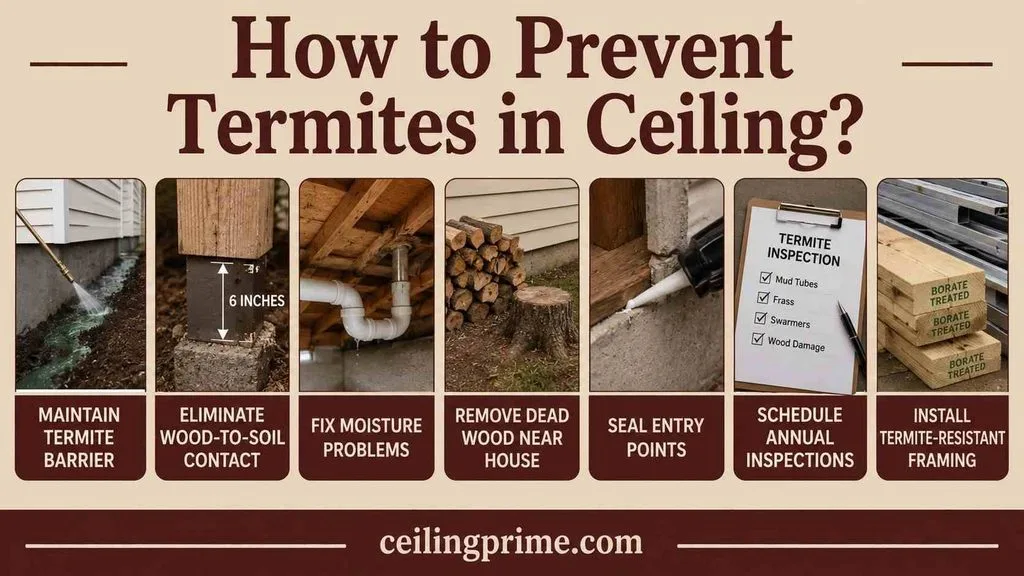
How to Prevent Termites in Ceiling?
- Maintain a termite barrier. Renew liquid soil treatments every 5 to 10 years. Keep bait station monitoring active year-round.
- Eliminate wood-to-soil contact. No wood siding, trim, or framing should touch the ground. Maintain 6 inches of clearance between soil and any wood element.
- Fix moisture problems. Termites need moisture. Fix roof leaks, plumbing drips, and condensation in the attic. Keep the crawlspace dry with a vapor barrier.
- Remove dead wood near the house. Firewood stacks, tree stumps, and scrap lumber against the foundation attract termite colonies.
- Seal entry points. Caulk cracks in the foundation, around utility penetrations, and at the sill plate where the framing meets the foundation.
- Schedule annual inspections. A licensed inspector checks for mud tubes, frass, swarmers, and wood damage. Annual inspections catch infestations before they reach the ceiling. Cost: $75 to $150 per year.
- Install termite-resistant framing in new construction. Pressure-treated lumber, steel framing, and borate-treated wood resist termite feeding.
Termite Treatment and Ceiling Repair Costs
| Item | Cost |
| Professional termite inspection | $75–$150 |
| Liquid soil treatment (barrier) | $800–$2,500 |
| Bait station system (install + year 1) | $1,500–$3,500 |
| Direct wood injection treatment | $500–$1,500 |
| Fumigation (full tent) | $1,200–$5,000 |
| Ceiling drywall replacement (per room) | $300–$1,500 |
| Joist sistering (per joist) | $200–$500 |
| Full structural repair (severe damage) | $3,000–$25,000+ |
Homeowner insurance does not cover termite damage. The full cost — treatment plus repair — is the homeowner’s responsibility. Early detection through annual inspections is the cheapest way to avoid five-figure repair bills.
Catch Them Early and Treat the Whole Path
Termites in ceiling areas mean the colony has traveled through the entire building structure. Frass, mud tubes, pinholes, sagging drywall, and hollow-sounding wood are the early warnings. Treatment requires a licensed professional who addresses the colony from the soil to the ceiling. Repair the structural damage only after the colony is eliminated. And schedule annual inspections to catch the next infestation before it reaches the ceiling again.
Frequently Asked Questions
Can termites eat through drywall?
Termites do not eat drywall for nutrition. But they tunnel through the gypsum and paper face to reach wood on the other side. You see the evidence as pinholes, mud tubes, and soft spots on the ceiling surface.
Does termite damage look like water damage?
Yes. Bubbling paint, discolored patches, and sagging drywall from termites look nearly identical to water damage. Many termite infestations are discovered when homeowners open the ceiling to fix a suspected plumbing leak and find frass, mud tubes, or hollowed joists instead of wet wood.
Can I treat ceiling termites myself?
Not effectively. Ceiling termites are part of a colony that extends through the building structure. Spot-treating the ceiling with store-bought spray kills visible termites but does not reach the colony. A licensed professional treats the colony path from the soil to the ceiling.
How fast do termites damage ceiling joists?
A mature subterranean colony consumes 1 to 3 pounds of wood per day. Formosan colonies consume faster. A single ceiling joist can be hollowed in 6 to 12 months by an established colony. The damage is slow enough to be invisible but fast enough to compromise structure within a year.
Are termite swarmers near the ceiling dangerous?
Swarmers themselves do not cause damage. They do not eat wood. They are the reproductive members looking to start new colonies. But their presence near the ceiling means a mature colony is inside the structure. Call a professional immediately.
Does insurance cover termite ceiling damage?
Standard homeowner insurance does not cover termite damage. It is classified as preventable maintenance. Some policies cover the sudden collapse of a structure caused by hidden termite damage, but not the termite treatment or repair itself. Check your specific policy.