
Mildew on Ceiling: What It Is, How to Clean It & How to Stop It
Mildew on ceiling surfaces appears as flat, powdery patches of white, gray, or light yellow growth. It sits on the surface of the paint or drywall. It does not penetrate deeply. It cleans off easier than mold. But left untreated, mildew damages paint, stains the drywall, and produces spores that irritate your lungs.
This guide explains what mildew is, how it differs from mold, the 5 causes, how to clean it safely, and room-by-room fixes for bathrooms, bedrooms, showers, vents, tiles, and painted ceilings. No details are repeated between sections.
Mildew vs Mold on Ceiling: How to Tell the Difference
| Feature | Mildew | Mold |
| Appearance | Flat, powdery, surface-level | Fuzzy, raised, penetrates material |
| Color | White, gray, light yellow | Black, green, dark brown |
| Texture | Dry, dusty, wipes off easily | Slimy or fuzzy, hard to remove |
| Depth | Surface only — sits on paint | Grows into drywall, wood, grout |
| Health risk | Mild respiratory irritation | Moderate to serious — allergies, asthma |
| Removal difficulty | Easy — DIY with vinegar or bleach | Moderate to hard — may need drywall replacement |
Quick test: press a damp cloth against the growth. If it wipes off clean and the surface underneath looks normal, it is mildew on ceiling paint. If the growth is embedded, dark, and the surface underneath is stained or soft, it is mold.
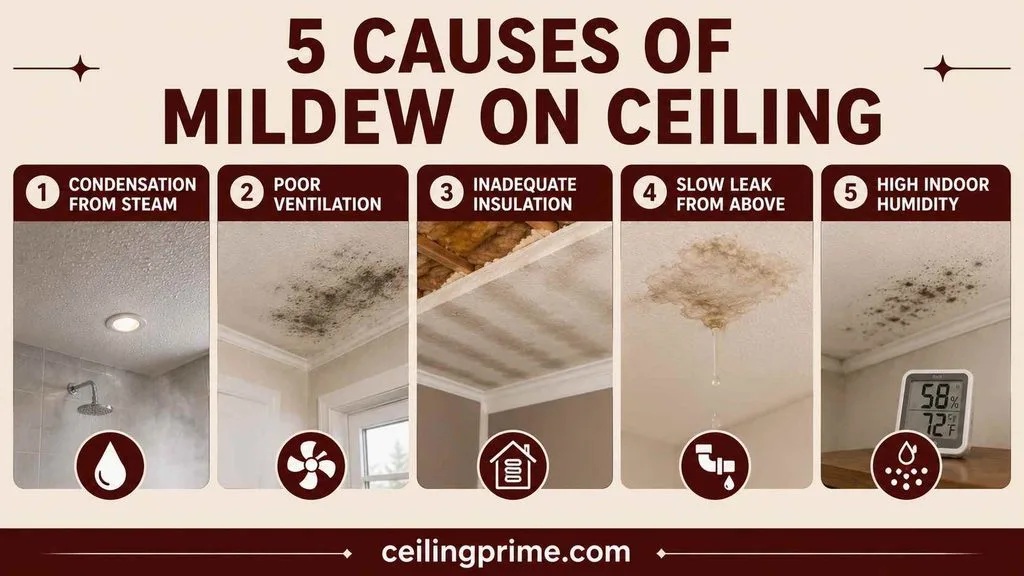
5 Causes of Mildew on Ceiling
1. Condensation from steam: Warm humid air from showers, baths, or cooking rises and condenses on the cold ceiling surface. The moisture film feeds mildew spores within days. This is the cause of ceiling mildew in bathrooms and kitchens.
2. Poor ventilation: Bathrooms without exhaust fans, interior rooms without windows, and closed-off bedrooms trap humidity. Stagnant air holds moisture against the ceiling. Mildew thrives in still, damp air above 60% relative humidity.
3. Inadequate insulation: Thin or missing attic insulation creates cold spots on the ceiling. Warm indoor air condenses on those cold surfaces. The condensation appears in patterns that follow the ceiling joists — a sign called ghosting or thermal bridging.
4. Slow leak from above: A minor plumbing drip or roof seepage keeps a section of drywall chronically damp. The moisture never fully dries. Mildew colonizes the persistently damp surface.
5. High indoor humidity: Homes in humid climates, homes with poor air circulation, and homes where moisture-producing activities (cooking, laundry, multiple showers) happen frequently maintain indoor humidity above 50%. That sustained humidity feeds mildew growth on any cool ceiling surface.
Bathroom Ceiling Mildew
Bathrooms are the number one location for ceiling mildew. Steam from hot showers rises to the ceiling every day. If the exhaust fan is weak, absent, or not running long enough, moisture accumulates faster than it dries. Mildew appears within 1 to 2 weeks of sustained moisture.
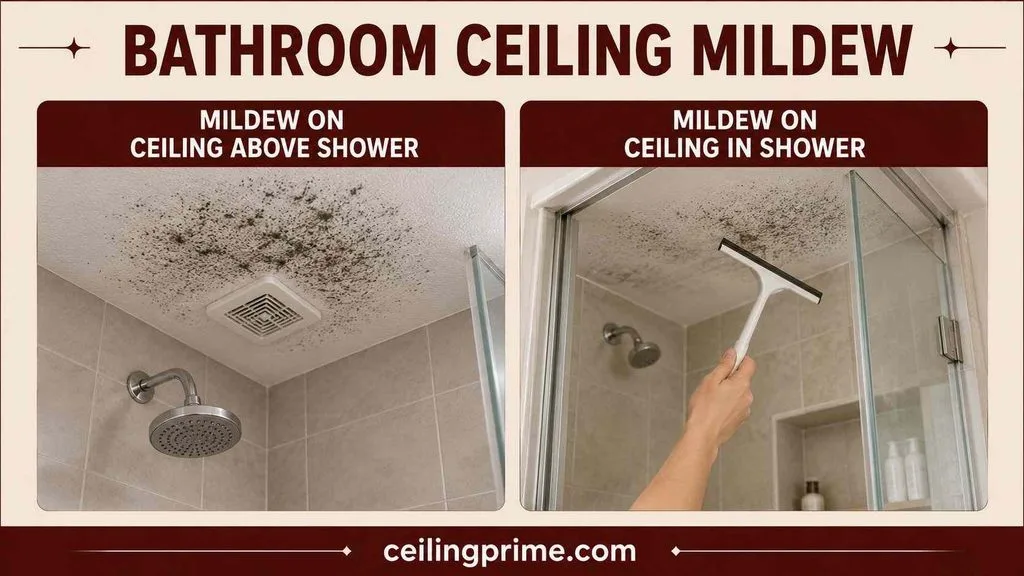
Mildew on Ceiling Above Shower
The section directly above the shower or bathtub receives the most concentrated steam. Mildew above the shower appears as small gray or white dots spreading outward from the center of the steam zone. The fix is ventilation: run the exhaust fan during every shower and 20 minutes after. Upgrade to an 80+ CFM fan with a humidity sensor if the current fan does not clear steam within 10 minutes.
Mildew on Ceiling in Shower (Enclosed Stall)
Walk-in showers and enclosed stalls trap steam against the ceiling at close range. The ceiling inside the stall stays wet longer than the bathroom ceiling outside the stall. Use a squeegee on the ceiling after every shower. Leave the shower door or curtain open after use to release trapped steam.
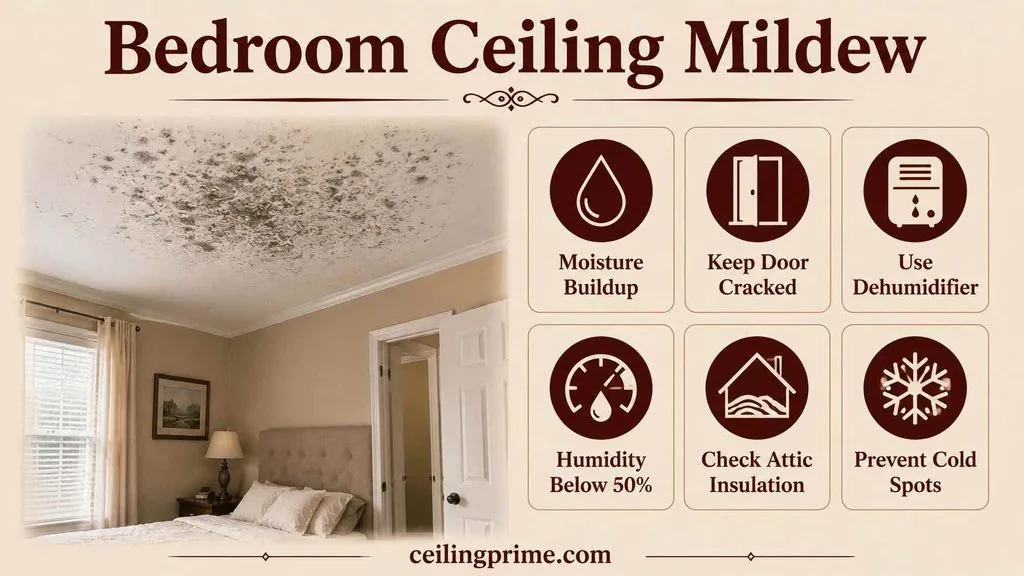
Bedroom Ceiling Mildew
Bedroom ceiling mildew is almost always a condensation problem. Body heat and breathing add 1 to 2 pints of moisture to the air per person per night. A closed bedroom door traps that moisture inside. Poor attic insulation creates cold ceiling spots. The moisture condenses on those spots overnight.
Fixes: keep the bedroom door cracked at night for airflow. Run a small dehumidifier if the room stays above 50% humidity. Check the attic insulation directly above the bedroom — thin spots or gaps cause localized ceiling mildew on drywall.
Ceiling Tile Mildew
Drop ceiling tiles (acoustical tiles) absorb moisture from the air. The porous surface provides food for mildew spores. Once mildew colonizes a ceiling tile, surface cleaning is temporary. The spores live inside the porous material. The mildew returns within weeks after cleaning.
Permanent fix: replace stained or moldy tiles with new ones. Use vinyl-faced or moisture-resistant tiles in bathrooms and kitchens. Standard mineral fiber tiles are not designed for high-humidity rooms.
Ceiling Paint Mildew
Standard ceiling paint does not resist mildew. Moisture sits on the painted surface. Spores land on the damp paint film and grow. The mildew appears as powdery white or gray patches that wipe off with a damp cloth.
After cleaning, repaint with bathroom-rated paint containing mildewcide. This paint resists mildew growth on the surface. Apply mildew-resistant primer first to seal any residual staining. Standard flat ceiling paint in dry rooms (living rooms, hallways) does not need mildewcide — only wet rooms.
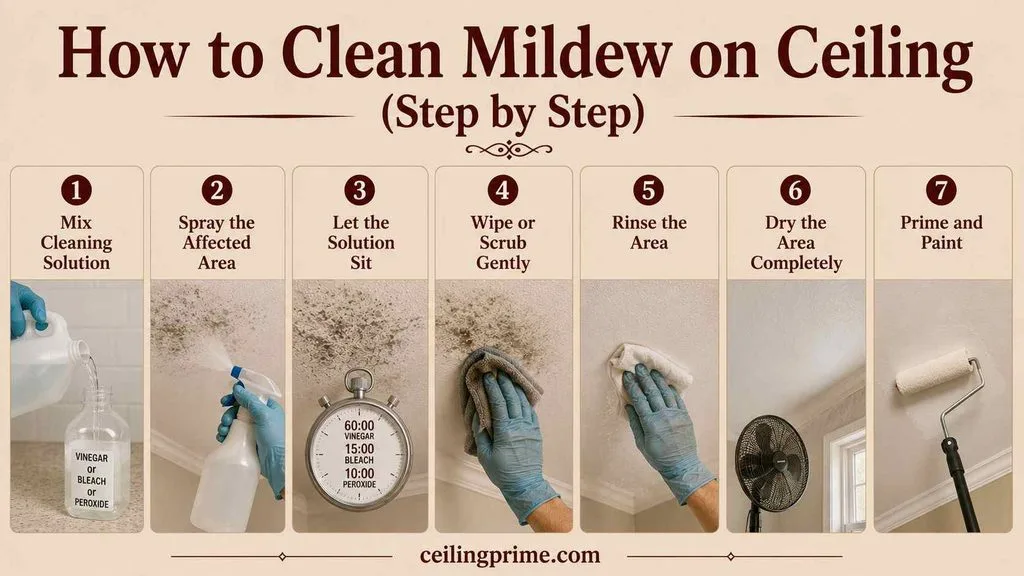
How to Clean Mildew on Ceiling (Step by Step)
Mildew sits on the surface. It cleans off easier than mold. Here is the process.
Gear: N95 mask, safety goggles, rubber gloves. Mildew spores go airborne when you scrub.
- Step 1: Mix cleaning solution. Option A: undiluted white vinegar in a spray bottle. Option B: 1 cup bleach per gallon of water. Option C: 3% hydrogen peroxide, undiluted.
- Step 2: Spray the affected area thoroughly. Wet every visible spot.
- Step 3: Let the solution sit. Vinegar: 60 minutes. Bleach: 15 minutes. Peroxide: 10 minutes.
- Step 4: Wipe with a damp microfiber cloth or soft sponge. The mildew should lift off easily. If it resists, scrub gently with a soft-bristle brush.
- Step 5: Rinse the area with a clean damp cloth. Remove all cleaning solution residue.
- Step 6: Dry the area completely. Run the exhaust fan. Open the window. Point a fan at the ceiling. Do not prime or paint until fully dry (24 hours minimum).
- Step 7: Apply mildew-resistant primer. Let dry 2 hours. Paint with bathroom-rated paint if the room is humid.
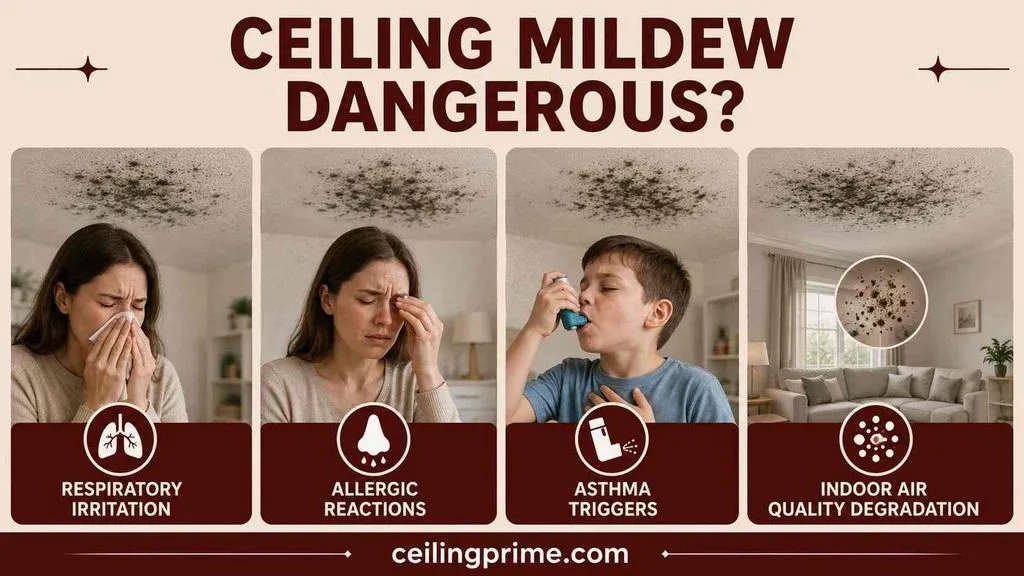
Is Ceiling Mildew Dangerous?
Mildew is less dangerous than mold. But it is not harmless. Here are the 4 health effects of ceiling mildew exposure.
- Respiratory irritation: Mildew spores irritate the nose, throat, and airways. Symptoms include sneezing, coughing, and a scratchy throat.
- Allergic reactions: People with mildew allergies experience itchy eyes, runny nose, nasal congestion, and skin rashes. Symptoms worsen during and after showers when spores are most active.
- Asthma triggers: Mildew spores can trigger asthma attacks in sensitive individuals. Children and elderly people are at the highest risk.
- Indoor air quality degradation: A ceiling covered in mildew releases spores continuously into the room air. The spore count rises over time. Air quality drops even if you cannot see the mildew clearly.
Mildew itself is rarely toxic. But heavy, untreated mildew can attract true mold colonies. Surface mildew left unchecked for months becomes a growth base for deeper, more harmful mold species.
How to Prevent Mildew on Ceiling Permanently?
- Run the exhaust fan during every shower, bath, and cooking session. Keep it on 20 minutes after.
- Keep indoor humidity between 30% and 50%. Use a hygrometer to measure. Run a dehumidifier if levels stay above 50%.
- Verify the exhaust fan duct vents to the outside, not into the attic. Attic-vented fans relocate the moisture problem instead of solving it.
- Check attic insulation above bathrooms and bedrooms. Add insulation to R-38 or higher. Eliminate cold ceiling spots.
- Insulate HVAC ducts and vent boots to stop condensation rings around ceiling registers.
- Use mildew-resistant paint and primer on bathroom and kitchen ceilings.
- Wipe the ceiling dry with a towel after heavy steam events.
- Crack the bathroom door during showers to let steam escape into the rest of the house.
- Open windows when weather allows to circulate fresh air and reduce indoor humidity.
Mildew Removal and Prevention Costs in 2026
| Item | 2026 Cost |
| DIY cleaning (vinegar/bleach/peroxide) | $5–$15 |
| Mildew-resistant primer + bathroom paint | $30–$70 |
| Replacement ceiling tiles (per box) | $20–$60 |
| Exhaust fan upgrade (80+ CFM installed) | $150–$400 |
| Duct insulation for ceiling vents | $100–$300 |
| Attic insulation upgrade (above bathroom) | $300–$1,000 |
| Portable dehumidifier | $150–$400 |
Clean the Surface, Fix the Moisture, Seal the Paint
Mildew on ceiling surfaces grows because moisture sits on the paint too long. Clean it with vinegar, bleach, or peroxide. Let the surface dry. Prime with mildew-resistant primer. Paint with bathroom-rated paint. Then fix the real problem: upgrade the exhaust fan, insulate the attic, reduce indoor humidity, and insulate the ducts around ceiling vents. The mildew stays gone when the ceiling stays dry.
Frequently Asked Questions
Can I just wipe mildew off and leave it?
Wiping removes the visible growth. But spores remain on the surface. Without a cleaning solution (vinegar, bleach, or peroxide), the mildew returns within days. Clean with a disinfecting solution. Then prime and paint to seal the surface.
Why does mildew keep coming back on my ceiling?
The moisture source is still active. The exhaust fan is too weak, not running long enough, or venting into the attic. The insulation above the ceiling is thin. Or indoor humidity stays above 50%. Fix the ventilation and insulation to stop the cycle permanently.
Is the gray stuff on my bathroom ceiling mildew or mold?
Wipe it with a damp cloth. If it comes off easily and the surface underneath looks clean, it is mildew. If the growth is embedded, dark, fuzzy, or the surface is stained or soft, it is mold. Mold requires stronger treatment and may need drywall replacement.
Does a dehumidifier stop ceiling mildew?
Yes, if indoor humidity is the problem. A dehumidifier keeps humidity below 50%, which starves mildew spores. But if the cause is direct steam condensation (like above a shower), an exhaust fan is the more effective fix. Both tools together provide the best protection.
Can I paint over mildew without cleaning it?
No. Paint does not kill mildew. The growth continues underneath. It pushes through the new paint within weeks. Clean the mildew first. Let the surface dry. Prime with mildew-resistant primer. Then paint.
Should I call a professional for ceiling mildew?
For surface mildew, DIY cleaning works well. Call a professional if: the growth covers more than 10 square feet, the drywall feels soft or crumbly, the mildew has progressed to mold (fuzzy, embedded, dark), or symptoms like coughing, wheezing, or skin irritation persist after cleaning.