
Moisture Spots on Ceiling: 6 Causes, How to Diagnose & How to Fix
Moisture spots on ceiling surfaces appear as dark, damp-looking patches on drywall. They may feel cool or wet to the touch. They may be accompanied by a musty smell. Some come and go with the weather. Others grow slowly over weeks. The spot itself is the symptom. The moisture source behind it is the problem.
This guide identifies the 6 causes of ceiling moisture. It explains how the timing of the spot tells you the source. It covers wet spots after rain, after showers, and during winter. It walks through the diagnosis, drying, repair, and prevention for each cause. No details are repeated.
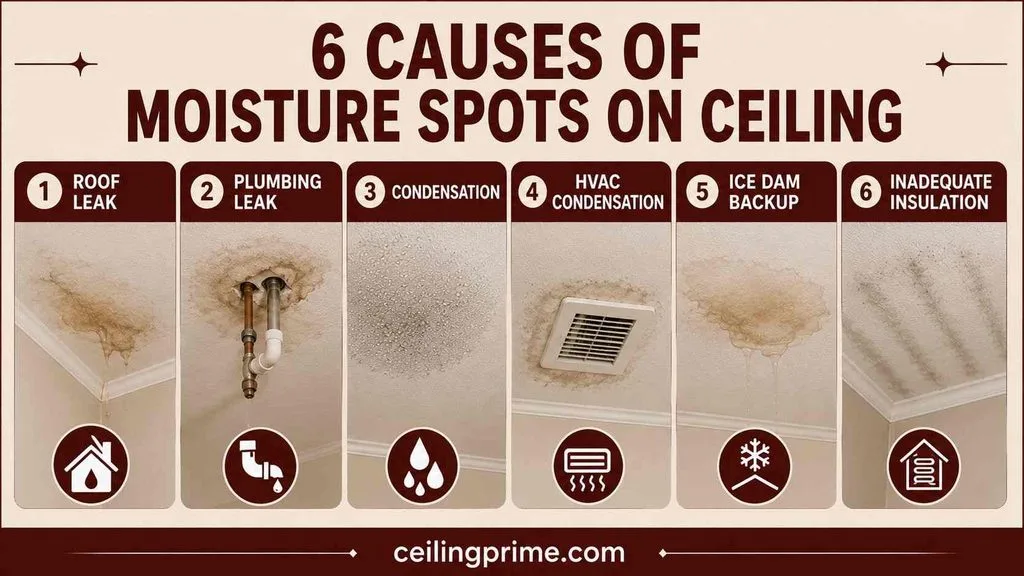
6 Causes of Moisture Spots on Ceiling
Here are the 6 causes of ceiling moisture spots you need to know.
1. Roof leak: Damaged shingles, cracked flashing around chimneys and vents, deteriorated vent boots, and failed caulking around roof penetrations let rainwater enter the attic. The water travels along rafters and joists before dripping onto the drywall below. A moisture patch on ceiling drywall that appears after storms points to the roof.
2. Plumbing leak from above: A dripping supply line, leaking drain pipe, failed shower pan, cracked toilet wax ring, or loose sink drain connection in an upstairs bathroom or kitchen sends water through the floor and onto the ceiling below. The spot appears directly under the fixture.
3. Condensation: Warm humid indoor air contacts a cold ceiling surface. The moisture in the air turns to liquid on the cold drywall. This creates damp spots on ceiling surfaces without any leak. The spot feels cool and damp but no water drips from above. This is the most common cause of winter ceiling dampness.
4. HVAC condensation: A clogged condensate drain line, overflowing drip pan under the air handler, or sweating ductwork in the attic creates moisture that drips onto the ceiling. The spot appears near ceiling registers, vents, or directly below the HVAC unit.
5. Ice dam backup: In cold climates, ice dams form at the roof edge. Melting snow backs up behind the dam and seeps under the shingles. The water enters the attic and drips onto the ceiling. Moisture stains on ceiling surfaces that appear only during winter freeze-thaw cycles point to ice dams.
6. Inadequate attic insulation: Thin insulation creates cold spots on the ceiling surface. Warm indoor air condenses on those cold spots. The damp patches follow the ceiling joist pattern. This is called ghosting or thermal bridging. It is not a leak. It is an insulation problem.
When the Spot Appears Tells You the Cause?
Wet Spots on Ceiling After Rain
The spot appears during or within 24 hours after rainfall. It grows during heavy rain. It shrinks or dries between storms. This pattern points to a roof leak. Check the attic directly above the spot for wet wood, water trails on rafters, and daylight coming through the roof deck. A roof leak is the most likely cause of wet spots on ceiling after rain.
Wet Spots on Ceiling After Shower
The spot appears on the ceiling below a bathroom. It gets darker after someone showers or runs a bath. Two possible causes: a plumbing leak from the shower pan, drain, or supply lines above, or condensation from steam passing through the floor structure. Test by running the shower for 10 minutes while watching the ceiling below. If the spot grows, it is a plumbing leak. If the spot only appears when the exhaust fan is not running, it is condensation.
Wet Spots on Ceiling in Winter
Winter-only ceiling spots are almost always condensed. Cold outdoor air chills the ceiling through thin attic insulation. Warm indoor air condenses on the cold drywall surface. The spots appear as broad, damp patches that are not concentrated in one point. Humidity spots on ceiling surfaces during winter disappear in warmer months when the temperature difference drops. Adding attic insulation stops this pattern permanently.

How to Tell If a Moisture Spot Is a Leak or Condensation
| Leak (Active Water Source) | Condensation (No Leak) |
| Concentrated in one spot or ring pattern | Spread across a wide area or follows joist lines |
| Grows after rain, shower, or running water | Grows during cold weather or high humidity |
| May drip actively | Damp sheen but no dripping |
| Attic wood above spot is wet | Attic wood above spot is dry |
| Brown or yellow staining around edges | No discoloration — just dampness |
The attic check is the most reliable test. Go into the attic above the moisture spots on ceiling. Touch the wood. Wet wood means a leak. Dry wood means condensation. A moisture meter reads above 20% for active leaks and below 15% for dry surfaces.
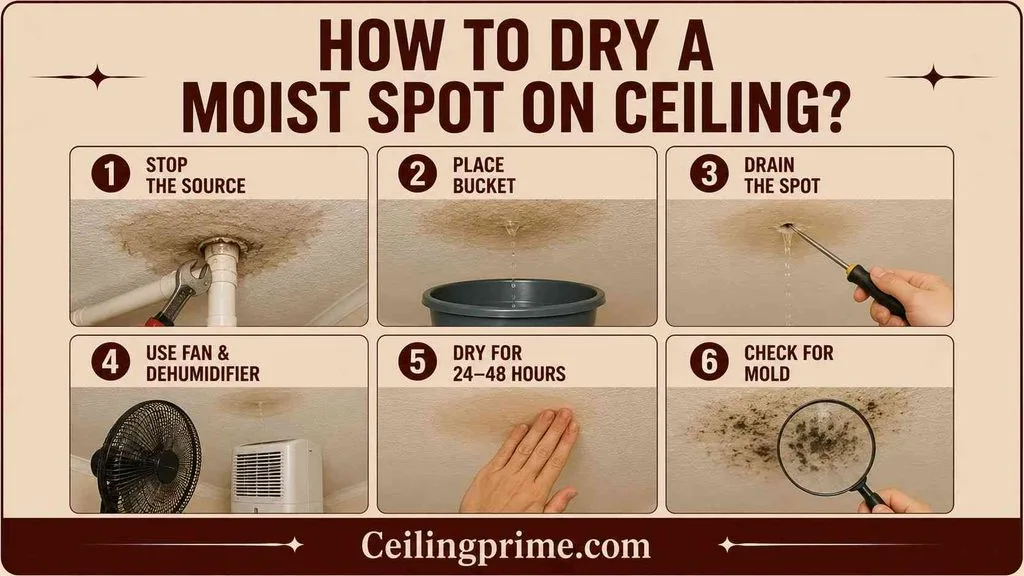
How to Dry a Moist Spot on Ceiling?
Speed matters. Wet drywall grows mold within 48 to 72 hours. Dry the spot before any cosmetic repair.
- Step 1: Stop the moisture source. Fix the leak. Turn off the water supply if plumbing is the cause. Place a tarp over the roof if rain is active.
- Step 2: Place a bucket under any active drip.
- Step 3: If the spot is bulging, poke a small hole in the center with a screwdriver. Let trapped water drain into the bucket. This relieves pressure and prevents ceiling collapse.
- Step 4: Aim a fan at the wet area. Open windows for cross-ventilation. Run a dehumidifier in the room.
- Step 5: Dry for 24 to 48 hours minimum. Check the drywall by pressing with your palm. It should feel firm and room-temperature — not cool, soft, or damp.
- Step 6: Check for mold before closing the surface. If the drywall was wet for more than 72 hours, inspect the back side and the attic cavity for gray, green, or black growth.
How to Repair Moisture Spots on Ceiling?
If the Drywall Is Firm and Dry (Cosmetic Repair)
- Sand the stained area lightly with 120-grit sandpaper.
- Apply stain-blocking primer over the entire stain. Extend 2 inches past the stain edges. Let dry 1 to 2 hours. Regular latex primer does not block moisture stains — the discoloration bleeds through.
- Paint with two coats of flat ceiling paint. For a perfect color match, paint the entire ceiling.
If the Drywall Is Soft, Sagging, or Moldy (Replacement)
- Cut the damaged section back to the nearest ceiling joists on each side.
- Remove the damaged drywall. Check the joist cavity for mold. Treat any mold on wood with a mold-killing solution.
- Let the cavity dry completely. 24 to 48 hours with fans.
- Install new drywall. Screw into joists every 8 inches. Tape, mud, sand, prime, and paint.

Moisture Spots on Ceiling by Room Location
- Bathroom ceiling: The most common location. Shower steam condenses on the ceiling daily. Run the exhaust fan during and 20 minutes after every shower. If the spot is directly below an upstairs bathroom, check plumbing fixtures above.
- Bedroom ceiling: Night breathing adds moisture to the air. Poor attic insulation creates cold ceiling spots. The moisture condenses overnight. Keep the door cracked. Check insulation depth above the bedroom.
- Kitchen ceiling: Cooking steam rises to the ceiling. Run the range hood on high during cooking. Spots near the ceiling above the sink may indicate a supply line drip from the floor above.
- Living room ceiling: Moisture spots on ceiling surfaces in the living room usually trace to a roof leak, HVAC condensation, or an upstairs bathroom plumbing leak. The spot is often far from the actual source because water travels along joists.
- Top-floor ceiling (directly below attic): The most leak-prone position. Roof leaks, ice dams, HVAC drip pans, and insulation gaps all affect this ceiling. Check the attic directly above any spot.
How to Prevent Moisture Spots on Ceiling?
- Inspect the roof twice a year. Check shingles, flashing, vent boots, chimney mortar, and caulking in spring and fall.
- Clean gutters every 6 months. Clogged gutters cause water backup under the roofline.
- Run bathroom exhaust fans during and 20 minutes after every shower.
- Check plumbing connections annually. Look under sinks, behind toilets, around water heaters, and at washing machine hoses.
- Service the HVAC system yearly. A technician cleans the condensate drain line and checks the drip pan for cracks.
- Add attic insulation to R-38 or higher. This eliminates cold ceiling spots that attract condensation.
- Insulate HVAC ducts in the attic. Uninsulated ducts sweat and drip onto the ceiling below.
- Install a water leak detector in the attic. Battery-powered sensors alert you to leaks before visible damage appears on the ceiling.
- Keep indoor humidity between 30% and 50%. Use a hygrometer to monitor. Run a dehumidifier if levels stay high.

Repair Costs for Ceiling Moisture Spots in 2026
| Repair | 2026 Cost |
| Cosmetic repair (prime + paint stain) | $20–$50 DIY |
| Drywall section replacement | $200–$600 |
| Professional stain treatment + paint | $100–$400 |
| Roof leak repair (source fix) | $300–$1,500 |
| Plumbing leak repair (source fix) | $150–$3,000 |
| HVAC condensate line flush + drip pan check | $100–$250 |
| Attic insulation upgrade | $1,000–$3,000 |
| Mold remediation (if needed) | $500–$3,000 |
Find the Source, Dry the Spot, Fix the Cause
Moisture spots on ceiling surfaces tell you where the water ended up. The timing tells you where it came from. After rain = roof. After shower = plumbing or steam. In winter = condensation. Fix the source first. Dry the drywall within 48 hours. Check for mold. Then prime and paint. The spot disappears permanently when the moisture source is gone.
Frequently Asked Questions
Can a moisture spot on the ceiling go away on its own?
Condensation spots can dry and disappear when humidity drops or the weather warms. But the underlying cause remains. The spot will return the next time conditions align. Leak-caused spots never go away on their own — they grow until the source is fixed.
How do I know if I need a roofer or a plumber?
Check the timing. Spot appears after rain = roofer. Spot appears after running water, showers, or flushing = plumber. Spot appears in winter without rain or water use = insulation contractor. Check the attic above the spot for confirmation.
Are damp ceiling spots dangerous?
A damp spot itself is not immediately dangerous. But wet drywall grows mold within 48 to 72 hours. Mold causes respiratory symptoms, allergies, and asthma. A large, sagging wet spot can collapse. Do not stand or sleep under an actively wet ceiling area.
Can I just paint over a moisture stain?
Only after the source is fixed and the drywall is completely dry. Use stain-blocking primer first. Regular paint without primer lets the discoloration bleed through within days.
Why does my ceiling have moisture spots but no visible leak?
3 causes produce spots without dripping: condensation on cold ceiling surfaces, HVAC condensation from sweating ductwork, and slow plumbing drips that evaporate before they drip visibly. Check the attic above the spot with a flashlight and moisture meter.
How long does it take for a wet ceiling spot to dry?
24 to 48 hours with fans and a dehumidifier running. A moisture meter reading below 15% confirms the surface is dry. Do not prime or paint until the reading is below 15%.