Black Mold on Ceiling: Causes, Health Risks & How to Remove It
Black mold on ceiling surfaces appears as clusters of dark spots ranging from gray-black to deep greenish-black. The spots may be flat or fuzzy. They grow in irregular patterns that expand outward over time. The longer mold sits on a ceiling, the deeper it penetrates into the drywall. Surface cleaning works in the first weeks. After months, the drywall itself must be replaced.
This guide covers 6 causes, how to tell black mold from dirt, health risks, room-by-room identification, step-by-step removal, and permanent prevention. Every location — bathroom, bedroom, shower, vents, fans, and ceiling tiles — is covered in its own section.
What Is Black Mold on Ceiling?
Black mold is a general term for any dark-colored mold growing on indoor surfaces. The most commonly referenced species is Stachybotrys chartarum, which produces mycotoxins (fungus-produced poisons). Other black-appearing mold species include Aspergillus, Cladosporium, Penicillium, and Alternaria. All of them grow on moist cellulose-rich surfaces like drywall paper, ceiling tiles, and wood.
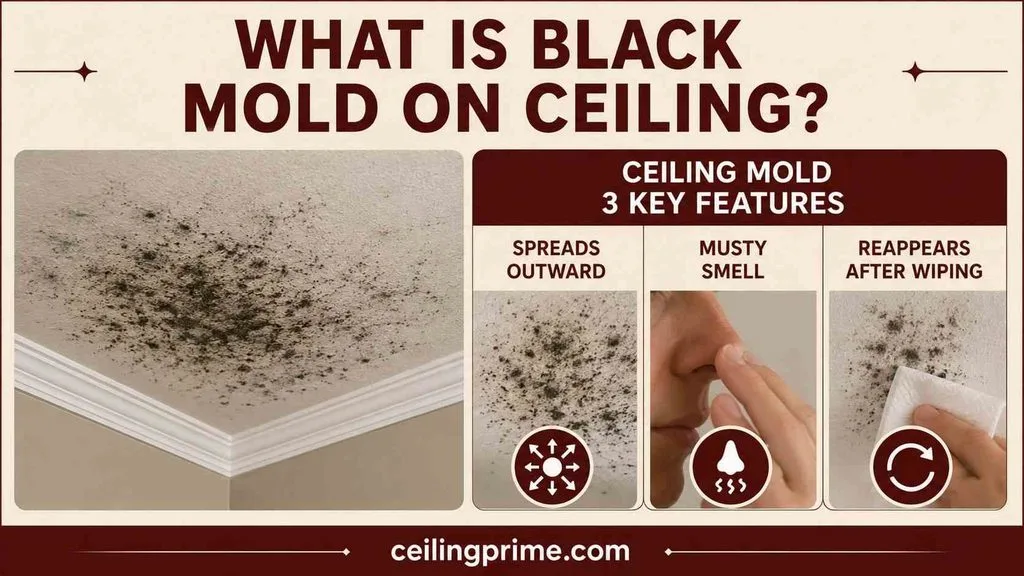
Not every dark spot on a ceiling is moldy. Dirt accumulation, soot from candles, cooking grease, and thermal bridging (ghosting) all create dark marks. Ceiling mold has 3 distinguishing features: it spreads outward over days or weeks, it has a musty smell, and it reappears after wiping.
Black Mold vs Dirt: How to Tell the Difference
| Black Mold | Dirt, Soot, or Ghosting |
| Grows larger over days or weeks | Stays the same size indefinitely |
| Fuzzy, spotted, or slimy texture | Smooth, dusty, or greasy film |
| Musty or earthy smell near the spot | No odor or cooking/smoke smell |
| Returns after wiping with water | Stays gone after cleaning |
| Appears near moisture sources (shower, leak, vent) | Appears evenly across the surface |
Wipe the dark area with a damp cloth. If it comes off and does not return in 2 weeks, it was dirt. If it returns or smells musty, it is mold.
6 Causes of Black Mold on Ceiling
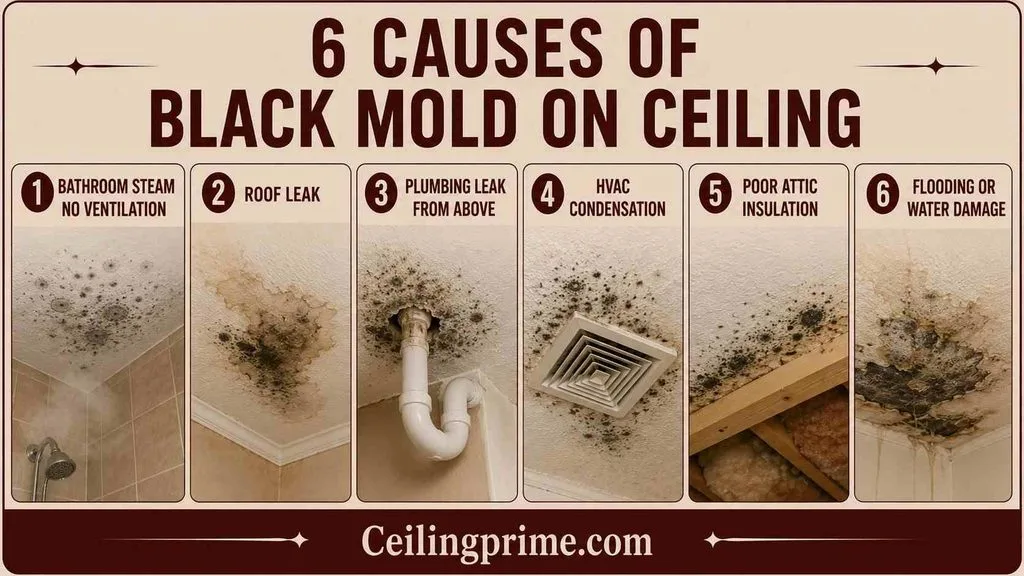
1. Bathroom steam without ventilation: Hot showers produce steam that rises to the ceiling. Without an exhaust fan, the moisture soaks into the drywall. Mold grows within 48 to 72 hours. This is the single most common cause of ceiling mold in residential homes.
2. Roof leak: Damaged shingles, cracked flashing, or failed vent boots let rainwater into the attic. The water soaks the drywall from above. Mold forms in the wet area and spreads outward. Brown water stains often appear alongside the mold.
3. Plumbing leak from above: A dripping pipe, failing shower pan, or cracked drain in an upstairs bathroom sends water to the ceiling below. Chronic slow leaks produce ideal conditions for mold growth.
4. HVAC condensation: A clogged condensate drain, sweating ductwork, or overflowing AC drain pan creates moisture inside the ceiling cavity. Mold grows around the vent opening or along the duct path.
5. Poor attic insulation: Thin insulation creates cold ceiling surfaces in winter. Warm indoor air condenses on the cold drywall. The repeated moisture cycle feeds mold, especially at joist lines and ceiling corners.
6. Flooding or water damage: A burst pipe, roof failure, or natural flood saturates the ceiling. If the drywall does not dry within 48 hours, mold colonizes the wet material. Drywall that stays wet for more than 72 hours almost always develops mold.
Health Risks of Ceiling Mold Exposure
The Centers for Disease Control and Prevention (CDC) and the World Health Organization (WHO) confirm that all indoor mold exposure causes health effects. Black mold on ceiling surfaces releases spores into the room air. You breathe those spores during every hour spent in the room.
6 common symptoms of mold exposure:
- Sneezing, runny nose, and nasal congestion.
- Coughing and throat irritation.
- Itchy, watery, or red eyes.
- Skin rashes or irritation on exposed skin.
- Wheezing or shortness of breath (asthma trigger).
- Headaches and fatigue from prolonged exposure.
3 high-risk groups:
- Children under 5 — developing lungs are more vulnerable to spore inhalation.
- Adults with asthma, allergies, or chronic lung conditions — mold worsens existing symptoms.
- People with weakened immune systems — mold infections can become systemic in immunocompromised individuals.
The Environmental Protection Agency (EPA) recommends professional mold remediation for any mold area larger than 10 square feet. The Occupational Safety and Health Administration (OSHA) sets workplace exposure limits for mold spores. Indoor air quality (IAQ) testing measures airborne spore counts.
Black Mold on Ceiling by Room Location
Bathroom Ceiling Black Mold
The most common location. Shower steam, bath moisture, and poor ventilation create ideal mold conditions. The ceiling directly above the shower or bathtub develops mold first. Run the exhaust fan during and 20 minutes after every shower. Upgrade to an 80+ CFM fan with a humidity sensor.
Above the Shower
The shower zone gets the highest concentration of steam. Mold appears as scattered black dots above the showerhead area. This specific zone needs the strongest ventilation fix. Point the exhaust fan directly above the shower if possible. If the fan is across the room, the steam reaches the ceiling before the fan captures it.
Inside the Shower Stall (Enclosed Stall)
Enclosed shower stalls trap 100% of the steam inside the enclosure. The ceiling of the stall stays wet for hours after every use. Mold grows on grout lines, caulk seams, and the ceiling panel. Squeegee the ceiling after each shower. Leave the stall door or curtain open after use. Run the exhaust fan to dry the enclosure.
Bedroom Ceiling Mold
Bedroom ceiling mold is not from shower steam. It comes from above: a roof leak, attic condensation, or poor insulation. Check the attic directly above the mold. Look for wet insulation, water trails on rafters, and frost on the roof deck in winter. Body heat and breathing add moisture to the bedroom overnight. A cold, uninsulated ceiling above the bed creates a condensation point.
Around Ceiling Vents
Black mold around ceiling vents means the ductwork is sweating. Cold AC air runs through ducts in a hot attic. The temperature difference creates condensation on the duct exterior. Moisture drips onto the drywall around the vent opening. Mold grows in a ring pattern. Insulate the ductwork and vent boot to stop the condensation.
On Ceiling Fan Blades
Mold on ceiling fan blades and housings means the room has high humidity. The fan blades collect moisture and dust. Mold feeds on the dust in humid conditions. Clean the blades with a vinegar solution. Fix the humidity source. A fan in a moldy room circulates spores throughout the space.
On Drop Ceiling Tiles
Ceiling tiles (drop ceiling panels) are made of porous fiber material. They absorb moisture quickly and hold it. Mold grows inside the tile, not just on the surface. Cleaning is usually not enough. Replace moldy ceiling tiles. Fix the moisture source above the tile grid before installing new panels.
From a Roof Leak
Roof leak mold appears alongside brown water stains. The mold grows outward from the wet zone. It may be hidden above the drywall for months before breaking through the surface. If you see brown stains AND black spots, the mold has been growing for weeks or longer. Fix the roof leak first. Then assess the mold extent from the attic side.
How to Remove Ceiling Mold (DIY for Under 10 sq ft)
Safety gear: N95 respirator mask, safety goggles, rubber gloves. Open the window. Run the exhaust fan. Seal the door to the rest of the house with plastic sheeting to prevent spores from spreading to other rooms.
- Step 1: Fix the moisture source first. No point cleaning mold while the leak or condensation is still active.
- Step 2: Spray undiluted white vinegar on the mold. Saturate the surface. Let sit for 60 minutes. Vinegar kills 82% of mold species.
- Step 3: Scrub gently with a soft brush. Work in small circles. Wipe with a damp microfiber cloth. Rinse the cloth frequently.
- Step 4: For stubborn stains, apply 3% hydrogen peroxide. Let fizz for 10 minutes. Wipe clean.
- Step 5: Let the ceiling dry completely. Run fans for 24 hours.
- Step 6: Apply mildew-resistant primer. Let dry for 2 hours.
- Step 7: Paint with bathroom-rated paint containing mildewcide. Two coats.
If the drywall feels soft or crumbly behind the mold, surface cleaning is not enough. Cut out the damaged section. Check the joist cavity for mold. Let the framing dry. Install new drywall. Prime and paint.
When to Call a Professional?
- The mold covers more than 10 square feet (EPA threshold).
- The mold is inside the drywall, not just on the surface. The drywall feels soft or crumbly.
- The mold returns within 30 days after DIY cleaning.
- You see mold in the attic above the ceiling (on joists, rafters, or insulation).
- Anyone in the home has persistent respiratory symptoms, allergies, or asthma flares.
- The mold is behind ceiling tiles in a commercial or office building.
- You cannot locate the moisture source.
- The ceiling is sagging with mold — structural compromise and collapse risk.
Professional mold remediation companies use containment barriers, HEPA air scrubbers, and antimicrobial treatments. They test spore counts before and after remediation to confirm the space is safe.
Permanent Mold Prevention
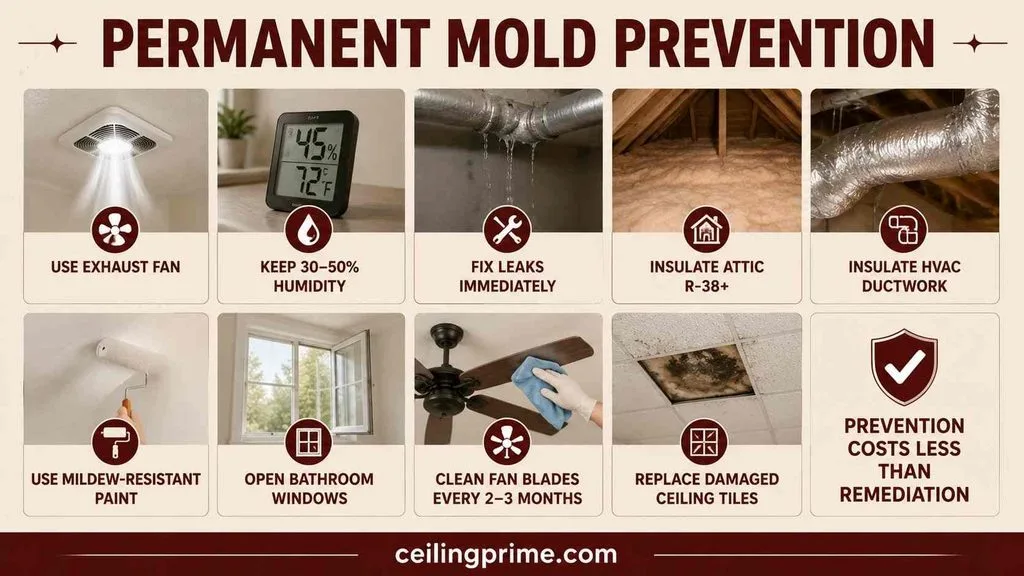
- Run the exhaust fan during every shower and 20 minutes after. Install a humidity-sensing fan that runs automatically.
- Keep indoor humidity between 30% and 50%. Use a hygrometer to monitor.
- Fix all leaks immediately. Roof, plumbing, and HVAC leaks create mold conditions within 48 hours.
- Insulate the attic to R-38 or higher. Cold ceilings attract condensation.
- Insulate HVAC ductwork in the attic. Cold ducts sweat and drip onto the ceiling.
- Use mildew-resistant paint on bathroom and kitchen ceilings.
- Open bathroom windows after showers when weather allows.
- Clean ceiling fan blades every 2 to 3 months. Dust plus humidity feeds mold.
- Replace water-damaged ceiling tiles immediately. Porous tiles hold moisture and mold permanently.
Prevention costs less than remediation. A $300 exhaust fan upgrade prevents a $3,000 mold remediation project.
Black Mold Ceiling Repair Costs in 2026
| Repair | 2026 Cost |
| DIY mold cleaning (vinegar + paint) | $20–$60 |
| DIY drywall section replacement | $50–$200 |
| Exhaust fan upgrade (80+ CFM) | $150–$400 |
| Professional mold remediation (ceiling) | $500–$3,000 |
| Attic duct insulation | $200–$600 |
| Roof leak repair (source fix) | $300–$1,500 |
| Mold testing / IAQ assessment | $250–$850 |
Remove the Mold, Fix the Moisture, and Keep It Gone
Black mold on ceiling surfaces grows because moisture is present and ventilation is poor. Kill the mold with vinegar or peroxide. Prime with mildew-resistant primer. Paint with bathroom-rated paint. Then fix the source: upgrade the exhaust fan, insulate the attic, repair the leak, or insulate the ductwork. The mold does not return when the moisture stops.
Frequently Asked Questions
Is all black mold on the ceiling toxic?
No. Most black-colored mold on ceilings is common Cladosporium or Aspergillus, which cause allergies and respiratory irritation but are not classified as toxic. Stachybotrys chartarum produces mycotoxins and is the species people call “toxic black mold.” It requires prolonged wet conditions and typically grows inside wall cavities, not on painted ceiling surfaces. All mold should be removed regardless of species.
Can I paint over black mold on the ceiling?
No. Paint does not kill mold. The colony grows underneath and pushes through the new paint within weeks. Clean the mold first. Let the surface dry. Prime with mildew-resistant primer. Then paint with bathroom-rated paint.
Does bleach kill black mold on ceiling?
Bleach kills surface mold on non-porous surfaces like tile and glass. It does not penetrate porous surfaces like drywall. Vinegar penetrates deeper than bleach on drywall ceilings. Use vinegar for drywall mold. Use bleach for tile and glass mold.
Why does black mold keep coming back on my bathroom ceiling?
The exhaust fan is too weak, not running long enough, or venting into the attic instead of outside. Fix the ventilation. Upgrade to 80+ CFM. Run it 20 minutes after every shower. Verify the duct exits through an exterior wall or roof.
How fast does black mold grow on a wet ceiling?
Mold spores begin colonizing wet drywall within 48 to 72 hours. Visible spots may take 1 to 2 weeks to appear. By the time you see black dots, the mold has been active for days. Speed matters: dry wet ceilings within 48 hours to prevent mold.
Should I test the mold before removing it?
The CDC and EPA say testing is not necessary before cleaning small areas (under 10 sq ft). All mold should be removed regardless of species. Test if: the area exceeds 10 sq ft, someone in the home has unexplained health symptoms, or you need documentation for an insurance claim or landlord dispute.