
10 Types of Ceiling Cracks with Pictures: What They Mean & When to Worry
This guide covers 10 types of ceiling cracks with pictures, descriptions, causes, danger levels, and repair options. Ceiling cracks range from harmless cosmetic lines that cost $50 to fix to structural warnings that signal foundation failure. Knowing which type you are looking at determines whether you grab a putty knife or call a foundation repair contractor.
3 of these 10 crack types are cosmetic and safe to repair on your own. 4 types need monitoring and may require professional inspection. 3 types are structural warnings that demand immediate evaluation.
Quick Reference: 10 Types of Ceiling Cracks with Pictures
| Crack Type | Appearance | Width | Cause | Danger |
| 1. Hairline | Thin random lines | <1/16” | Normal settling | Low |
| 2. Tape joint | Straight at panel seam | 1/16–1/8” | Poor drywall finish | Low |
| 3. Spider web | Radiating branches | <1/16” | Paint buildup | Low |
| 4. Discolored | Crack + yellow/brown stain | Varies | Water damage | Medium |
| 5. Ceiling-wall gap | Gap at wall junction | 1/8–1/2” | Truss uplift | Medium |
| 6. Popcorn texture | Through popcorn surface | Varies | Settling, moisture | Medium |
| 7. Plaster map | Grid pattern on plaster | <1/8” | Plaster aging | Medium |
| 8. Diagonal corner | 45° from door/window | >1/8” | Foundation shift | High |
| 9. Sagging + cracked | Drooping + multi-crack | >1/4” | Structural failure | High |
| 10. Traveling | Ceiling to wall crack | >1/8” | Foundation movement | High |
Cosmetic Ceiling Cracks (Low Risk)
These 3 types of ceiling cracks with pictures are cosmetic. They do not indicate structural problems. Repair them with drywall mud, tape, sandpaper, primer, and paint.
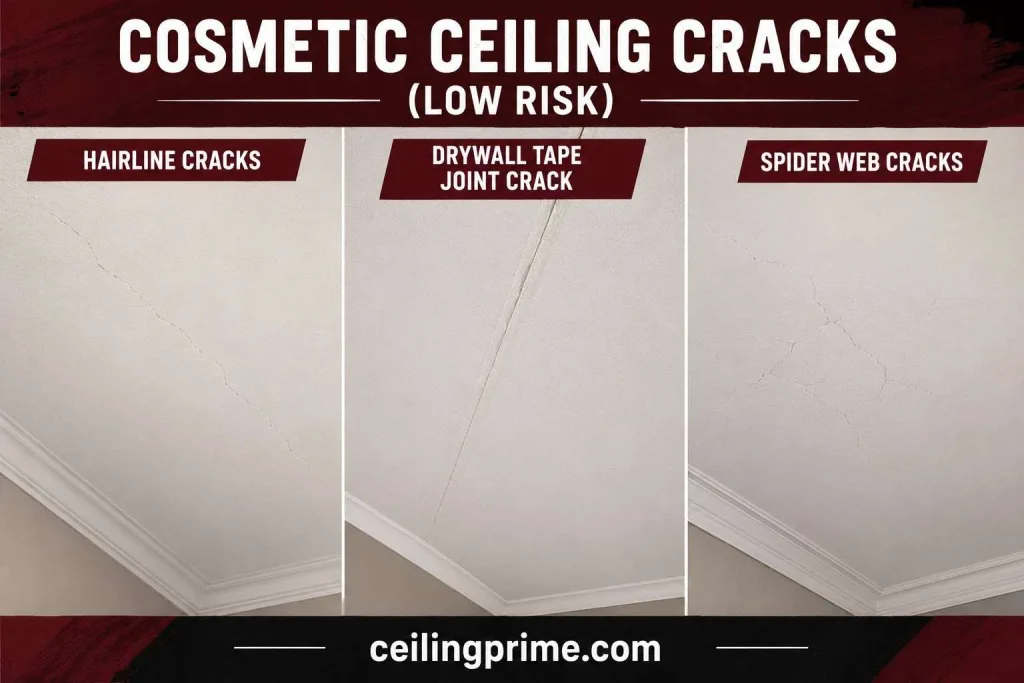
1. Hairline Cracks
What it looks like: Thin, random lines less than 1/16 inch wide scattered across the ceiling. Shallow and patternless.
Cause: Normal house settling. Temperature and humidity changes cause drywall and plaster to expand and contract. New homes develop hairline cracks within the first 1 to 3 years as the foundation settles.
Danger: None. Strictly cosmetic. The most common ceiling crack type.
Fix: Sand the area. Apply drywall mud with a putty knife. Dry, sand smooth, prime, paint. Cost: $20–$50.
2. Straight Tape Joint Cracks
What it looks like: A straight line following the seam between two drywall panels. May appear as a raised ridge where drywall tape separated from the surface.
Cause: Improperly installed drywall tape or insufficient joint compound during original construction.
Danger: None. A finishing defect, not structural.
Fix: Remove old tape. Apply new drywall tape with drywall mud. Sand, prime, paint. Cost: $50–$150.
3. Spider Web Cracks
What it looks like: Fine lines radiating outward from a central point like a spider web. Surface-deep only.
Cause: Multiple layers of paint or plaster applied over years. Each layer shrinks slightly as it dries, creating a web of hairline fractures in the outer coating.
Danger: None. Surface coating issue.
Fix: Sand down cracked paint layers. Apply primer and one even coat of flat ceiling paint.

Ceiling Cracks That Need Monitoring (Medium Risk)
These 4 types of ceiling cracks with pictures need watching over 3 to 6 months. If they grow wider, longer, or develop new symptoms, call a professional.
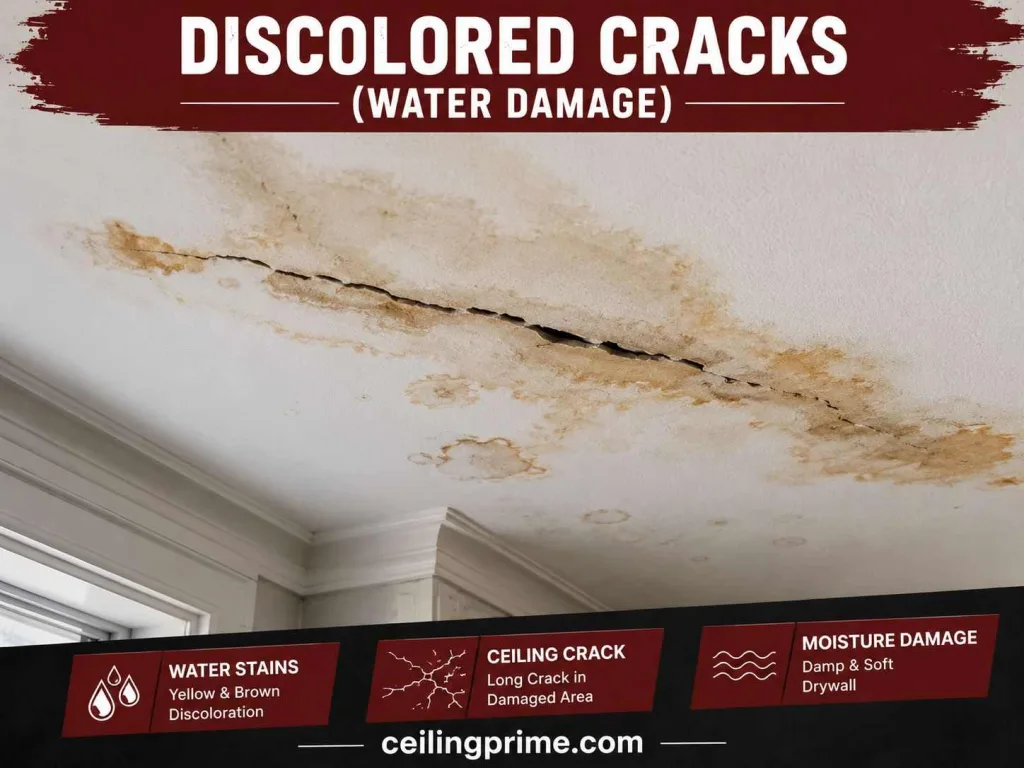
4. Discolored Cracks (Water Damage)
What it looks like: A crack surrounded by a yellow, brown, or rust-colored ring. The drywall around the crack may feel soft or damp.
Cause: Water damage from a plumbing leak, roof leak, overflowing fixture, or condensation. Moisture soaks through drywall, stains the surface, and weakens the material until it cracks.
Danger: Medium. The water source can cause mold growth within 72 hours, wood rot in joists, and progressive drywall failure.
Fix: Find and stop the water source. Let dry. Cut out damaged drywall. Patch, prime with stain-blocking primer (Kilz or Zinsser BIN), paint. Cost: $150–$500.
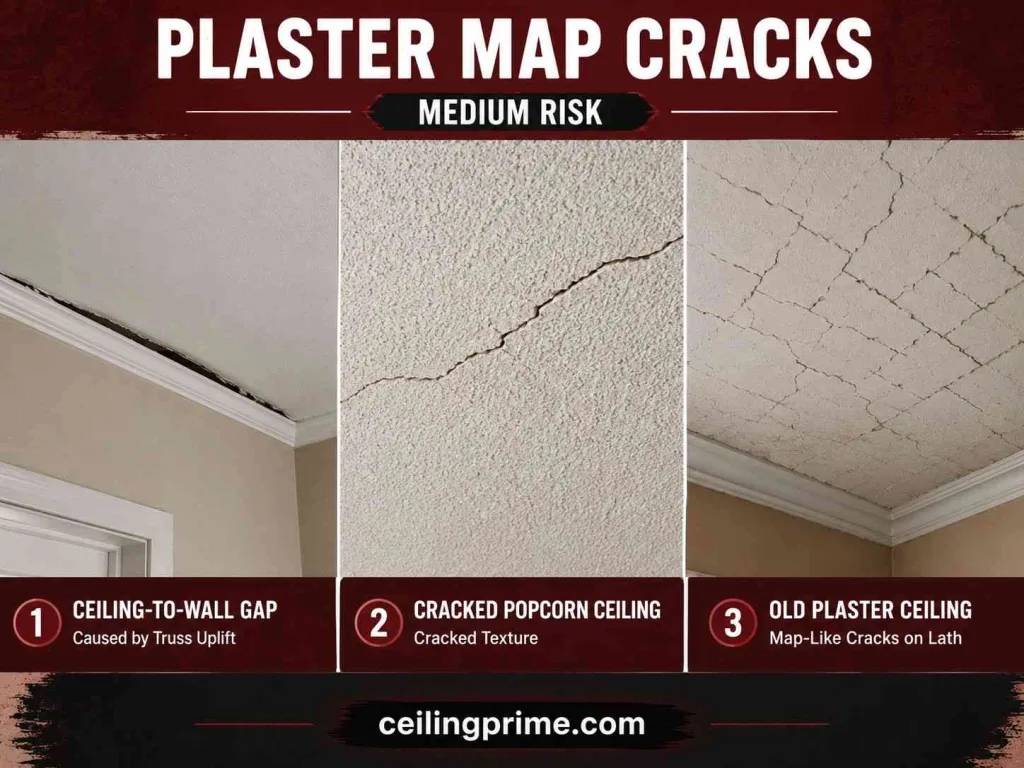
5. Ceiling-to-Wall Gap (Truss Uplift)
What it looks like: A gap where the ceiling meets the wall. Width 1/8 to 1/2 inch. May open and close with seasons.
Cause: Truss uplift: wood roof trusses expand with temperature and humidity, pushing the ceiling center up and pulling edges from walls. Foundation settlement also causes this.
Danger: Medium. Seasonal uplift is normal. Gaps that widen over time may indicate foundation settlement.
Fix: Truss uplift: install crown molding attached to wall only. Foundation issues: call a foundation repair contractor.
6. Popcorn Ceiling Texture Cracks
What it looks like: A crack through the bumpy popcorn texture. Popcorn may crumble along the crack edges.
Cause: Normal settling, moisture, or vibration. Popcorn texture is brittle and cracks more visibly than flat finishes. Pre-1986 popcorn may contain asbestos.
Danger: Medium. Usually cosmetic, but asbestos risk makes disturbance dangerous in older homes.
Fix: Test for asbestos first. If negative: patch with popcorn ceiling patch product, prime, paint. If positive: hire licensed abatement contractor.
7. Plaster Map Cracks
What it looks like: Grid or map-like pattern of fine cracks across a plaster ceiling, following the lath strips behind the plaster. Looks like dried mud.
Cause: Age. Plaster in pre-1950s homes loses its bond to wood lath over decades (plaster key bond failure). Humidity, vibration, and thermal movement accelerate it.
Danger: Medium. Loose plaster can detach and fall. Tap the ceiling — hollow sounds indicate sections ready to drop.
Fix: Small areas: skim coat with joint compound. Large areas: remove plaster, replace with drywall. Cost: $200–$800.
Structural Ceiling Cracks (High Risk — Call a Professional)
These 3 types of ceiling cracks with pictures are structural warnings. They indicate foundation movement or support failure. Call a foundation repair contractor or structural engineer.
8. Diagonal Cracks from Window/Door Corners
What it looks like: A crack at a 45-degree angle from the upper corner of a window or door frame toward the ceiling. Wider than 1/8 inch. May extend 12+ inches.
Cause: Foundation settlement. Uneven foundation shifting distorts the building frame. Stress concentrates at openings — the weakest points in the wall.
Danger: High. One of the strongest indicators of active foundation movement. Check for uneven floors, sticking doors, stair-step cracks in brick, and walls separating from ceiling or floor.
What to do: Call a foundation repair contractor. Do not patch until the foundation issue is resolved.
9. Sagging Ceiling with Multiple Cracks
What it looks like: The ceiling droops or bows downward. Multiple cracks radiate from the sag. Cracks may be wider than 1/4 inch. Drywall feels soft or spongy.
Cause: 3 possible causes: (1) water damage saturating the drywall, (2) structural failure — broken joist, rotted beam, or removed load-bearing wall, (3) excessive weight from above.
Danger: High. A sagging ceiling can collapse. Do not stand under it. Clear the area. If the sag is growing, vacate the room.
What to do: Call a professional immediately. If water is the cause, shut off the water supply and poke a small drain hole in the center of the sag into a bucket.
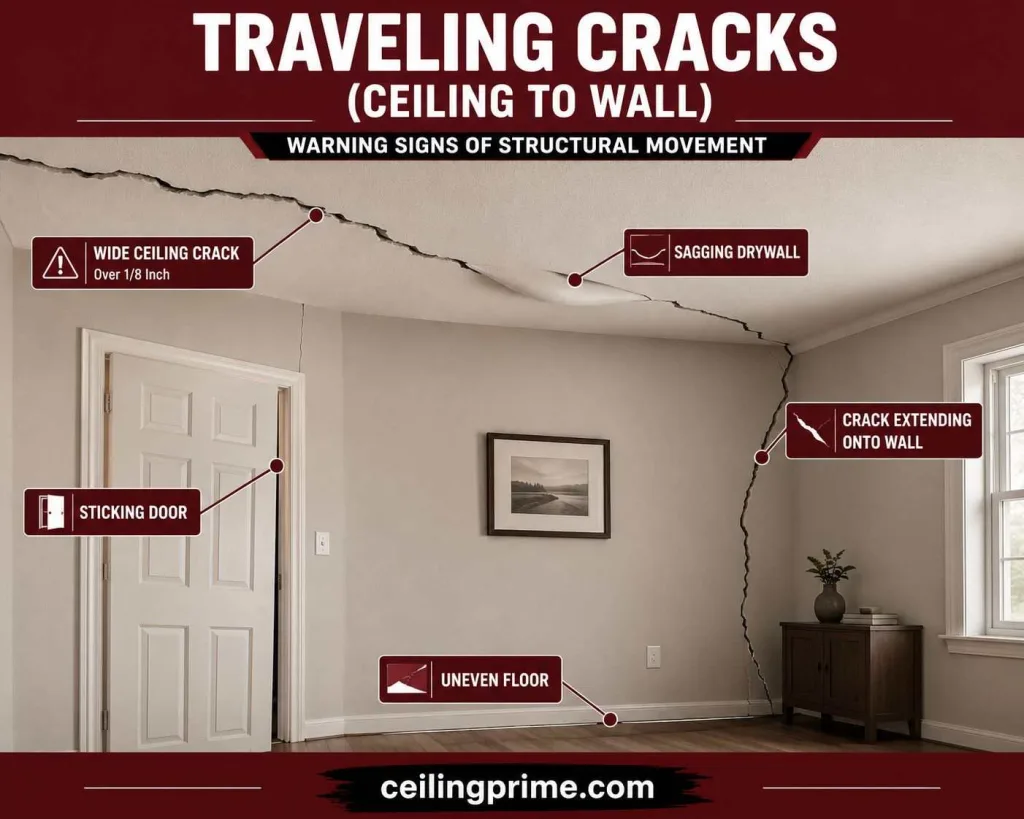
10. Traveling Cracks (Ceiling to Wall)
What it looks like: A crack running across the ceiling and continuing down the wall. Crosses the ceiling-wall joint. Width 1/8 inch or more.
Cause: Foundation movement. Uneven settlement, hydrostatic pressure against basement walls, soil erosion, earthquake, landslide, flood, or sinkhole.
Danger: High. The building structure is under stress at the frame level. Check exterior for stair-step cracks in brick, bowed walls, porches or chimneys pulling away from the house.
What to do: Call a foundation repair contractor or structural engineer. Do not patch — fix the source first.
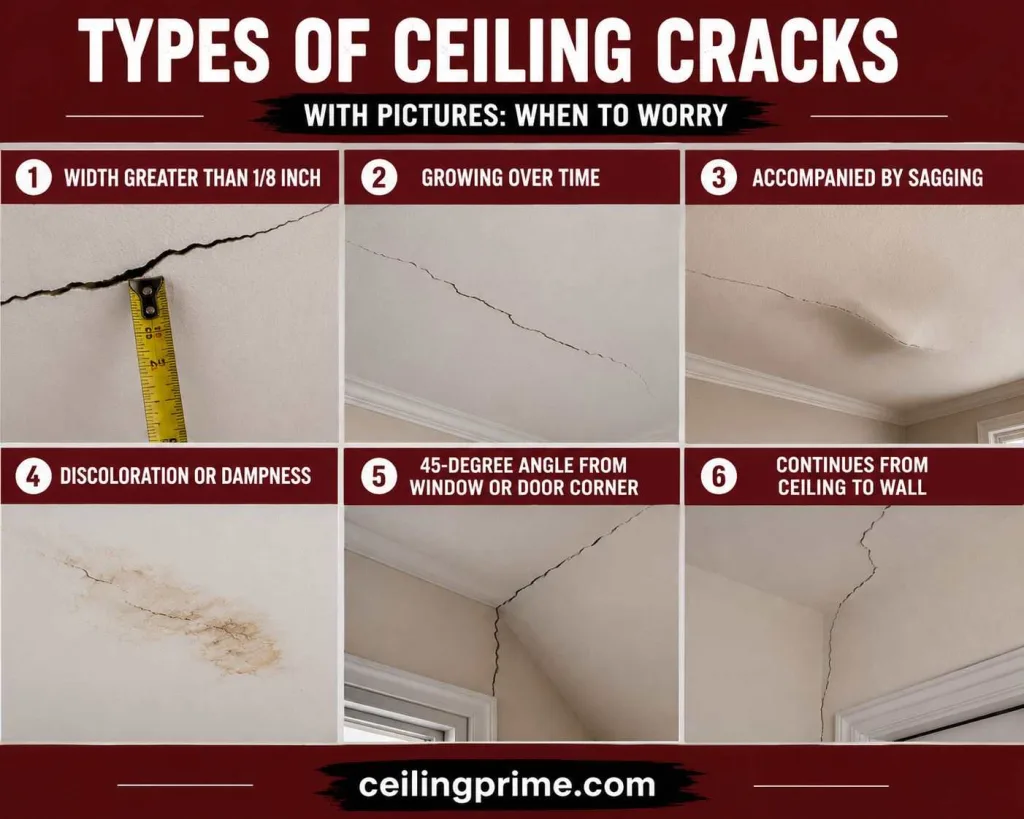
Types of Ceiling Cracks with Pictures: When to Worry
- Width greater than 1/8 inch: needs professional evaluation.
- Growing over time: mark ends with pencil. Check in 30 days. If longer or wider, call a pro.
- Accompanied by sagging: structural warning.
- Discoloration or dampness: active water damage. Fix the source first.
- 45-degree angle from window or door corner: foundation stress.
- Continues from ceiling to wall: building frame movement. Call a professional.
Ceiling Crack Repair Costs in 2026
| Repair Type | 2026 Cost |
| Hairline crack — DIY putty + paint | $20–$50 |
| Tape joint crack — retape + finish | $50–$150 |
| Water damage crack — patch + stain block | $150–$500 |
| Plaster skim coat section | $200–$800 |
| Drywall section replacement | $200–$600 |
| Foundation inspection | $300–$800 |
| Foundation repair | $2,000–$15,000+ |
Frequently Asked Questions
Are ceiling cracks dangerous?
Most are not. 7 out of 10 types are cosmetic or low-to-medium risk. 3 types — diagonal corner cracks, sagging with cracks, and traveling cracks — are structural warnings. Use width, direction, and companion symptoms to evaluate.
Are ceiling cracks covered by insurance?
Insurance covers cracks caused by sudden events (burst pipe, storm, falling tree). It does not cover normal settling, age, or deferred maintenance. Document damage with photos and file within 24 hours.
Can I identify my crack type using pictures?
Yes. This guide to types of ceiling cracks with pictures shows the visual pattern, width, and location for each of the 10 types. Match your crack to the descriptions to determine cause and severity.
What causes ceiling cracks in new homes?
Foundation settlement. New homes settle during the first 1 to 3 years. This produces hairline and minor tape joint cracks that are normal. Cracks wider than 1/8 inch or diagonal patterns in a new home warrant a builder callback.
How do I tell if a ceiling crack is getting worse?
Mark both ends with a pencil and write the date. Measure width. Check in 30 and 60 days. Growth in length, width, or new branches means the crack is active and needs professional inspection.