Garage Ceiling Ideas: 12 Options for Every Budget and Style
Most garages have unfinished ceilings. Bare joists, exposed wiring, visible insulation, and spider webs stare back at you every time you pull in. A finished ceiling transforms the garage from a raw utility space into a clean workshop, gym, home office, or organized storage room.
This guide covers 12 garage ceiling ideas ranked from cheapest to most expensive. It includes materials that meet fire code, alternatives to drywall, PVC panel installations, DIY options, and finishes you can install over existing drywall. Every idea lists the cost per square foot, DIY difficulty, and which garage types it fits best.
All 12 Garage Ceiling Ideas Compared
| Material | Cost/sq ft | DIY Level | Fire Rated? |
| 1. Painted open joists | $0.25–$0.75 | Easy | No |
| 2. Vinyl soffit panels | $1–$3 | Easy | No |
| 3. OSB (oriented strand board) | $0.75–$1.50 | Moderate | No |
| 4. Plywood panels | $1–$2 | Moderate | No |
| 5. PVC ceiling panels | $2–$5 | Easy | No |
| 6. Metal panels (steel/aluminum) | $2–$5 | Moderate | Yes (some) |
| 7. Standard drywall (1/2 inch) | $2–$5 | Hard | No |
| 8. Fire-rated drywall (5/8 Type X) | $2.50–$6 | Hard | Yes |
| 9. Drop ceiling (suspended grid) | $2–$5 | Moderate | Some tiles |
| 10. Beadboard or T&G wood | $3–$8 | Moderate | No |
| 11. Painted drywall + LED upgrade | $3–$7 | Hard | Depends |
| 12. Snap-lock ceiling system | $4–$8 | Easy | No |
Garage Ceiling Ideas on a Budget (Under $2/sq ft)
1. Painted Open Joists (Cheapest Option)
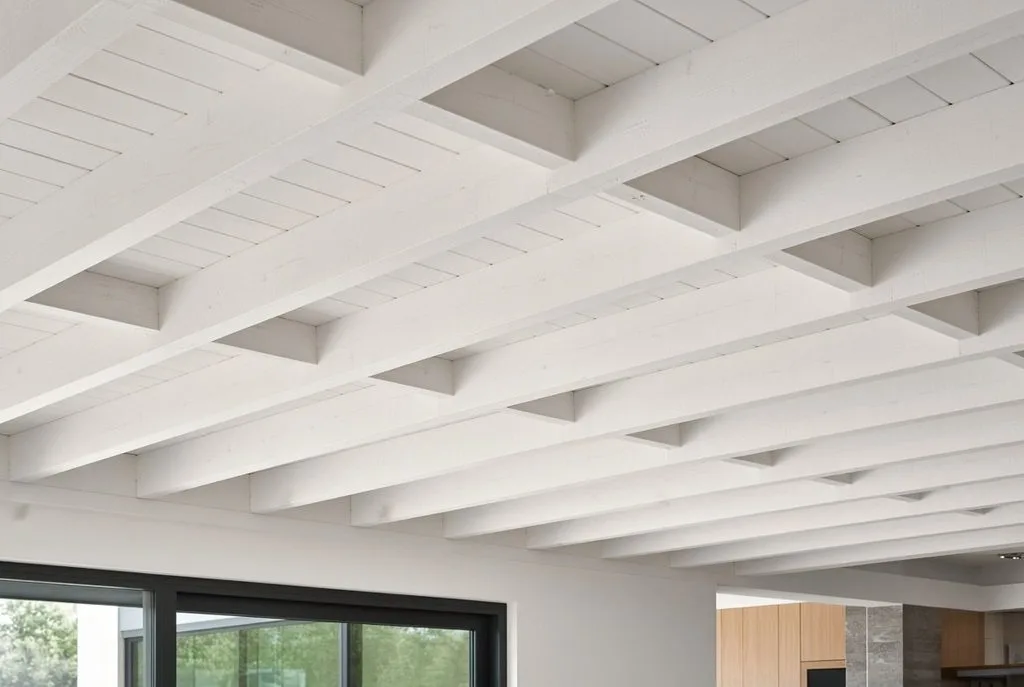
Leave the joists exposed. Paint everything one color — joists, wiring, pipes, and the underside of the subfloor above. Flat black hides the mess. White brightens the space. This is the cheapest finished ceiling option. One gallon of paint covers 350 to 400 square feet on irregular surfaces. Use an airless sprayer to coat everything in 2 to 3 hours.
Cost: $0.25–$0.75/sq ft. | DIY: Easy. | Best for: Budget projects, industrial look, workshops.
2. Vinyl Soffit Panels
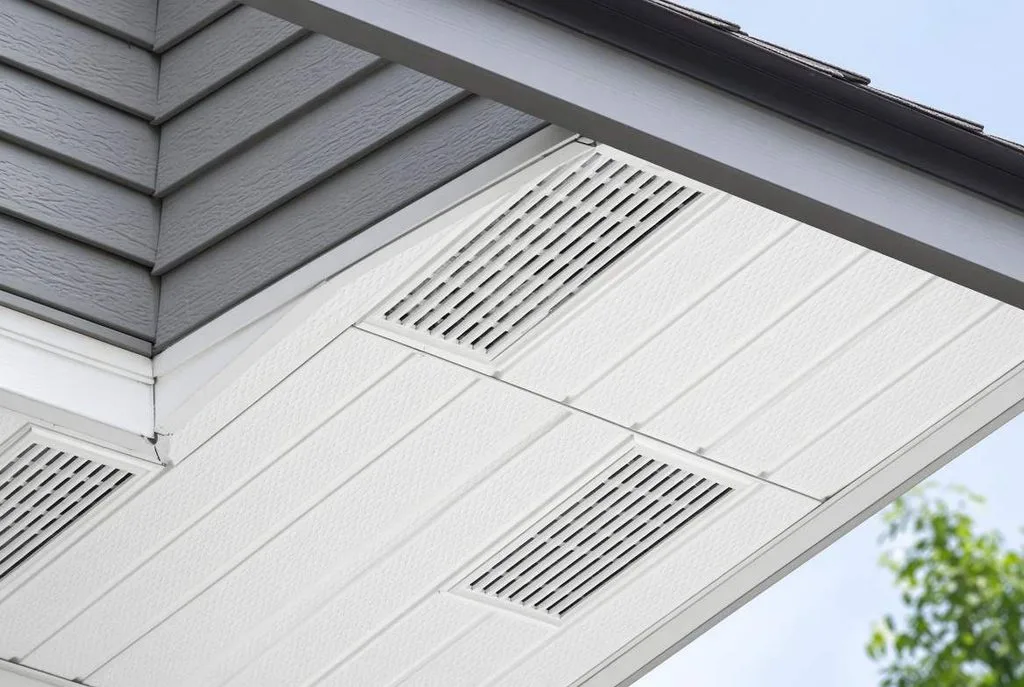
White vinyl soffit panels snap into J-channel tracks screwed to the joist faces. The panels are lightweight, moisture-proof, and never need painting. Vented soffit panels allow air circulation in the joist cavity above. This is the best inexpensive ceiling option because it installs fast, looks clean, and handles garage humidity without rot.
Cost: $1–$3/sq ft. | DIY: Easy. | Best for: Budget finish, quick install, damp garages.
3. OSB (Oriented Strand Board)
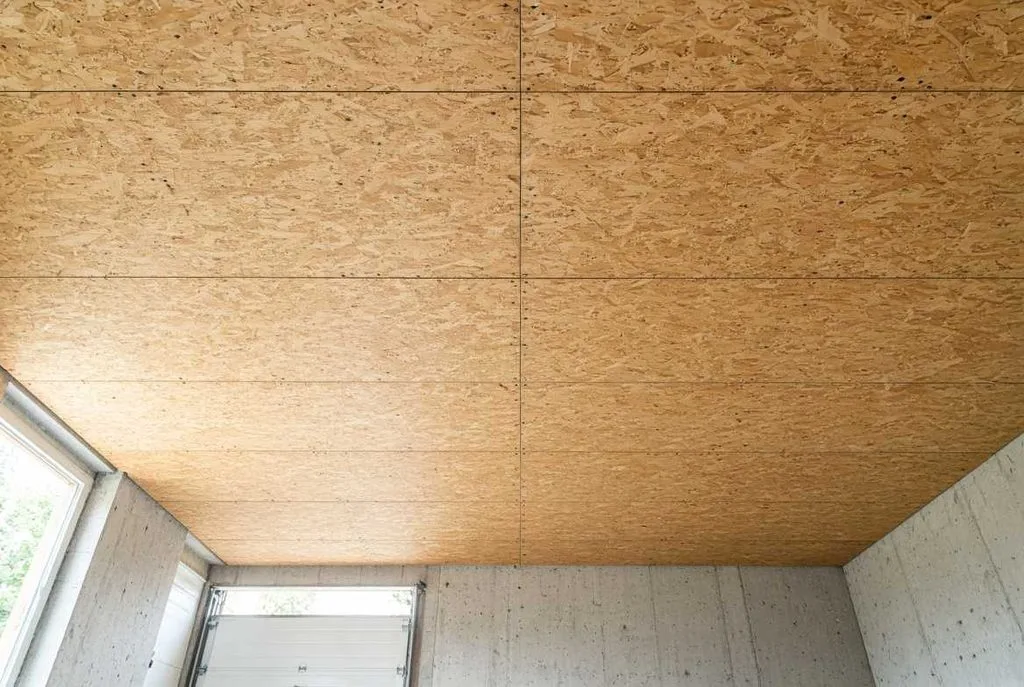
4×8 sheets of 7/16-inch OSB screwed to the joist faces create a solid, rustic ceiling. OSB has a textured wood-chip surface. Leave it natural for an industrial workshop look. Paint it white for a brighter finish. OSB is cheaper than plywood and handles the weight of overhead storage mounted to the joists.
Cost: $0.75–$1.50/sq ft. | DIY: Moderate (heavy sheets, overhead lifting). | Best for: Workshops, utility garages.
4. Plywood Panels
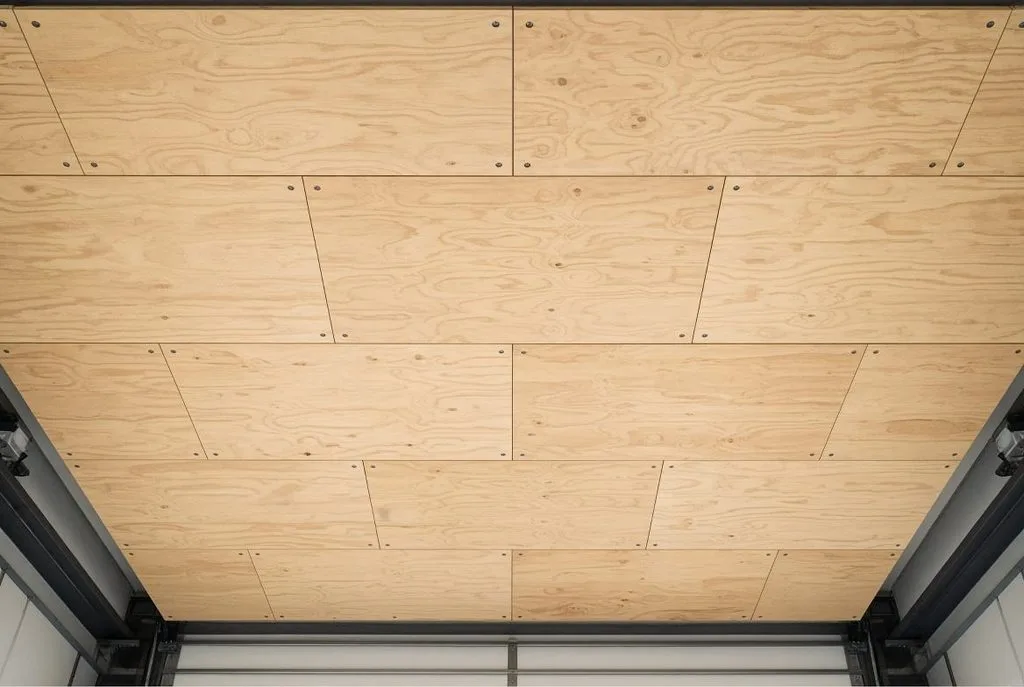
1/4-inch or 3/8-inch plywood sheets screwed to the joist faces create a smooth, paintable surface. Plywood is lighter than OSB and easier to handle overhead. It takes paint better than OSB. Use exterior-grade plywood in garages with temperature swings and humidity.
Cost: $1–$2/sq ft. | DIY: Moderate. | Best for: Budget finish that you plan to paint white.
Garage Ceiling Ideas Other Than Drywall
Drywall is the standard ceiling material for interior rooms. But in a garage, drywall is heavy, hard to install overhead solo, requires taping and mudding, and cracks from temperature swings. Many homeowners look for non-drywall alternatives because the installation is easier and the result is just as clean.
1. PVC Ceiling Panels
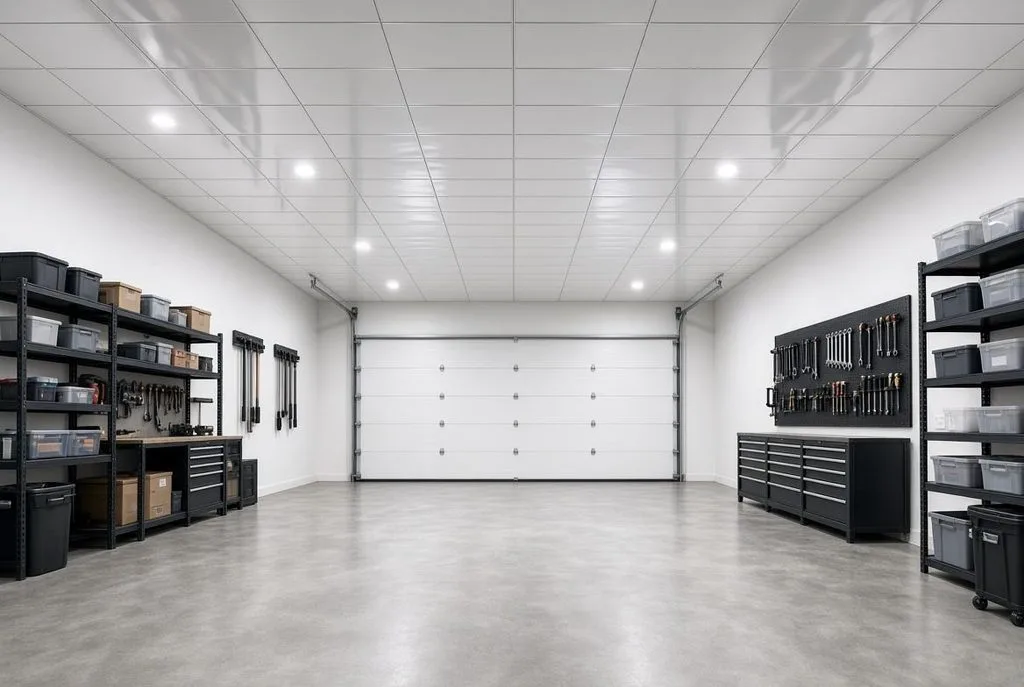
PVC interlocking panels snap together tongue-and-groove style. They screw or staple directly to the joists. PVC is waterproof, mold-proof, and wipes clean with a damp cloth. It does not absorb moisture, odors, or exhaust fumes. White PVC brightens the garage and reflects light from overhead fixtures. This is the top PVC ceiling option because it combines easy installation with zero maintenance.
Cost: $2–$5/sq ft. | DIY: Easy. | Best for: Clean finished look, chemical-resistant, easy cleaning.
2. Metal Panels (Steel or Aluminum)
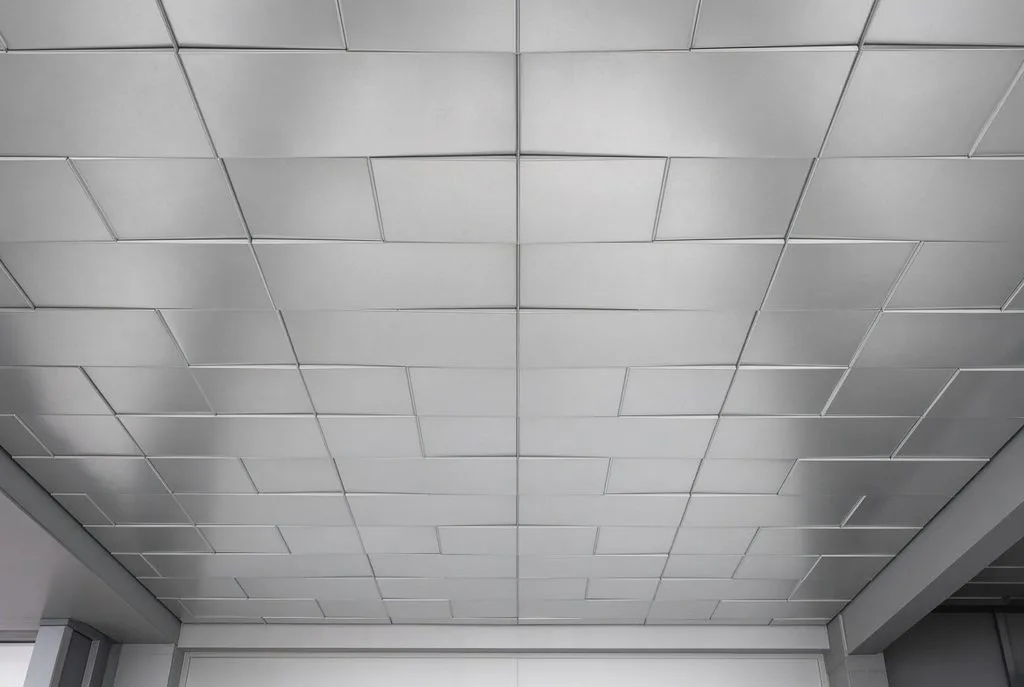
Corrugated steel or flat aluminum panels screw directly to the joists. Metal is durable, fire-resistant (some panels are fire-rated), and reflects light well. Galvanized steel resists rust. Aluminum is lighter and easier to cut. Metal panels give the garage an industrial, modern aesthetic.
Cost: $2–$5/sq ft. | DIY: Moderate (sharp edges, need tin snips). | Best for: Industrial style, fire-conscious garages, workshops.
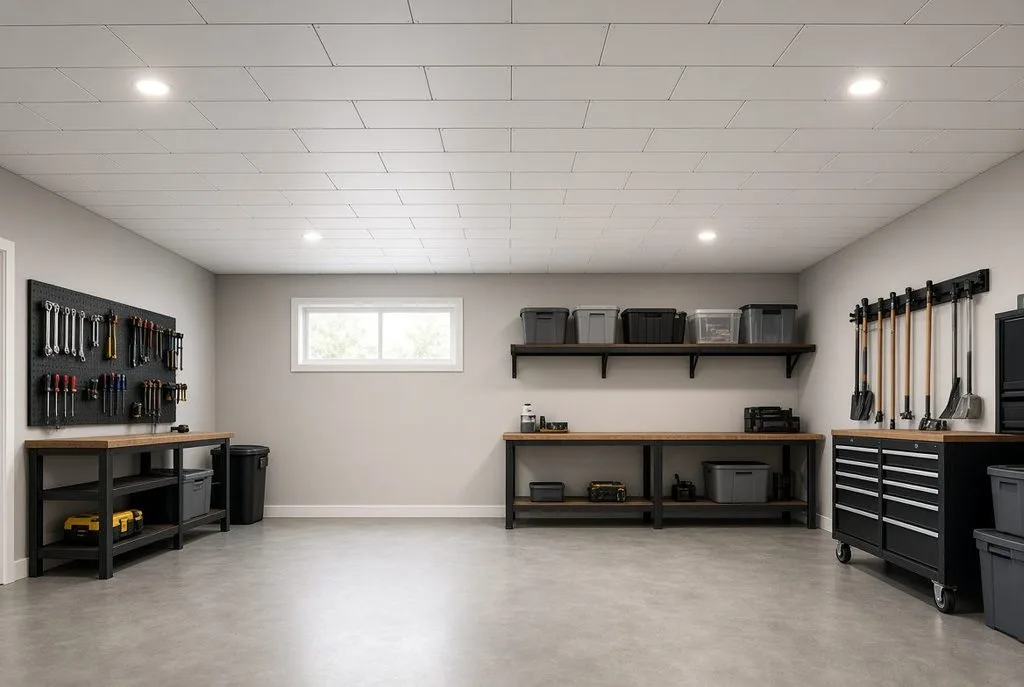
3. Drop Ceiling (Suspended Grid)
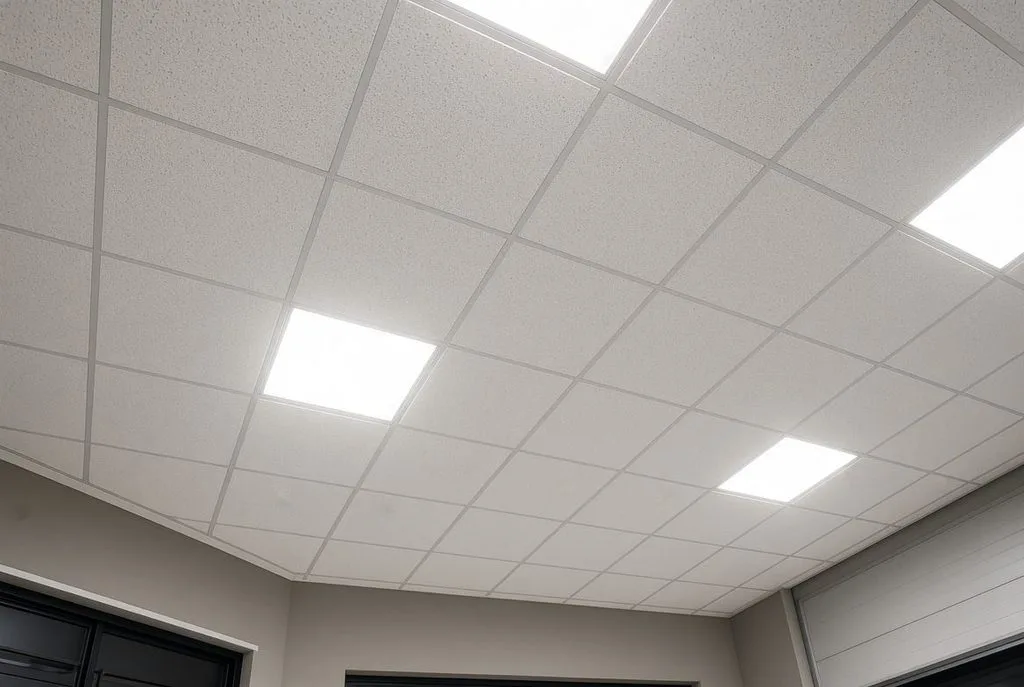
A metal grid hangs from wires attached to the joists. Acoustical tiles or PVC tiles drop into the grid. Drop ceilings hide wiring, pipes, and ductwork while keeping them accessible. Lift a tile to reach anything above. This makes drop ceilings popular in garages with HVAC ductwork or electrical runs.
Cost: $2–$5/sq ft. | DIY: Moderate. | Best for: Finished garages with overhead utilities, easy access to wiring.
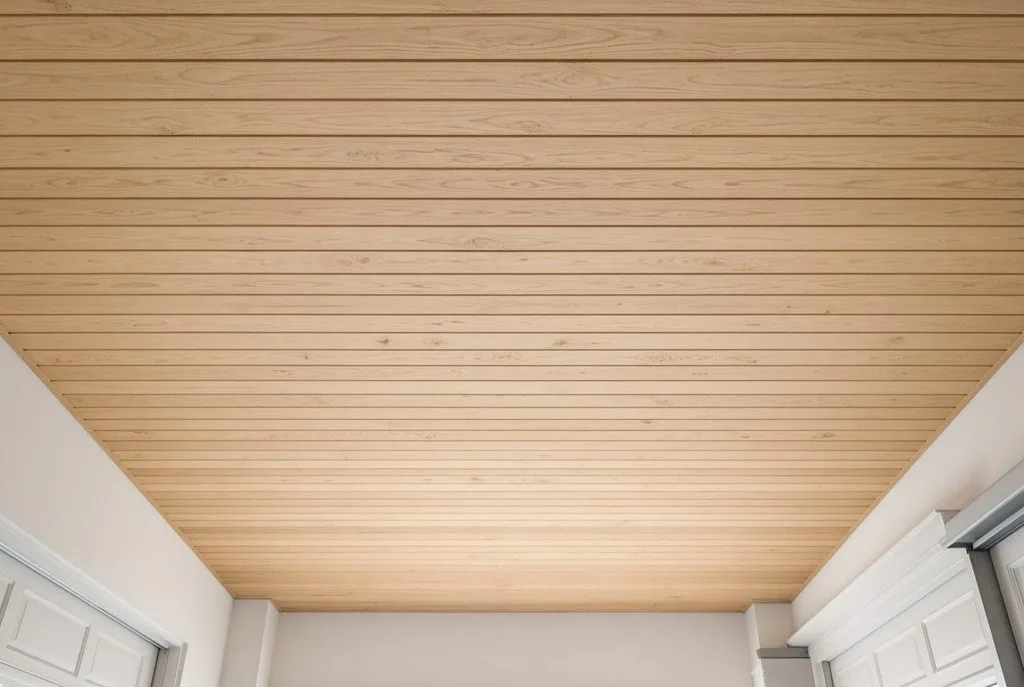
4. Beadboard or Tongue-and-Groove Wood
Wood planks nailed to the joist faces create a warm, premium garage ceiling. Beadboard adds a cottage character. Tongue-and-groove pine or cedar adds a rustic workshop feel. This is the most expensive non-drywall option. Use it in garages that double as living spaces, home offices, or entertainment rooms.
Cost: $3–$8/sq ft. | DIY: Moderate. | Best for: Premium finish, garages used as living space.
5. Snap-Lock Ceiling System
Interlocking panels clip onto a track system mounted to the joists. The panels snap together without screws or nails on the visible surface. The result is a seamless, clean ceiling with no visible fasteners. Panels pop out for access to wiring above. This is the cleanest non-drywall garage ceiling design available.
Cost: $4–$8/sq ft. | DIY: Easy. | Best for: Showroom garages, man caves, home gyms.
Garage Ceiling Ideas with Drywall
1. Standard Drywall (1/2 Inch)
Standard drywall produces the smoothest, most polished ceiling finish. It accepts any paint color and any texture (smooth, orange peel, knockdown). The downside: drywall is heavy, requires a lift or helper, needs taping and mudding, and takes 3 to 5 days to finish. It does not meet fire code in attached garages without upgrading to Type X.
Cost: $2–$5/sq ft installed. | DIY: Hard. | Best for: Garages converting to living space, smooth finish preference.
2. Fire-Rated Drywall (5/8 Inch Type X)
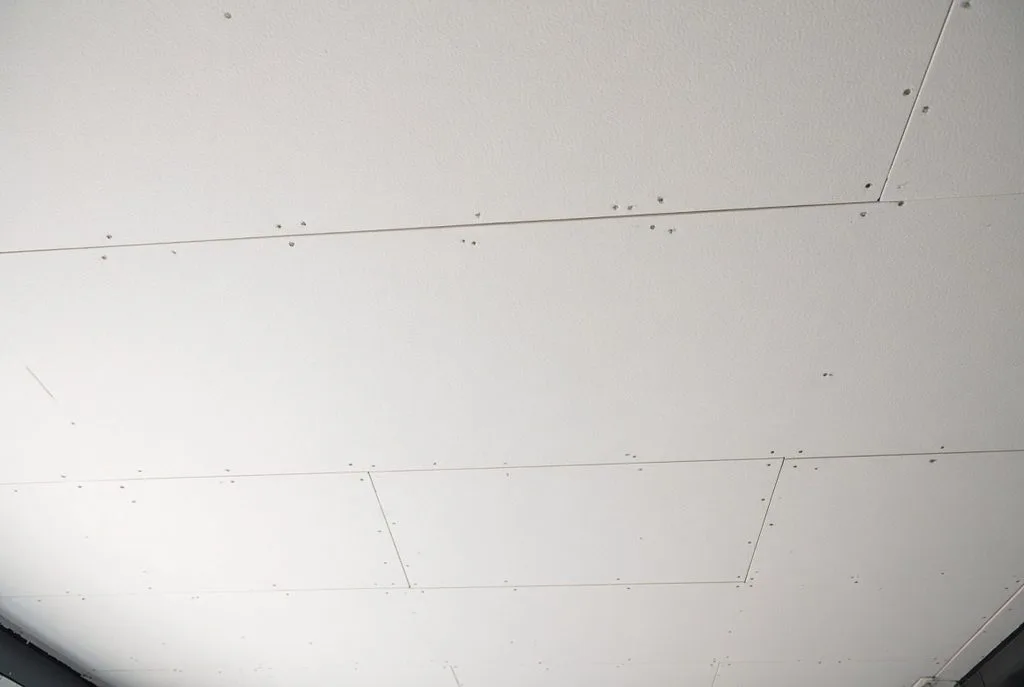
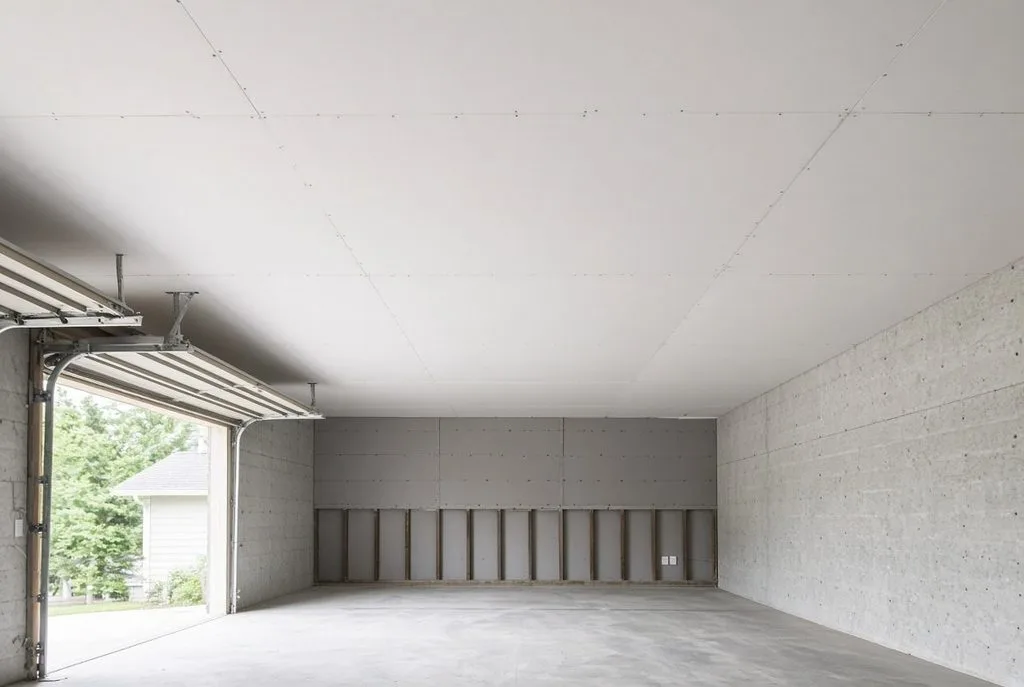
Building codes require 5/8-inch Type X fire-rated drywall on garage ceilings and walls that share a boundary with living space. This is not optional. It is the minimum fire separation between the garage and the rooms above or beside it. Type X drywall contains glass fiber reinforcement that resists fire longer than standard panels. Among all attached garage ceiling options, Type X drywall is the only option that satisfies fire code.
Cost: $2.50–$6/sq ft installed. | DIY: Hard. | Best for: Attached garages (code required), rooms above garage.
Garage Ceiling Ideas Over Existing Drywall
If your garage already has drywall but it looks tired, stained, or cracked, you do not have to tear it out. Several finishes install directly over the existing surface.
Painted Drywall + LED Lighting Upgrade
The cheapest upgrade for an existing drywall ceiling: scrape any peeling paint, prime, and repaint bright white. Then replace the single-bulb fixture with 4-foot LED shop lights. Two to four LED fixtures transform a dim, dingy garage into a bright workspace. This is the fastest garage ceiling upgrade — one afternoon for paint and lights.
Cost: $1–$3/sq ft (paint) + $20–$50 per LED light. | DIY: Easy. | Best for: Quick refresh without major work.
PVC panels and snap-lock systems also install over existing drywall. Screw the mounting tracks through the drywall into the joists above. The new surface covers stains, cracks, and old texture without demolition.
Garage Ceiling Ideas DIY: Which Can You Do Yourself?
| DIY Difficulty | Materials | Tools Needed |
| Easy (weekend project) | Painted joists, vinyl soffit, PVC panels, snap-lock | Drill, saw, level, spray gun |
| Moderate (2–3 days) | OSB, plywood, metal, drop ceiling, beadboard | Above + lift/helper, tin snips, nailer |
| Hard (3–5 days) | Drywall (standard or Type X) | Drywall lift, taping knives, sander, compound |
Most DIY garage ceiling projects require only a drill, a saw, and a level. PVC panels and vinyl soffit are the easiest solo installations because the panels are lightweight and snap together. Drywall is the hardest because of overhead weight, compound coats, and sanding between coats.
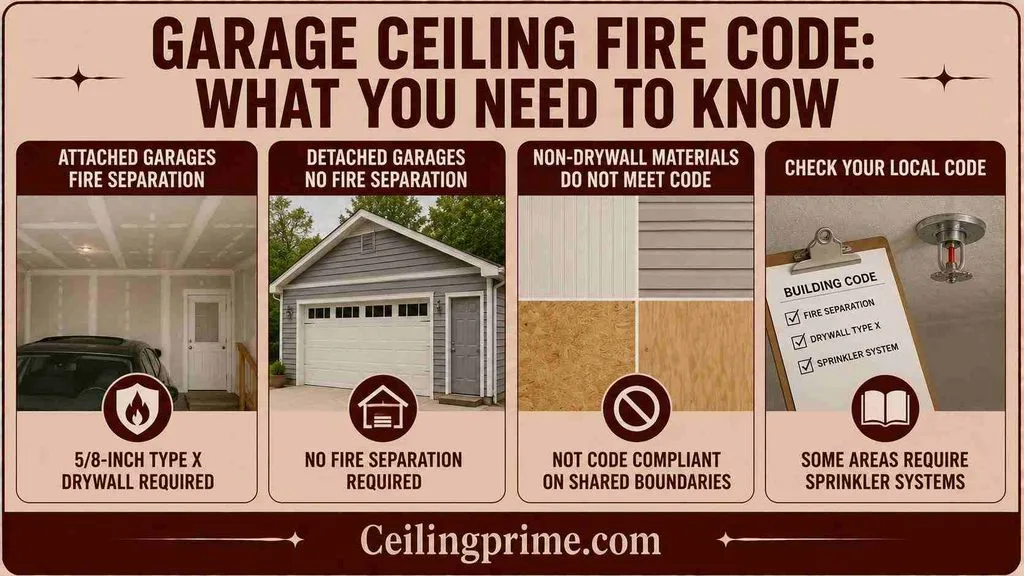
Garage Ceiling Fire Code: What You Need to Know
- Attached garages with living space above or beside must have a fire separation. The standard is 5/8-inch Type X drywall on all shared boundaries (ceiling and walls).
- Detached garages have no fire separation requirement. You can use any ceiling material.
- Non-drywall materials (PVC, vinyl, OSB, plywood, wood) do not meet fire code for shared boundaries. If your garage is attached, install Type X drywall first, then add your decorative finish on top.
- Check your local code. Some jurisdictions require sprinkler systems in addition to drywall fire separation.
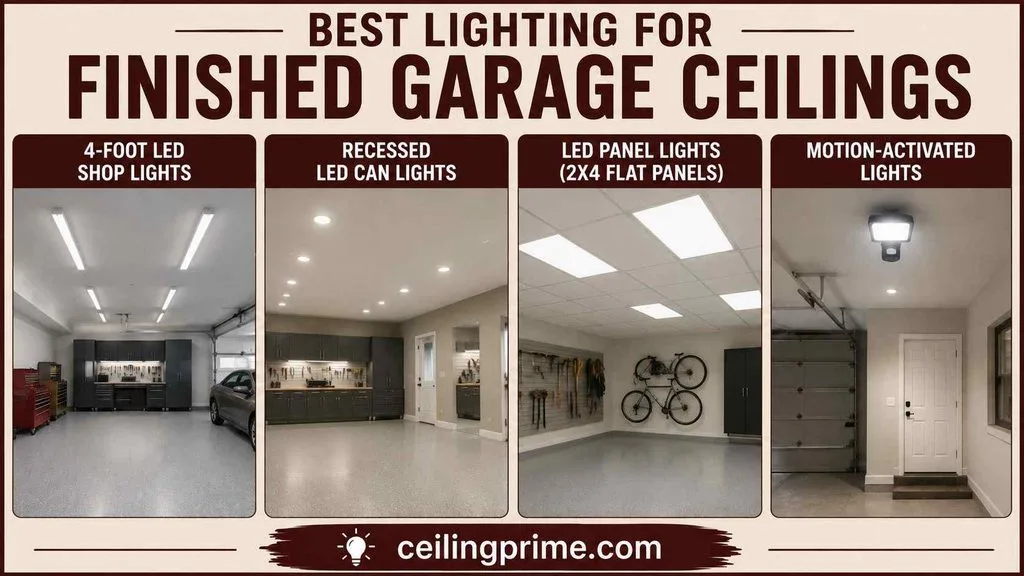
Best Lighting for Finished Garage Ceilings
- 4-foot LED shop lights: The standard for garages. Produce 4,000 to 5,000 lumens per fixture. Mount 2 to 4 across the ceiling for even coverage. Cost: $20 to $50 each.
- Recessed LED can lights: Flush with the ceiling surface. Clean look. Require drywall or solid panel ceiling for mounting. Space them 4 to 6 feet apart.
- LED panel lights (2×4 flat panels): Drop into a suspended grid ceiling. Produce 4,000 to 6,000 lumens. Replace fluorescent tubes with no rewiring.
- Motion-activated lights: Turn on when you enter. Turn off after 5 to 15 minutes of no movement. Save energy. Ideal for garages used intermittently.
Garage Ceiling Costs by Material
| Material | DIY Cost (2-Car, ~450 sq ft) | Professional Cost |
| Painted open joists | $100–$350 | $300–$600 |
| Vinyl soffit | $450–$1,350 | $800–$2,000 |
| OSB panels | $340–$680 | $700–$1,500 |
| Plywood panels | $450–$900 | $800–$1,800 |
| PVC panels | $900–$2,250 | $1,500–$3,500 |
| Metal panels | $900–$2,250 | $1,500–$3,500 |
| Drywall (Type X) | $200–$500 (materials) | $1,500–$4,000 |
| Drop ceiling | $900–$2,250 | $1,500–$3,000 |
| Beadboard / T&G | $1,350–$3,600 | $2,500–$5,000 |
| Snap-lock system | $1,800–$3,600 | $3,000–$5,500 |
The most popular options fall between $1 and $5 per square foot. Painted joists is the cheapest at under $1. Snap-lock systems are the most expensive at $4 to $8. Most homeowners land on vinyl soffit or PVC panels for the best balance of price, appearance, and ease of installation.
Finish the Ceiling and Transform the Garage
The right garage ceiling ideas match your budget, your skill level, and how you use the space. Painted joists work for utility garages. Vinyl soffit and PVC panels work for clean, moisture-proof finishes on a budget. Type X drywall satisfies fire code for attached garages. Snap-lock systems and beadboard create showroom-quality results. Pick your material, check fire code, and transform the most neglected surface in your garage.
Frequently Asked Questions
What is the cheapest way to finish a garage ceiling?
Painted open joists. One gallon of flat paint and an afternoon. Cost: under $50 for a 2-car garage. Vinyl soffit is the cheapest panel option at $1 to $3 per square foot.
Do I need drywall on my garage ceiling?
Only if the garage is attached to living space. Fire code requires 5/8-inch Type X drywall on shared boundaries. Detached garages can use any material. You can install decorative panels over the required drywall.
Can I install PVC panels over existing drywall?
Yes. Screw the mounting tracks through the drywall into the joists behind it. The PVC panels snap onto the tracks. This covers old stains, cracks, and texture without demolition.
What garage ceiling material is best for humidity?
PVC panels and vinyl soffit. Both are waterproof and mold-proof. They do not absorb moisture, warp, or rot. OSB and standard drywall absorb humidity and can grow mold in damp garages without dehumidifiers.
Can I use a drop ceiling in a garage?
Yes. A drop ceiling hides utilities and gives easy access to wiring and plumbing above. The grid hangs 2 to 4 inches below the joists. Confirm your garage has enough headroom — the drop ceiling lowers the finished height by 4 to 6 inches.
What is the best lighting for a finished garage ceiling?
4-foot LED shop lights. Two to four fixtures provide 8,000 to 20,000 lumens of bright, even light for $40 to $200 total. Recessed LED cans produce a cleaner look but cost more and require a solid ceiling surface.





One Comment