Interior Design DrHomey: A Complete Guide to Practical, Budget-Friendly Home Styling
Interior design used to mean hiring a professional, spending thousands of dollars, and living in a construction zone for weeks. DrHomey changed that equation. The platform — built by designers, renovation specialists, and DIY experts — strips interior design down to clear, actionable principles that work in real homes with real budgets. No $15,000 custom sofas. No Pinterest-perfect rooms that nobody actually lives in. Just practical guidance on color, lighting, layout, furniture, and organization that makes any space look and feel better without requiring a design degree or an unlimited credit card.
Interior Design DrHomey is an online platform (drhomey.com) that provides room-by-room home styling advice, color selection guides, furniture placement principles, budget-friendly decorating tips, and 2026 design trend analysis — all written for homeowners, renters, and DIY enthusiasts rather than industry professionals.
The DrHomey approach is built on practical design rules (the 60-30-10 color rule, the 3-5-7 accessory principle, paint selection based on window direction) that produce professional-looking results without professional costs. This guide covers how the interior design DrHomey method works, the core principles behind it, room-by-room application, the 2026 trends shaping the platform’s content, and how to apply DrHomey principles whether your budget is $0 or $10,000.
What Is Interior Design DrHomey?
DrHomey is an online home design platform that bridges the gap between high-end interior design and everyday home improvement — providing structured, accessible design advice for people who want their homes to look intentional without spending a fortune.
The platform covers interior design, exterior improvements, home renovation, organization, and lifestyle upgrades. Contributors include professional builders, renovators, architects, and interior designers with combined experience spanning decades. The content is written for homeowners and renters of all experience levels — from someone rearranging a studio apartment to a family renovating a 4-bedroom house.
What separates DrHomey from generic home décor blogs is its systematic approach. Instead of showing aspirational photos with no context (“Get the look!”), DrHomey provides the rules behind the design — why certain colors work together, where furniture should sit relative to walls and windows, how lighting changes the perception of space, and which improvements deliver the most visual impact per dollar spent.

Core Interior Design DrHomey Principles
The 60-30-10 Color Rule
The 60-30-10 rule is the foundation of every well-designed room: 60% of the room’s color comes from the dominant shade (walls, large furniture, rugs), 30% from a secondary color (curtains, accent chairs, bedding), and 10% from an accent color (throw pillows, art, decorative objects).
This rule prevents the 2 most common color mistakes: rooms that are too monotone (boring) and rooms with too many competing colors (chaotic). The dominant color sets the mood. The secondary adds depth. The accent provides energy.
| Color Role | Percentage | Where It Shows Up | Example |
| Dominant | 60% | Walls, large furniture, area rugs | Warm white walls, beige sofa |
| Secondary | 30% | Curtains, accent chairs, bedding, backsplash | Olive green curtains, sage bedding |
| Accent | 10% | Throw pillows, art, vases, lamps | Terracotta pillows, brass lamp |
The 3-5-7 Accessory Rule
Use odd numbers of decorative elements — 3, 5, or 7 — on shelves, mantels, and surfaces. Odd groupings create visual movement and feel curated rather than staged. Even numbers feel static and commercial (like a retail display).
On a shelf: 3 books, 1 small vase, 1 sculptural object — heights varied. On a coffee table: 5 elements — a stack of books, a candle, a tray, a small plant, and 1 decorative object. The heights, textures, and materials should vary to keep the eye moving.
Paint Selection by Window Direction
One of the most practical interior design DrHomey tips: choose paint colors based on which direction your windows face, because natural light changes the appearance of every color depending on the compass point.
| Window Direction | Light Quality | Best Paint Colors |
| North-facing | Cool, bluish light (spaces feel colder) | Warm tones: creamy whites, warm grays (greige), soft yellows |
| South-facing | Intense, warm golden light all day | Cool tones: blues, greens, cool grays to balance warmth |
| East-facing | Bright morning, shadowy afternoon | Soft warm neutrals that work in both light conditions |
| West-facing | Shadowy morning, intense afternoon sun | Adaptable neutrals — warm tones can overwhelm by sunset |
This principle alone prevents one of the most expensive mistakes in home design: painting a room a color that looked perfect on the swatch but feels completely wrong once it’s on the walls and hit by the actual light in your space.
Furniture Placement: Pull Away from Walls
Pull your furniture away from the walls — even a few inches behind a sofa creates breathing room and makes the space feel larger. Pushing all furniture against the walls is the most common layout mistake in living rooms. It makes the room feel like a waiting room instead of a living space.
Create conversation zones instead: angle chairs toward the sofa, place a coffee table within reach of all seating, and leave walking paths that don’t require sidestepping furniture.
Interior Design DrHomey: Room-by-Room Guide
Living Room
The living room is where interior design DrHomey principles have the most visible impact. The key moves:
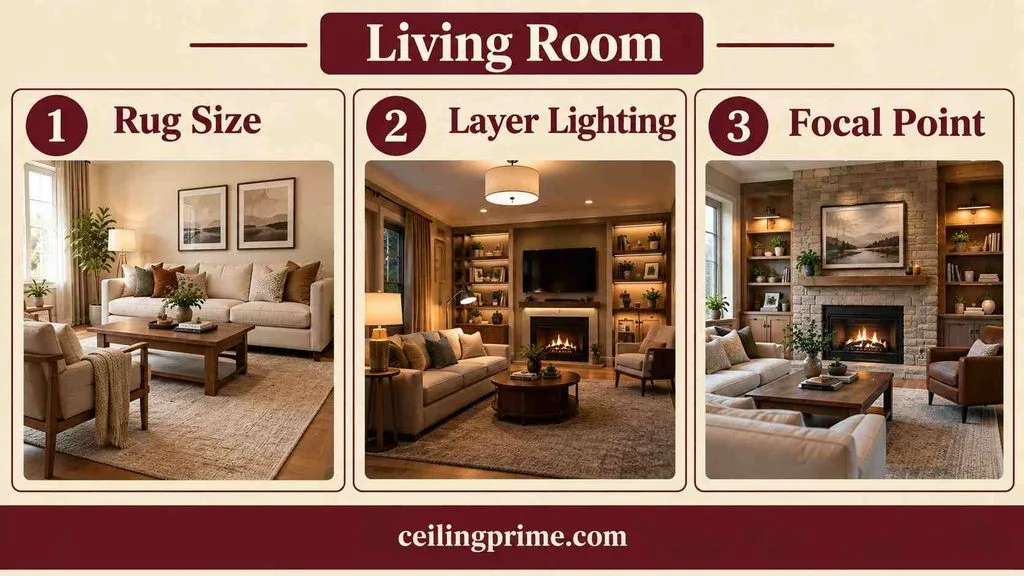
- Rug size matters more than rug quality. A rug that’s too small (where only the coffee table sits on it and the sofa legs are off) makes the room feel disjointed. The front legs of all seating should sit on the rug at minimum. An 8×10 rug works for most living rooms. Buying a cheap rug in the right size always looks better than an expensive rug that’s too small.
- Layer your lighting. No room should rely on a single overhead light. The interior design DrHomey method uses 3 layers: ambient (overhead or recessed), task (reading lamps, desk lamps), and accent (candles, picture lights, LED strips behind furniture). Each layer operates on a separate switch or dimmer.
- Anchor with a focal point. Every room needs 1 dominant visual element — a fireplace, a large piece of art, a statement bookshelf, or a bold accent wall. Everything else in the room should support (not compete with) the focal point.
Bedroom
- The bed is 90% of the bedroom’s visual impact — invest in bedding before anything else. White or neutral bedding with textured layers (a linen duvet, a knit throw, 2 to 3 pillows in different sizes) creates the hotel-bed look. The double-duvet trick (2 lightweight duvets inside 1 cover) adds loft without the cost of a premium down comforter.
- Nightstands don’t have to match. Using 2 different nightstands (same height, different style) adds personality and avoids the furniture-showroom look. A wall-mounted shelf on one side and a small table on the other works in tight spaces.
- Blackout curtains change everything. Floor-to-ceiling blackout curtains (hung 4 to 6 inches above the window frame and extending 6 to 12 inches beyond each side) make the window look larger, block light for better sleep, and add a layer of texture to the room. A $40 pair of blackout curtains transforms a bedroom more than a $400 headboard.
Kitchen
- Open shelving works when it’s edited — 3 to 5 items per shelf, unified color palette, varying heights. The mistake is treating open shelves like closed cabinets and cramming everything onto them. If you can’t curate it, keep the cabinet doors.
- Under-cabinet lighting costs $20 and takes 15 minutes. Peel-and-stick LED strip lights under upper cabinets illuminate the countertop workspace and make the entire kitchen feel warmer and more intentional. This is the highest-impact, lowest-cost kitchen improvement available.
- Replace hardware before replacing cabinets. New pulls and knobs ($3 to $8 each) on existing cabinets can transform a kitchen’s look for $50 to $100 total. Brass, matte black, or brushed nickel hardware modernizes dated cabinets instantly.

Bathroom
- A single framed mirror upgrade replaces the builder-grade flat mirror and changes the bathroom’s entire aesthetic. Remove the adhesive-mounted flat mirror (the one in every rental and builder-spec home) and hang a framed mirror. Wood, metal, or rattan frames in natural tones add warmth.
- Matching towels and a coordinated shower curtain make a bathroom look “designed.” It sounds basic because it is — but mismatched towels and a generic shower curtain are the difference between a bathroom that looks intentional and one that looks like a dorm room.
Home Office
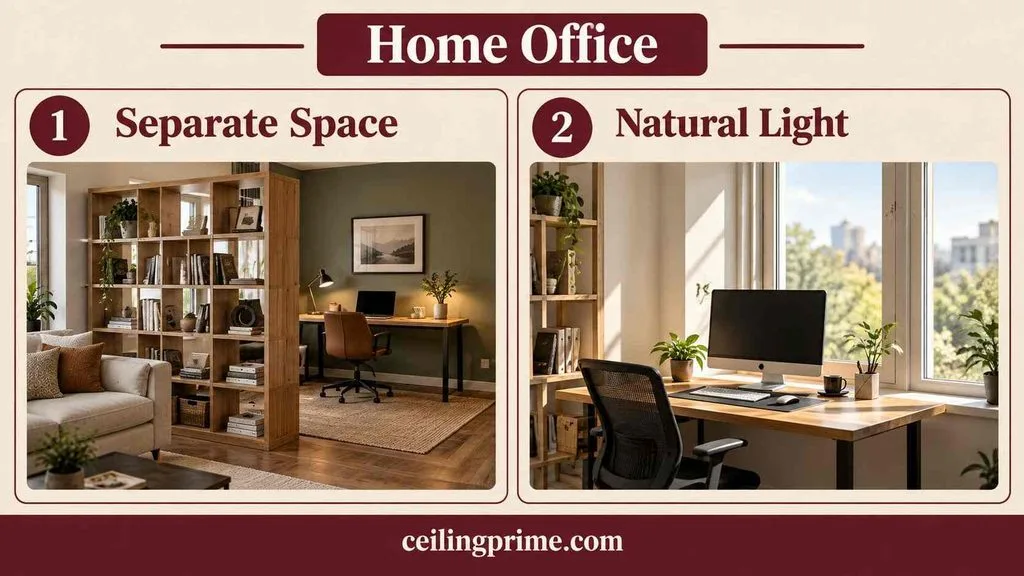
- Separate the workspace from the rest of the room visually — even in a studio apartment. A bookshelf used as a room divider, a rug that defines the desk zone, or a different paint color on the office wall creates psychological separation between work and living space.
- Face natural light when possible. Position your desk so windows are in front of you or to the side — never behind the monitor. Back-lit screens cause eye strain and screen glare.
Interior Design Trends on DrHomey in 2026
DrHomey tracks design trends that are showing up in real homes — not just on magazine covers and design mood boards.
| Trend | What It Looks Like | Why It Works |
| Earth tones and warm neutrals | Mocha brown, terracotta, olive green, greige replacing cold grays | Creates grounded, calming spaces that feel warm year-round |
| Curved furniture | Rounded sofas, arched cabinets, circular coffee tables | Softens rooms, improves flow, feels more inviting than sharp edges |
| Natural materials | Raw wood, stone, linen, rattan, clay replacing synthetic finishes | Adds texture and warmth that synthetic materials can’t replicate |
| Smart home integration | Smart thermostats, automated lighting, voice-controlled systems | Reduces energy waste and adds convenience with minimal visual intrusion |
| Biophilic design | Indoor plants, natural light maximization, water features, living walls | Connects indoor spaces to nature, proven to reduce stress |
| Japandi style | Japanese minimalism + Scandinavian warmth | Clean lines with warm materials — functional without feeling cold |
| Bold ceilings | Painted ceilings, wallpapered ceilings, exposed beams | The “fifth wall” adds dimension without requiring wall changes |
Interior Design DrHomey on a Budget
The DrHomey approach works at every price point. The table below shows where to spend and where to save for maximum visual impact per dollar.
| Budget | Best Moves | Estimated Cost |
| $0 (rearrange only) | Pull furniture from walls, rearrange layout, declutter surfaces, create focal point | Free |
| $50–$100 | New throw pillows, replace cabinet hardware, add under-cabinet LED lights | $50–$100 |
| $100–$300 | New curtains (floor-to-ceiling), framed bathroom mirror, matching towel set, area rug | $100–$300 |
| $300–$500 | Paint 1 to 2 rooms (DIY), upgrade bedding (white duvet + layers), replace light fixtures | $300–$500 |
| $500–$1,000 | New accent furniture (1 statement chair or bookshelf), gallery wall, smart lighting system | $500–$1,000 |
| $1,000–$5,000 | Kitchen hardware + backsplash, bathroom vanity upgrade, professional paint job, new sofa | $1,000–$5,000 |
The biggest mistake in budget design is spending money on trends instead of fundamentals. A properly sized rug, good lighting, and edited surfaces (the 3-5-7 rule) do more for a room’s appearance than any single expensive purchase.
Final Thoughts
Interior design doesn’t have to be expensive, complicated, or reserved for professionals. The interior design DrHomey approach proves that with a few clear rules — the 60-30-10 color ratio, the 3-5-7 accessory principle, paint selection based on natural light direction, furniture pulled from walls, and layered lighting — any room in any home can look intentional, organized, and personal.
The platform’s value isn’t in showing you what a beautiful room looks like (every website does that). The value is in explaining why it looks that way and how you can replicate the principles in your own space — whether your budget is $0 (rearrange and declutter) or $5,000 (paint, furniture, and fixtures).
Start in the room that bothers you most. Apply 1 principle. See what changes. Then apply another. That’s the interior design DrHomey method: not a renovation, but a series of small, smart decisions that compound into a home that feels like yours — because you designed it yourself.
Interior Design DrHomey: Frequently Asked Questions
What is Interior Design DrHomey?
Interior Design DrHomey is an online platform (drhomey.com) providing practical, budget-friendly home styling advice — including color selection, furniture placement, room-by-room design guides, and 2026 trend analysis — written for homeowners, renters, and DIY enthusiasts rather than design professionals.
Is DrHomey free to use?
The platform’s content (articles, guides, tips) is freely accessible online. DrHomey generates revenue through advertising and affiliate partnerships rather than subscription fees. The design principles and room-by-room guides are available without payment.
Do I need a design background to use DrHomey tips?
No. The interior design DrHomey approach is specifically built for people without formal design training. Guides are written in beginner-friendly language with clear rules (60-30-10 color rule, 3-5-7 accessory principle, paint-by-window-direction) that anyone can apply immediately.
What makes DrHomey different from Pinterest or other design sites?
DrHomey provides the rules behind the design, not just the photos. Pinterest shows aspirational images without explaining how to achieve the look. DrHomey explains why certain colors work together, where furniture should sit, how lighting affects perception, and which improvements deliver the most impact per dollar.
Can DrHomey tips work in small apartments?
Yes — many DrHomey guides focus specifically on maximizing small spaces. Furniture placement principles (pulling furniture from walls, creating zones with rugs, using vertical storage) apply to studio apartments as much as large homes. Small-space design is one of the platform’s most popular content categories.
What are the best interior design DrHomey tips for beginners?
Start with 3 moves: apply the 60-30-10 color rule to your main living space, properly size your area rug (front legs of all seating on the rug), and add layered lighting (ambient + task + accent). These 3 changes improve any room’s appearance without requiring specialized knowledge or significant spending.




3 Comments