Yellow Stains on Ceiling: Causes, Room-by-Room Fixes & How to Remove
Yellow stains on ceiling surfaces make a room look neglected even when the rest of the house is spotless. A single yellow spot draws the eye every time you walk in. The stain could be water damage. It could be cooking grease. It could be condensation. Or it could be something that has nothing to do with a leak at all.
This guide covers 8 causes of yellow ceiling stains. It explains what each cause looks like. It covers every room: bathroom, bedroom, kitchen, and living room. It shows how to clean the stain, when to prime and repaint, and when the stain means something more serious. No details are repeated. Every LSI question is answered in order.
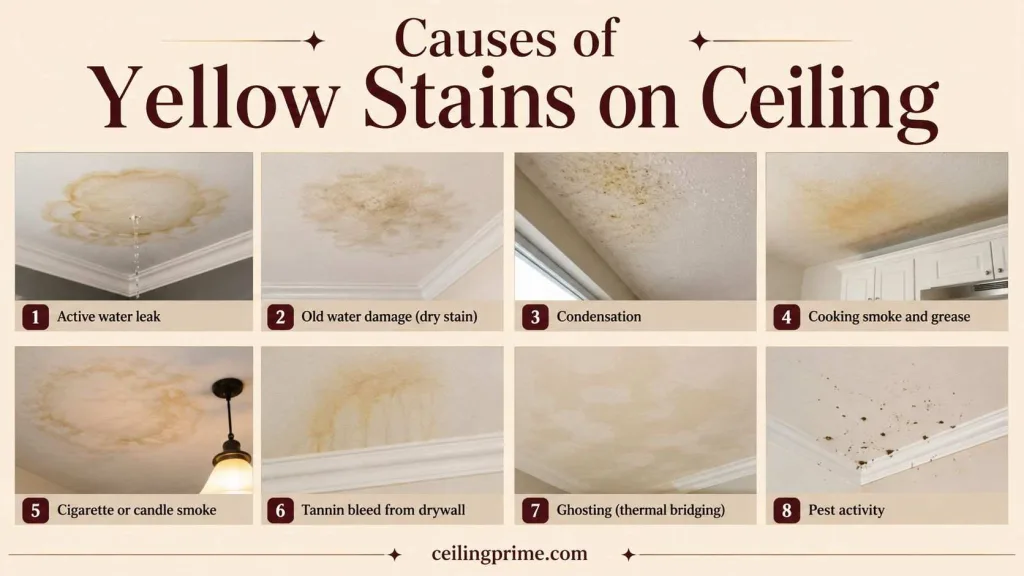
8 Causes of Yellow Stains on Ceiling
1. Active water leak: A roof leak or plumbing leak sends water through the drywall. Dissolved minerals leave a yellow or brown ring on the surface. The stain grows after rain or after running water above. The ceiling may feel damp or soft.
2. Old water damage (dry stain): A leak was fixed months or years ago. The stain dried but was never primed or painted over. The tannins from the water remain visible. A dry yellow stain on ceiling drywall is cosmetic if the source is gone.
3. Condensation: Warm moist air hits a cold ceiling surface. Moisture collects. Over time, the moisture pulls tannins from the drywall paper to the surface. This creates ceiling stains without any leak. Bathrooms, kitchens, and poorly insulated rooms are the most common locations.
4. Cooking smoke and grease: Grease vapor and smoke from a stove rise to the ceiling. They coat the surface in a thin yellow-brown film. The discoloration is evenly distributed, not in a ring or spot. Stains above the stove are almost always grease.
5. Cigarette or candle smoke: Nicotine and soot from tobacco smoke settle onto ceilings over years. Candle smoke leaves similar residue. The stain is diffuse, yellowish, and covers a wide area. Older rental properties often have this.
6. Tannin bleed from drywall: Moisture activates natural tannins in the drywall paper. The tannins bleed through the paint as yellow or amber spots. This happens after a single moisture event, even if the surface is now dry. It is the most common cause of post-painting yellow spots.
7. Ghosting (thermal bridging): Faint yellow or gray lines appear on the ceiling following the joist pattern. Cold spots at the joist locations attract household dust and moisture. The dust bonds to the damp surface and creates shadow lines. This is not water damage. It is an insulation problem.
8. Pest activity: Animal urine from rodents, squirrels, or raccoons in the attic seeps through the drywall. The stain is irregular, strongly yellow, and has a distinct odor. Check the attic above the stain for droppings, nesting material, or entry points.
Yellow Ceiling Stains but No Leak: 5 Hidden Causes
This is the most searched ceiling stain question. The stain is there but the ceiling is dry. No dripping. No wet spots. Here are the 5 causes that produce a stain without a leak.
- Condensation: Steam or humidity condenses on a cold ceiling. The moisture evaporates. Tannins and minerals remain on the surface as a yellow spot. Common in bathrooms, bedrooms, and poorly ventilated rooms.
- Old repaired leak: The plumber fixed the pipe. The roofer patched the shingle. But no one primed or painted the stained drywall. The dry yellow stain stays visible until it is sealed and covered.
- Tannin bleed after painting: You painted the ceiling without stain-blocking primer. Moisture from the wet paint activated tannins in the drywall paper. The tannins bled through the fresh coat. Yellow spots appeared within days.
- Ghosting: Joist-pattern lines form from thermal bridging. No water involved. Just dust sticking to cold, damp spots on the ceiling surface.
- Pest urine: Rodents in the attic. The urine soaks through from above. The ceiling is not wet because the urine dried. The stain and odor remain.
Touch the stain. If it is completely dry and firm, the cause is not an active leak. If it is damp, soft, or growing, there is still moisture entering from above.
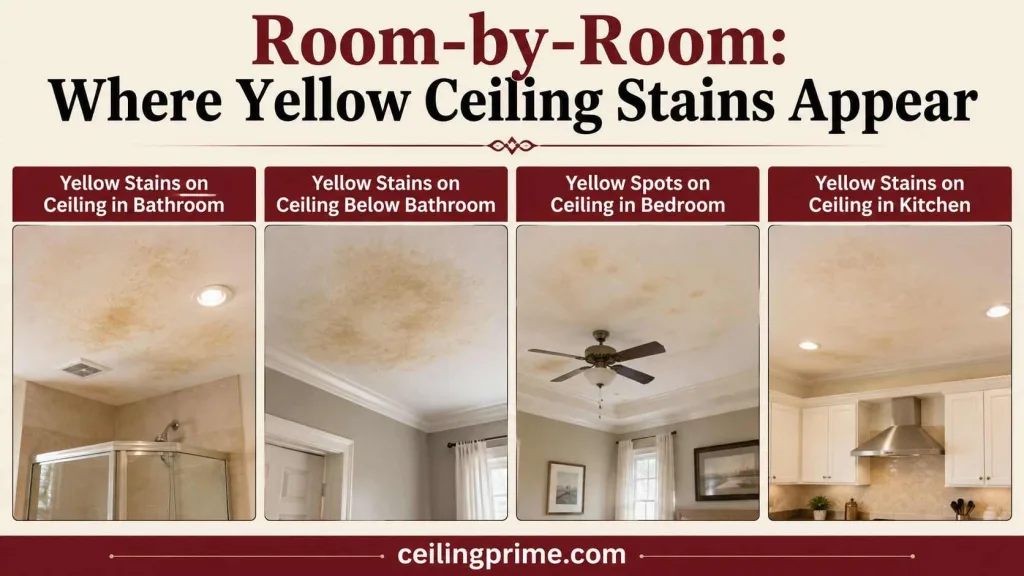
Room-by-Room: Where Yellow Ceiling Stains Appear
Yellow Stains on Ceiling in Bathroom
Bathrooms produce more ceiling stains than any other room. Steam from hot showers rises and condenses on the ceiling daily. Without an exhaust fan (or with a weak one), moisture soaks into the drywall. Tannins bleed to the surface. Mold may follow. Run the exhaust fan during every shower. Keep it running 20 minutes after. Upgrade to an 80+ CFM fan if stains keep returning.
Yellow Stains on Ceiling Below Bathroom
A yellow stain on a ceiling directly below an upstairs bathroom points to a plumbing leak. Shower pans, toilet wax rings, cracked tile grout, and supply pipe connections are the sources. The stain may feel damp if the leak is active. Fix the plumbing first. Let the drywall dry. Then prime and paint.
Yellow Spots on Ceiling in Bedroom
Bedroom ceiling stains usually come from the attic above. Poor insulation creates cold spots. Condensation forms on those spots during winter. The moisture pulls tannins to the surface. If the bedroom is on the top floor, check attic insulation depth. If the stain is directly below a bathroom above, check plumbing connections.
Yellow Stains on Ceiling in Kitchen
Kitchen ceiling stains have two common causes. Cooking grease and smoke vapor create a diffuse, even yellow film. A plumbing leak from an upstairs bathroom creates a focused ring or spot. Yellow stains on ceiling above stove are grease. Yellow spots near sinks or dishwashers may be supply line drips. Clean grease stains with degreaser. Fix plumbing leaks at the source.
How to Clean Yellow Spots on Ceiling?
Cleaning removes surface stains. It does not fix the cause. Always find and fix the moisture or smoke source first. Then clean. Then prime. Then paint.
For Smoke and Grease Stains
- Mix 1 tablespoon dish soap and 1 tablespoon white vinegar in 1 quart warm water.
- Dip a sponge. Wring it until barely damp.
- Blot the stained area. Do not scrub textured ceilings.
- For heavy grease, use a diluted degreaser (50/50 with water). Test a small area first.
- Wipe with a clean damp cloth. Let air dry.
For Water and Tannin Stains
Cleaning alone does not remove tannin stains. The tannins are embedded in the drywall paper, not sitting on the surface. You can lighten the stain with a bleach solution (1 part bleach to 10 parts water). Mist lightly. Blot dry. But the permanent fix for tannin-stained ceilings or tannins is stain-blocking primer followed by paint.
For Ghosting Lines
Wipe the lines with a dry microfiber cloth. Follow with a damp cloth. The dust comes off easily. But the lines return unless you add insulation above the ceiling to eliminate the cold spots at the joist locations.
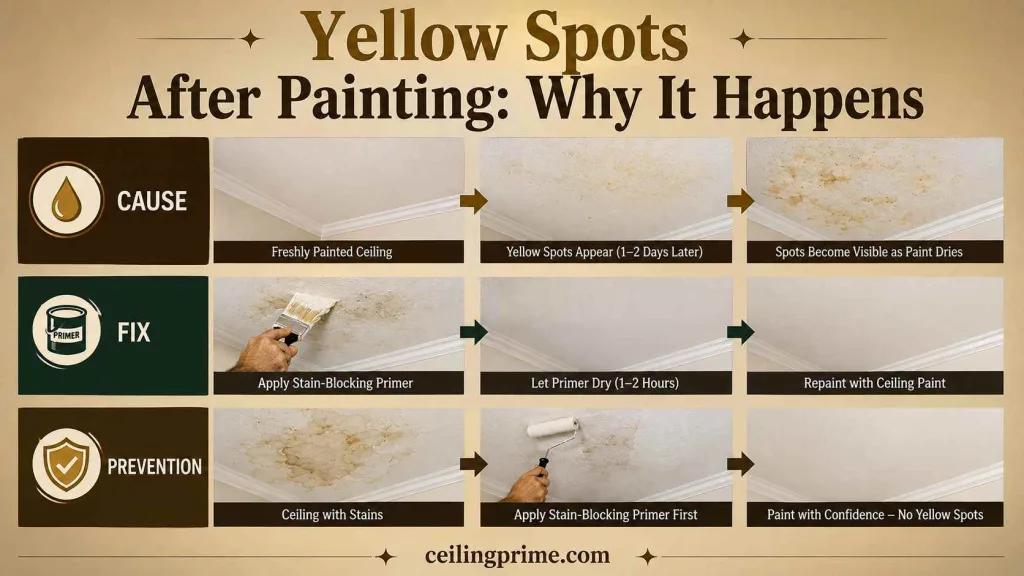
Yellow Spots After Painting: Why It Happens
You painted the ceiling. It looked perfect. Two days later yellow spots appeared through the fresh paint. This is tannin bleed. Here is why it happens and how to fix it.
- Cause: The moisture from the wet latex paint reactivated tannins in the drywall paper. The tannins migrated through the wet paint to the surface. The spots appeared as the paint dried. Post-painting yellow spots are a primer problem, not a paint problem.
- Fix: Apply stain-blocking primer (oil-based or shellac-based) directly over the stained areas. Let dry 1 to 2 hours. Repaint with ceiling paint. The primer seals the tannins. Regular latex primer does not block tannins — it lets them through.
- Prevention: Always apply stain-blocking primer before painting any ceiling that has ever had water stains, smoke stains, or visible discoloration. One coat of primer before painting prevents the problem entirely.
Best Primers for Yellow Ceiling Stains
| Primer Type | Blocks | Best For |
| Oil-based stain blocker | Water stains, tannins, smoke | General yellow stain coverage |
| Shellac-based stain blocker | Heavy tannins, nicotine, fire damage | Severe stains, calcimine surfaces |
| Water-based stain blocker | Light stains, low odor | Quick dry, mild discoloration only |
Oil-based primer is the standard for most yellow ceiling stains. Shellac-based primer handles the worst cases. Water-based primer works only for very light discoloration. Regular latex primer does not block tannin stains at all.
Dry Stain vs Active Leak: How to Tell
| Dry Yellow Stain (No Active Leak) | Active Leak (Needs Immediate Attention) |
| Ceiling feels firm and dry to the touch | Ceiling feels damp, soft, or spongy |
| Stain has not changed in weeks or months | Stain is growing or getting darker |
| No dripping or pooling water | Water drips or beads on the surface |
| No musty odor | Musty smell near the stain |
| Fix: prime and paint | Fix: find leak, dry area, then repair |
Touch the stain with your palm. Press gently. Dry and firm means cosmetic. Damp and soft means active moisture. Dry, firm stains are safe to prime and paint over. Damp stains need the source fixed first.
Repair Costs for Yellow Ceiling Stains in 2026
| Repair | 2026 Cost |
| DIY clean + prime + paint (one stain) | $20–$50 |
| DIY full ceiling prime + repaint | $50–$150 |
| Professional stain treatment + paint | $100–$400 |
| Drywall section replacement (water damage) | $200–$600 |
| Roof leak repair (source fix) | $300–$1,500 |
| Plumbing repair (source fix) | $150–$3,000 |
| Attic insulation upgrade (ghosting fix) | $1,000–$3,000 |
Find the Cause, Then Fix the Stain
Yellow stains on ceiling surfaces are symptoms. Water leaks, condensation, cooking grease, smoke, tannin bleed, ghosting, and pests each leave a different mark. Match the stain pattern to the cause. Fix the cause first. Clean the surface. Prime with a stain-blocking product. Then repaint. The stain disappears when the source is gone and the primer seals what is left behind.
Frequently Asked Questions
Why does my ceiling have yellow spots but no leak?
5 causes produce stains without an active leak: condensation, old dried water damage, tannin bleed after painting, ghosting from thermal bridging, and pest urine from the attic. Touch the stain. If it is dry and firm, the moisture event is over.
Can I just paint over a yellow ceiling stain?
Only with stain-blocking primer first. Regular paint without primer lets the tannins bleed through. The yellow spot reappears within days. Apply oil-based or shellac-based primer first. Then paint.
Why did yellow spots appear after I painted my ceiling?
Tannin bleed. The moisture from wet latex paint reactivated tannins in the drywall paper. The tannins migrated through the fresh paint. The fix: apply stain-blocking primer over the spots. Repaint. The primer seals the tannins permanently.
How do I remove yellow grease stains from a kitchen ceiling?
Mix dish soap and white vinegar in warm water. Blot the stain with a damp sponge. For heavy grease, use a diluted degreaser. Let dry. Prime with oil-based primer. Repaint. Run the range hood while cooking to prevent future buildup.
Are yellow ceiling stains dangerous?
The stain itself is not dangerous. But an active leak behind the stain can cause mold growth within 48 to 72 hours. Mold causes respiratory problems. Check for dampness, musty odors, and growing stain size. If any are present, fix the source immediately.
What causes yellow stains on ceiling in winter only?
Condensation from poor insulation. Warm indoor air meets a cold, poorly insulated ceiling. Moisture forms. Tannins bleed. The stains appear only in cold months. Adding attic insulation to R-38 or higher stops the condensation cycle.






2 Comments