
Should Ceilings Be Painted White? When White Works, When It Doesn’t & Alternatives
Should ceilings be painted white? The short answer: not always. White is the default ceiling color in most homes. It reflects light. It makes rooms feel taller. It matches every wall color. But designers now say white is not the right choice for every room.
A stark white ceiling can make dark rooms feel disconnected. It can draw the eye upward to flaws. It can make a space feel cold and clinical. The better question is: which rooms benefit from white and which rooms look better with color? This guide answers that question room by room. It covers the pros and cons of white ceilings. It lists 8 alternative colors that designers recommend. And it explains two 2026 ceiling paint trends: color-drenching and color-capping.
Quick Answer
Ceilings do not always need to be white. White is a practical choice for low-light rooms, kitchens, bathrooms, and homes where you want a bright, traditional look. A ceiling can also match the walls, use a lighter tint, or take on a deeper color. The best choice depends on ceiling height, room size, lighting, wall color, and the mood you want.
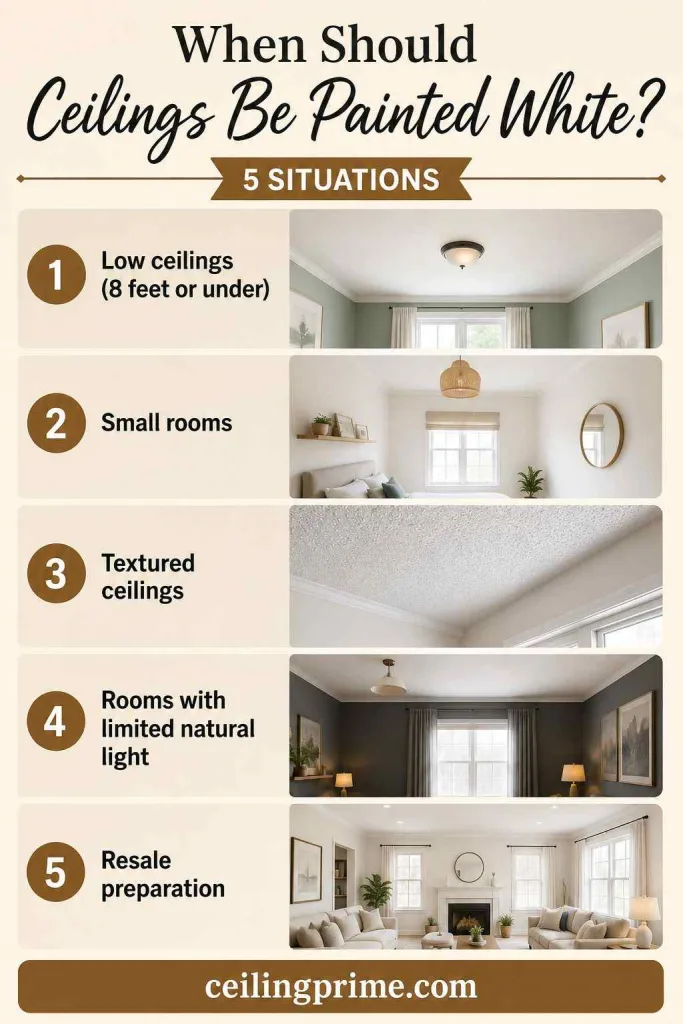
When Should Ceilings Be Painted White? 5 Situations
1. Low ceilings (8 feet or under): White or a very light ceiling can help a low room feel brighter, but painting the ceiling and walls the same light color can also make the boundaries less noticeable.
2. Small rooms: White ceilings make small rooms feel bigger. The ceiling blends with white or light walls. The room reads as one open volume. Bathrooms, laundry rooms, and closets benefit most.
3. Textured ceilings: Popcorn and knockdown textures catch shadows. White minimizes those shadows. A dark color on textured ceilings highlights every bump. White helps the texture recede visually.
4. Rooms with limited natural light: White generally reflects more visible light than darker paint colors, which can help a room feel brighter. North-facing rooms and basement spaces stay brighter. Warm whites (not blue-white) work best here.
5. Resale preparation: Buyers expect white ceilings. It is the safe, universally accepted choice. White works with most furniture and decorating styles.
When Should Ceilings Not Be Painted White? 5 Situations
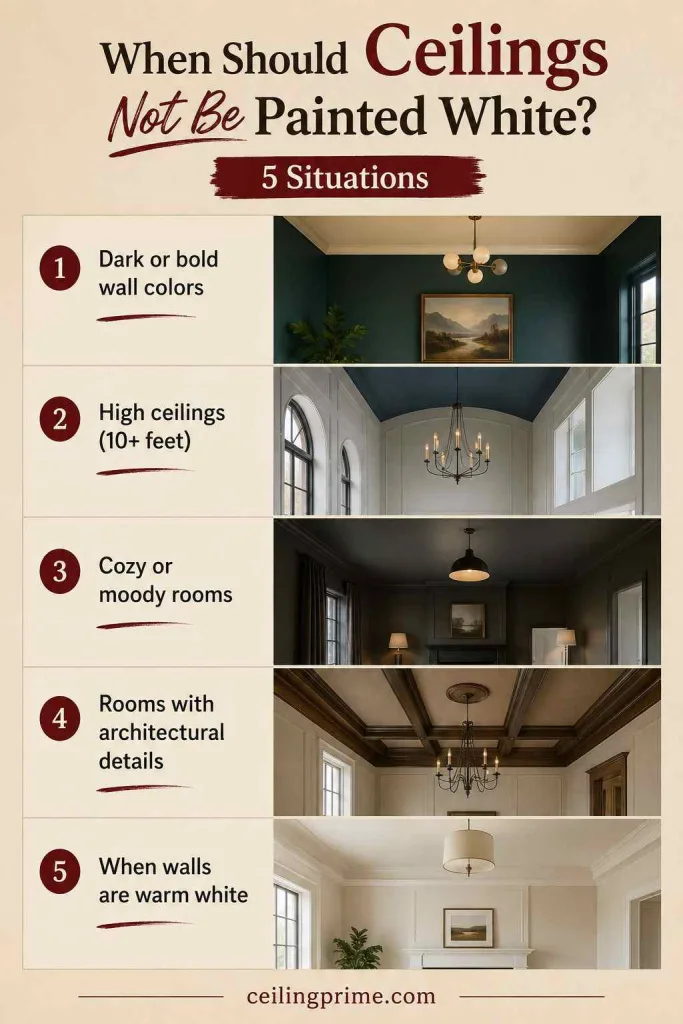
Designers increasingly say: should ceilings be painted white when the walls are dark? Almost never. Here are 5 situations where white is not the best choice.
1. Dark or bold wall colors: A stark white ceiling next to dark navy walls creates a harsh line. The eye jumps to the white ceiling. The room feels cut in half. A tinted ceiling softens the transition. Use a 50% lighter version of the wall color instead.
2. High ceilings (10+ feet): White on a high ceiling makes it recede further. The room can feel cold and cavernous. A slightly darker ceiling brings the height down visually. Warm tones add coziness to tall spaces.
3. Cozy or moody rooms: Bedrooms, dens, and media rooms want warmth. A white ceiling breaks the mood. Painting the ceiling the same color as the walls wraps the room in one tone. Designers call this color-drenching.
4. Rooms with architectural details: Coffered ceilings, tray ceilings, and exposed beams look flat in white. Color highlights the recessed panels and beam edges. It adds depth and dimension to the architecture.
5. When walls are warm white: Warm off-white walls next to a cold blue-white ceiling clash subtly. The ceiling looks dingy or gray by comparison. Match the ceiling white to the wall white. Use the same undertone family.
Pros and Cons of White Ceilings
| Pros of White Ceiling | Cons of White Ceiling |
| Reflects light — brightens the room | Stark white can feel cold and clinical |
| Makes ceilings look higher | Draws eye to ceiling flaws and stains |
| Matches every wall color | Creates harsh line with dark walls |
| Easy to touch up — white is always available | Bright white looks blue under cool light |
| Safe for resale — universal appeal | Feels disconnected in color-drenched rooms |
| Hides popcorn and textured ceiling shadows | Makes high ceilings feel even taller and colder |
The answer to whether ceilings should be painted white depends on the room. White wins in small, low, or bright spaces. Color wins in large, tall, or moody spaces.
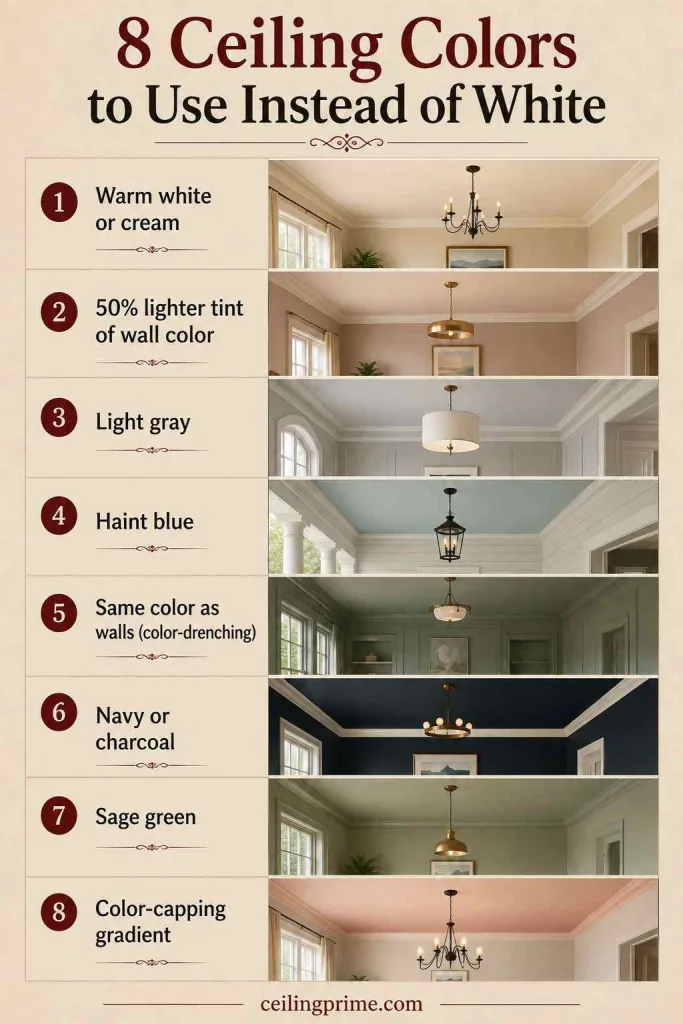
8 Ceiling Colors to Use Instead of White
1. Warm white or cream: Ceiling whites with yellow or pink undertones feel softer. They eliminate the cold blue cast of pure white. Best picks: Benjamin Moore White Dove, Sherwin Williams Alabaster.
2. 50% lighter tint of wall color: Take your wall color to the paint store. Ask for a 50% lighter version. This creates a soft gradient from wall to ceiling. The transition feels natural, not jarring.
3. Light gray: Gray ceilings pair with white walls beautifully. The gray adds depth without darkness. Light gray works in modern and Scandinavian interiors.
4. Haint blue: A soft blue-green that mimics the sky. Traditional on Southern porch ceilings. Now used in bedrooms and living rooms. Creates a calm, airy atmosphere.
5. Same color as walls (color-drenching): Paint the walls, ceiling, and trim one color. The room feels wrapped and cocoon-like. This works in bedrooms, dens, and powder rooms. It is bold but increasingly popular in 2026.
6. Navy or charcoal: Dark ceilings add drama to large rooms. Navy works in dining rooms. Charcoal suits media rooms and home offices. Use flat paint to reduce glare.
7. Sage green: Soft green adds organic warmth above. It mimics nature and calms the space. Works on porch ceilings and garden-facing rooms.
8. Color-capping gradient: The wall starts lighter at the bottom. Color intensifies upward to the ceiling. The ceiling is the darkest tone. It is the opposite of a white ceiling approach.
Color-Drenching vs Color-Capping: 2026 Ceiling Trends
Color-Drenching
One color covers walls, ceiling, and trim. The room becomes a single tone. Edges disappear. The space feels immersive and wrapped. Use it in small rooms to blur boundaries. Use it in bedrooms for a cozy, enveloping feel. Avoid it in large open-plan rooms. The single color can feel monotone without furniture to break it up.
Color-Capping
The ceiling is the boldest color in the room. Walls start lighter at the bottom. Color gets darker as it moves upward. The ceiling is the deepest shade. Benjamin Moore introduced this technique in 2025. It adds drama without overwhelming the space. It works best in rooms with 9-foot or taller ceilings. Both trends challenge the old rule that should ceilings be painted white. The answer in 2026: it depends.
Best Ceiling Color by Room
| Room | Best Ceiling Color | Why |
| Kitchen | White or warm white | Reflects task lighting, matches cabinets |
| Bathroom | White or light blue | Feels clean, works with white fixtures |
| Bedroom | Wall color or 50% lighter tint | Creates warmth and coziness for sleep |
| Living room | Warm white or light gray | Brightens without feeling clinical |
| Dining room | Color-drenched or dark accent | Sets a moody, intimate dinner atmosphere |
| Home office | Light gray or warm white | Focused, calm without distraction |
| Media room | Dark charcoal or black | Reduces screen glare, cinema feel |
| Porch | Haint blue or sage green | Mimics sky, adds outdoor character |
| Basement | White or light color | Maximizes limited natural light |
White is the right choice in 5 out of 9 rooms. Color works better in the other 4. The question of should ceilings be painted white has a different answer for each room.
White Ceiling vs. Colored Ceiling
| If your room has… | Consider |
| 8-foot ceiling or lower | White or light ceiling |
| Very little natural light | Warm white |
| Dark walls | Matching or tinted ceiling |
| 10+ foot ceiling | Medium or darker color |
| Small powder room | Color-drenched ceiling |
| Coffered ceiling | White, tint, or accent color |
| Media room | Dark matte ceiling |
| Warm white walls | Warm white ceiling |
| Cool gray walls | Cool white or matching tint |
| Vaulted ceiling | Same color as walls or intentional contrast |
Should the Ceiling Match the Walls?
No, the ceiling does not have to match the walls. A white or off-white ceiling creates contrast and helps reflect light. Matching the ceiling and walls can create a cozy, modern look. It works well in small rooms, moody spaces, and rooms with sloped or vaulted ceilings.
However, dark matching colors may make low-light rooms feel smaller. Textured ceilings often look better in a simple white finish. Choose based on the room’s lighting, size, ceiling shape, and style.
What Paint Finish Is Best for Ceilings?
The best paint finish for most ceilings is flat or matte. It has little to no sheen, so it does not reflect much light. This helps hide small bumps, cracks, patch marks, and uneven drywall. Flat paint also gives the ceiling a smooth, clean appearance.
Ultra-flat paint is another good option for ceilings with visible flaws. Eggshell or satin can work in bathrooms and kitchens because they are easier to clean. For most rooms, however, flat paint is the best choice.
What Ceiling Color Works Best by Ceiling Height?
The best ceiling color depends on the room’s height and the look you want.
- Low Ceilings (8 Feet or Less): Choose bright white or match the ceiling to the walls. These options make the room feel taller and more open.
- Standard Ceilings (9 Feet): Try soft white, a light pastel, or a lighter version of the wall color.
- High Ceilings (10 Feet or More): Use charcoal, navy, deep green, or warm brown for a cozier feel. Use crisp white if you want to highlight the height.
What Ceiling Color Makes a Room Look Bigger?
A white or very light ceiling can make a room feel larger and brighter. Crisp white reflects the most light and creates an open feel. Warm off-white works well for a softer look. Pale blue or aqua can also make the ceiling feel higher by creating an airy effect.
Painting the ceiling the same color as the walls can hide sharp edges and create a smooth look. For the best result, choose a flat or matte finish with minimal glare.
How Lighting Changes Ceiling Color?
- Warm Light (2700K–3000K): Makes cream, beige, and off-white ceilings look warmer and cozier.
- Neutral Light (3500K–4000K): Shows the ceiling color more naturally without strong warm or cool tones.
- Cool Daylight (5000K–6500K): Makes white and cool-toned ceilings look brighter, cleaner, and slightly cooler.
- Light Direction: Downlights can create shadows, while uplighting can make the ceiling look softer and more even.
- Natural Light: North-facing rooms tend to look cooler. South-facing rooms usually appear warmer and brighter.
- CRI: Choose bulbs with a CRI of 90+ for more accurate ceiling color.
Expert Tips for Choosing Ceiling Paint Color
- Match the undertone: If walls are warm, use warm white. If walls are cool gray, use cool white. Mismatched undertones make the ceiling look dirty.
- Always use flat finish: Flat paint hides ceiling flaws. Eggshell and satin show every roller mark. Flat absorbs light and reduces glare from overhead fixtures.
- Use dedicated ceiling paint: Ceiling paint is thicker than wall paint. It resists drips during overhead application. It dries to a flat, uniform finish.
- Test with a sample: Paint a 2-foot square section. View it at different times of day. Morning light and evening light change how ceiling color reads. What looks warm at noon can look gray at 6 PM.
- Consider the fifth wall: Designers call the ceiling the fifth wall. It influences how every other surface in the room looks. Do not treat it as an afterthought.
- Dark ceilings need great lighting: A dark ceiling absorbs light. Add recessed cans, LED strips, or pendant lights. Without extra lighting, the room feels dim. Should ceilings be painted white to avoid this? Only if you cannot add lighting.
White Is a Choice, Not a Rule
Should ceilings be painted white? In kitchens, bathrooms, and low rooms — usually yes. In bedrooms, dining rooms, and tall spaces — consider a tinted ceiling or full color. The old rule of white-ceiling-everywhere is fading. Color-drenching and color-capping give homeowners options that make rooms feel warmer, moodier, and more intentional. Try a sample. View it at different times of day. Then decide.
If you live in Austin and want professional ceiling painting, popcorn removal, or a smooth-finish upgrade, CeilingPrime handles it all. Call (512) 000-0000 or visit ceilingprime.com for a free estimate.
Frequently Asked Questions
Is white always the best ceiling color?
No. White works in most kitchens and bathrooms. It works in low rooms and small spaces. But bedrooms, dining rooms, and media rooms look better with color. There is no single best ceiling color.
What white is best for ceilings?
Warm whites look best in most homes. Benjamin Moore White Dove and Chantilly Lace are top picks. Sherwin Williams Alabaster and Extra White are popular too. Avoid blue-toned whites unless walls are also cool-toned.
Should ceiling and wall paint be the same color?
It can be. Color-drenching uses one color everywhere. It works in small rooms and cozy spaces. But large rooms need some contrast. A lighter version of the wall color is a safe starting point. Some designers use a heavily diluted version of the wall color, while others prefer a subtle 20–50% tint. Test the actual paint before committing.
Does ceiling color affect room size perception?
Yes. White makes rooms feel taller and bigger. Dark colors make ceilings feel lower and closer. In large rooms, that lower feel adds coziness. In small rooms, it can feel cramped.
What is the 2026 ceiling color trend?
Color-capping is the biggest trend. The ceiling is the boldest color in the room. Benjamin Moore introduced this in 2025. Color-drenching is still popular for bedrooms and powder rooms. White remains the default for kitchens and resale.
Can I paint a popcorn ceiling a color other than white?
Yes. Use flat paint applied with an airless sprayer. Do not roll — the roller tears the texture. Light colors work best. Dark colors highlight every bump and shadow in the texture.