Wallpaper Ceiling: 10 Design Ideas, Room-by-Room Guide & Installation
A wallpaper ceiling turns the most overlooked surface in any room into a statement. Designers call the ceiling the fifth wall. Most homeowners leave it flat white. A patterned, textured, or bold-colored ceiling changes the mood of the entire space. It draws the eye upward. It adds visual depth. It makes an ordinary room feel custom-designed.
This guide covers 10 wallpaper ceiling design ideas, the best patterns for every room, how to choose between peel-and-stick and traditional paste, step-by-step installation, costs, and common mistakes. No brand names. Just practical design and DIY guidance.
Why a Wallpaper Ceiling Works?
- Adds pattern without overwhelming the room: The ceiling is seen at a glance, not at eye level. A bold pattern on the ceiling adds interest without dominating the space the way a fully papered wall does.
- Makes small rooms feel larger: A patterned ceiling draws the eye upward and creates the illusion of height. Light-colored patterns with small-scale motifs expand the visual volume.
- Hides ceiling imperfections: Hairline cracks, drywall seams, and uneven surfaces disappear under textured or patterned wallpaper. Wallpaper is easier than skim-coating and repainting a flawed surface.
- Creates a focal point: A dining table, bed, or sofa placed directly under a papered ceiling section becomes the visual anchor of the room.
- Easy to change: Peel-and-stick wallpaper removes cleanly. Traditional paste wallpaper strips with a steamer. Changing the ceiling pattern is faster than removing tile or paneling.
10 Wallpaper Ceiling Design Ideas
1. Geometric Patterns
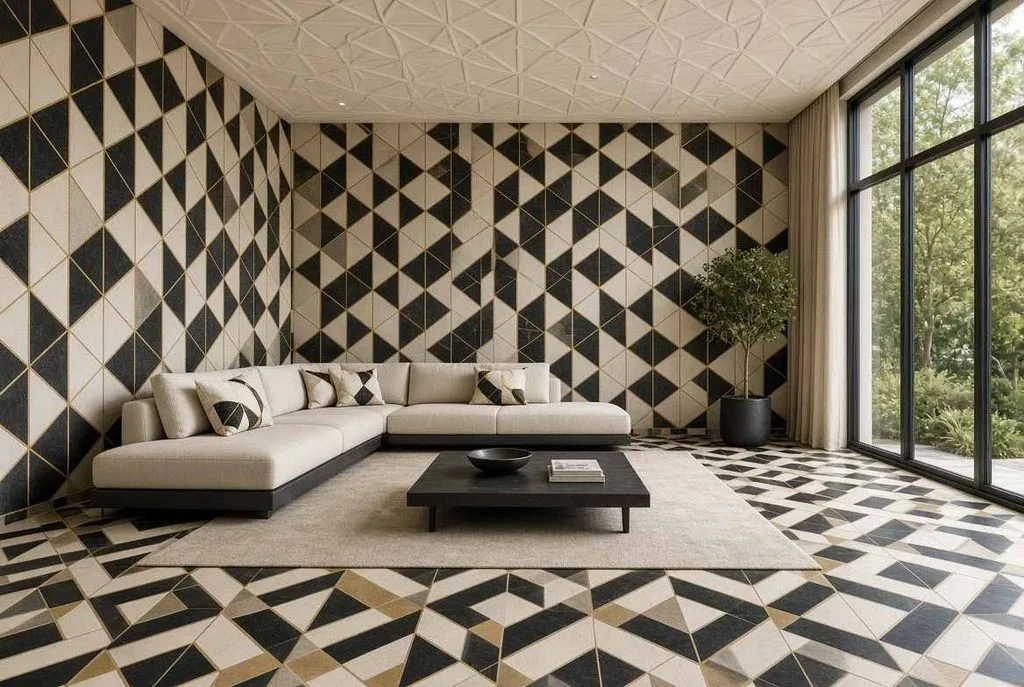
Hexagons, triangles, chevrons, and diamond grids create a modern, structured look. Muted tones (gray, navy, soft gold) keep geometric patterns sophisticated. Bold black-and-white geometrics make a statement in contemporary rooms. Geometric patterns are the most versatile ceiling design because they suit modern, mid-century, and transitional interiors.
2. Floral and Botanical
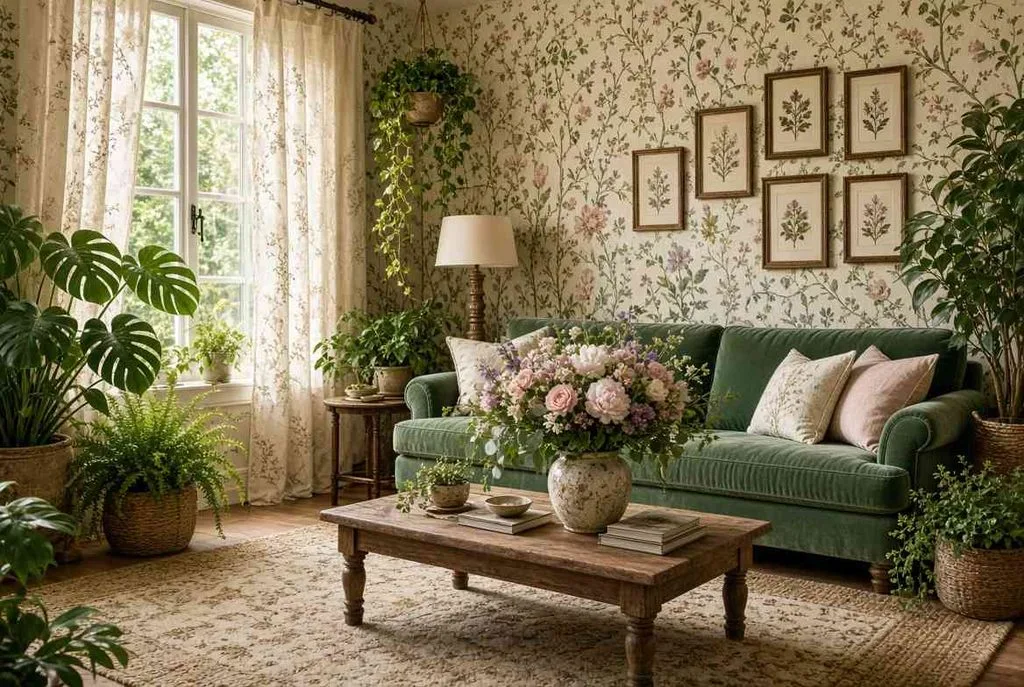
Large-scale florals overhead create a garden canopy effect. Trailing vines, ferns, and tropical leaves add organic movement. Use muted florals (sage, blush, cream) for bedrooms. Use bold tropicals (deep green, teal) for dining rooms and entryways.
3. Starry Sky or Celestial
Constellations, moons, and star-field patterns turn the ceiling into a night sky. Dark navy or black backgrounds with metallic gold or silver stars create drama. This idea is popular in nurseries, bedrooms, and home theaters.

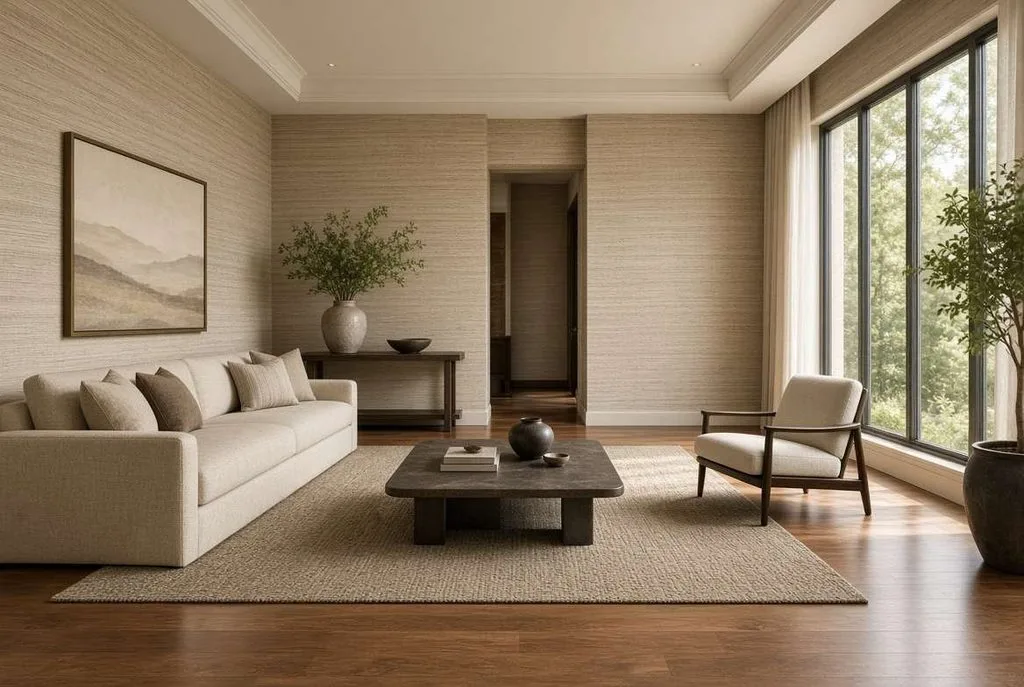
4. Grasscloth Texture
Grasscloth wallpaper adds woven natural texture. The material is made from jute, seagrass, or hemp fibers. It adds warmth and organic character without a printed pattern. Grasscloth on a ceiling reads as elevated and intentional.
5. Subtle Tone-on-Tone
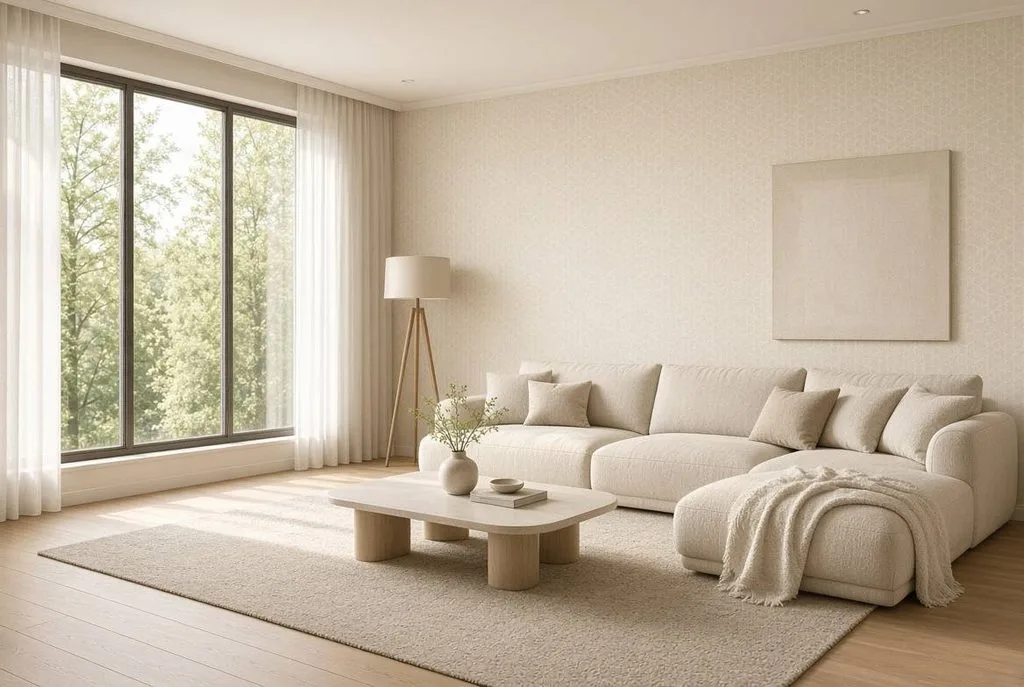
A tone-on-tone pattern uses the same color in two finishes: matte and sheen. The pattern is barely visible from across the room. Up close, the subtle motif reveals itself. This is the safest ceiling wallpaper choice for homeowners who want texture without bold color.
6. Metallic or Foil Accent
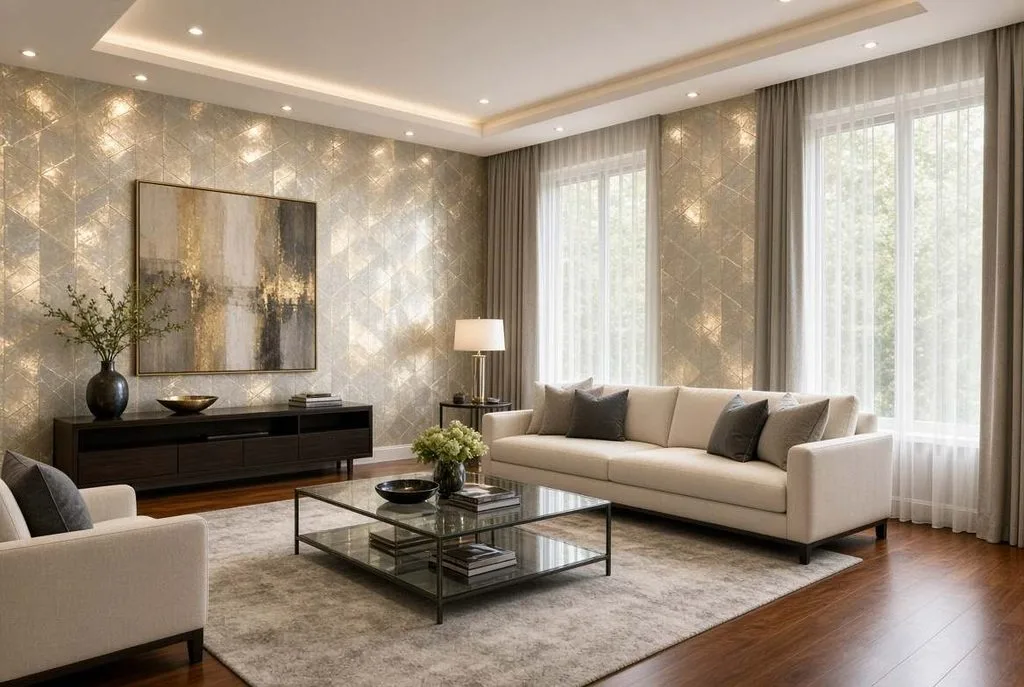
Metallic wallpaper reflects light downward. Gold, copper, and silver foils create a glamorous, high-end ceiling. Use metallic patterns sparingly. A dining room or powder room ceiling is the ideal location. Too much metallic in a large room looks overdone.
7. Mural or Scene
A single-image mural covers the entire ceiling in one continuous scene. Cloud murals mimic an open sky. Painted ceiling murals in the style of classical frescos add old-world drama. Tree canopy murals create a forest canopy overhead. Murals work best in rooms with 9-foot or taller ceilings.

8. Striped Pattern
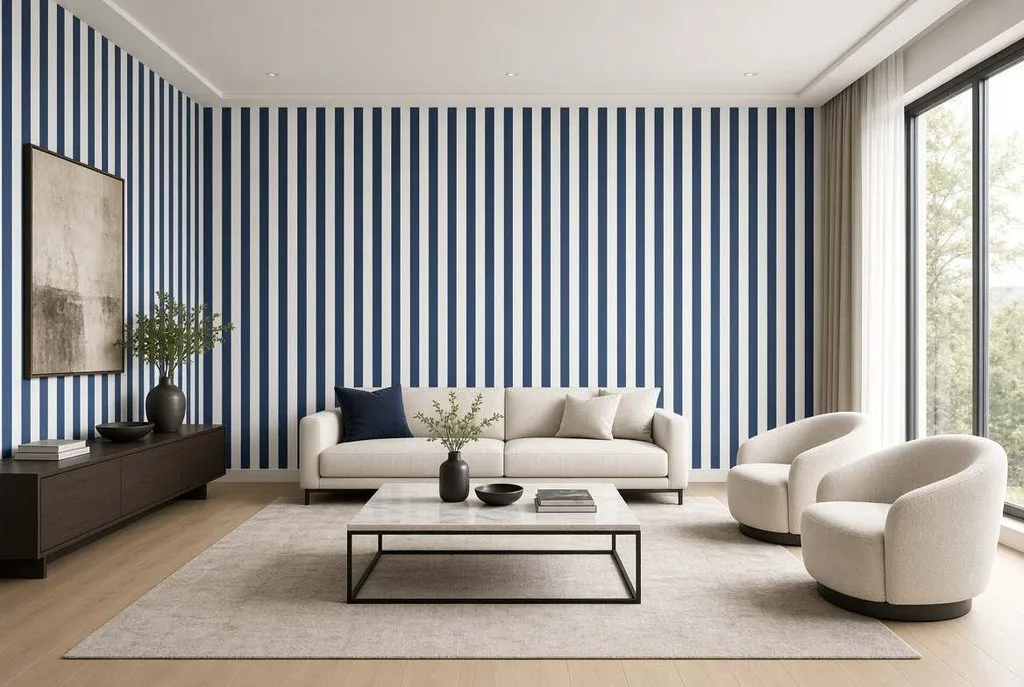
Horizontal stripes make a room feel wider. Vertical stripes (running from one wall to the opposite wall) make a room feel longer. Thin pinstripes add subtle movement. Wide stripes make a bold statement. Run stripes in the direction of the room’s longest dimension to maximize the effect.
9. Damask or Classic Toile
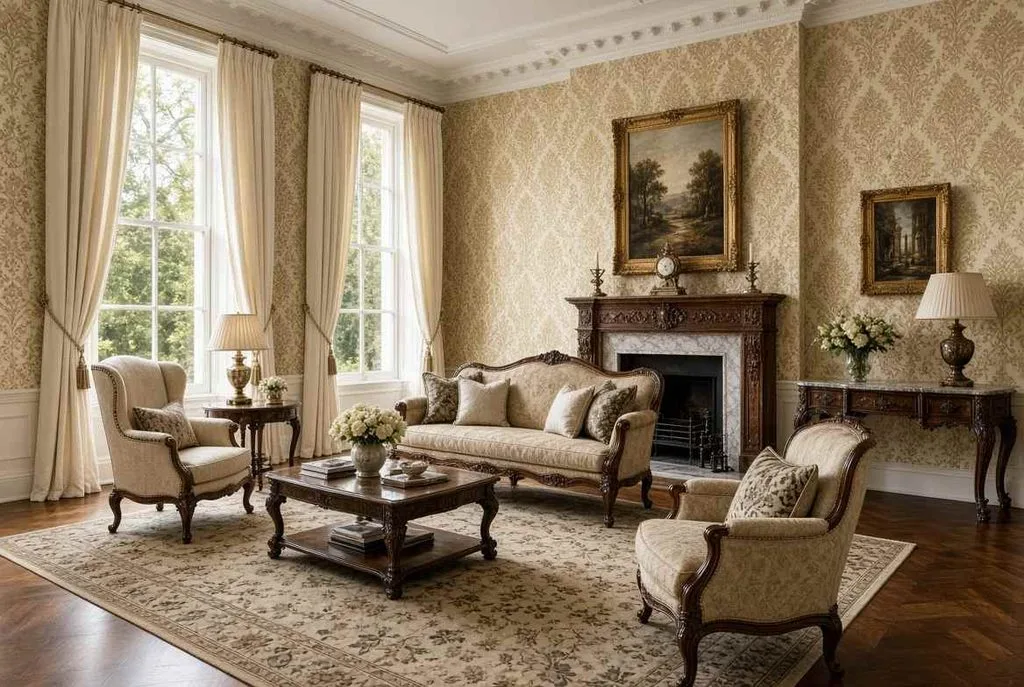
Traditional damask patterns and French toile add old-world elegance. These work on dining room ceilings, formal entryways, and Victorian-style rooms. Cream-on-cream damask is subtle. Navy toile on a white background is bold.
10. Faux Material (Wood Grain, Marble, Tin)
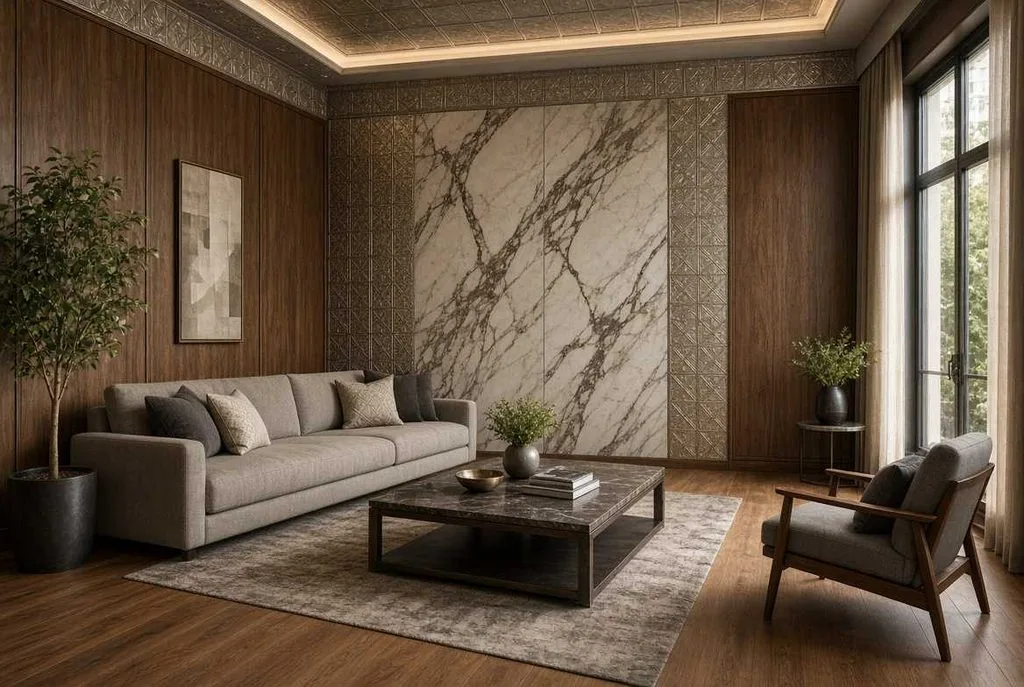
Faux wood-grain wallpaper mimics tongue-and-groove planks without the weight or cost. Faux marble creates a classical European look. Faux pressed-tin reproduces vintage tin ceiling patterns in lightweight paper. These are excellent alternatives when real materials are too heavy or expensive for the ceiling.
Wallpaper Ceiling by Room
Bedroom Ceiling Wallpaper
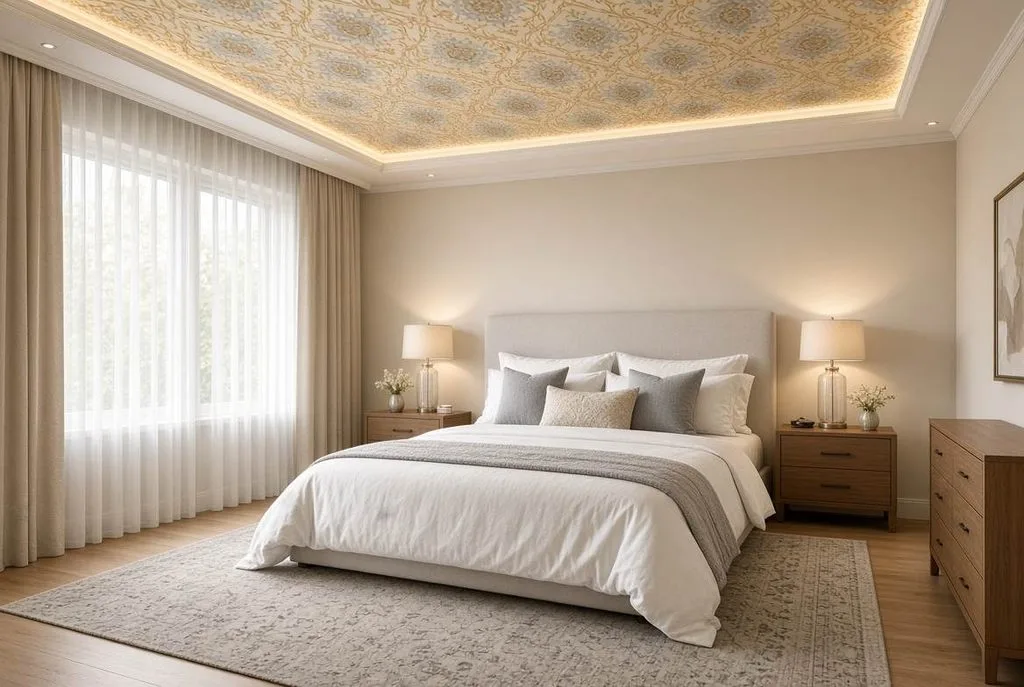
The bedroom ceiling is visible from the bed every night and every morning. Soft patterns work best: subtle florals, tone-on-tone motifs, celestial star fields, or calming geometrics in muted colors. The ceiling design ideas for bedrooms that work best are patterns you will not tire of seeing daily. Avoid high-contrast or busy patterns. They stimulate the brain and interfere with relaxation.
Bathroom Ceiling Wallpaper
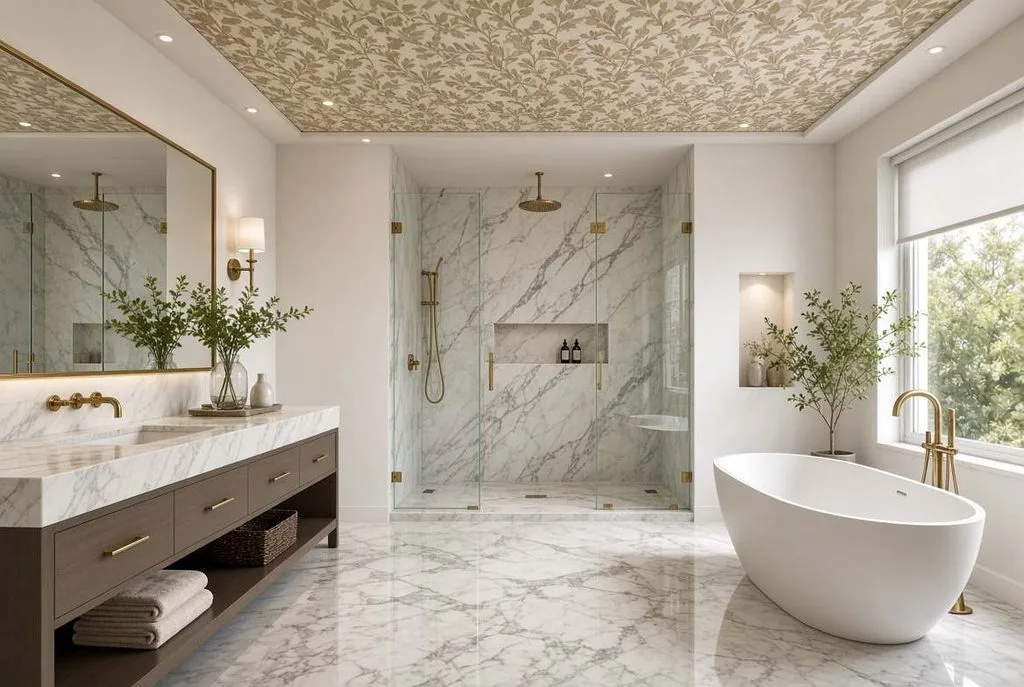
Bathrooms have moisture. The wallpaper must handle humidity. Vinyl-coated wallpaper resists steam. Peel-and-stick vinyl withstands bathroom humidity if the exhaust fan runs regularly. Avoid grasscloth and natural fiber wallpapers in bathrooms. They absorb moisture and grow mold. Tropical prints, tile-look patterns, and soft geometrics suit bathroom ceilings.
Dining Room Ceiling Wallpaper
The dining room is the best room for a bold ceiling statement. Guests look up at the ceiling during meals. A dramatic pattern frames the chandelier and defines the dining space. Metallics, damask, dark florals, and murals all work here. The dining table anchors the room below while the ceiling adds the drama above.
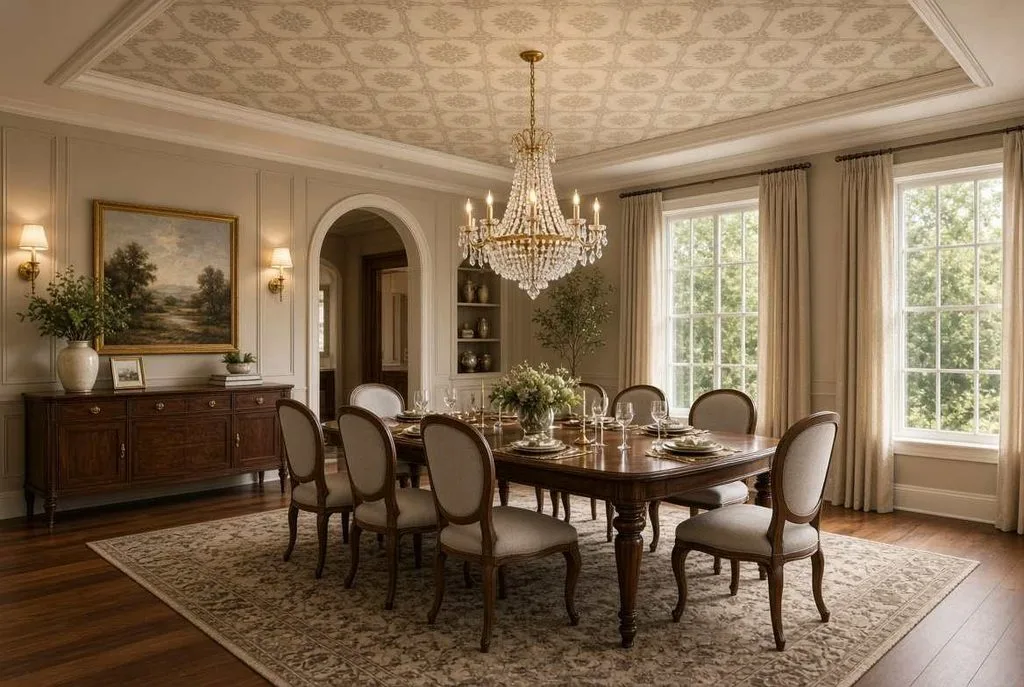
Kitchen Ceiling Wallpaper
Kitchen ceilings deal with grease vapor, steam, and cooking splatter. Use vinyl-coated or scrubbable wallpaper. Avoid delicate papers. A patterned ceiling in the kitchen works best above an island or breakfast nook where food prep does not directly contact the surface. Simple geometrics, faux tin, and faux beadboard patterns suit the kitchen.
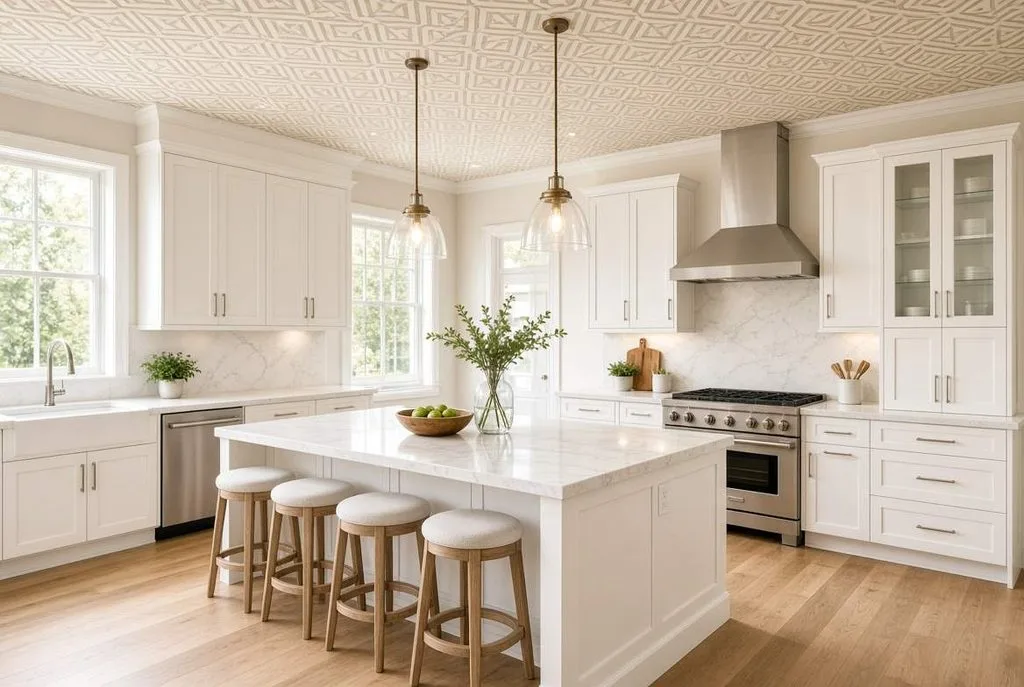
Hallway Ceiling Wallpaper
Hallways are narrow and often lack natural light. A papered hallway ceiling makes the space feel less like a corridor and more like a designed transition. Stripes running the length of the hall elongate the space. A light pattern with metallic accents reflects hallway lighting downward. Hallway ceilings are small areas that use minimal wallpaper, making them a low-risk place to try a bold design.
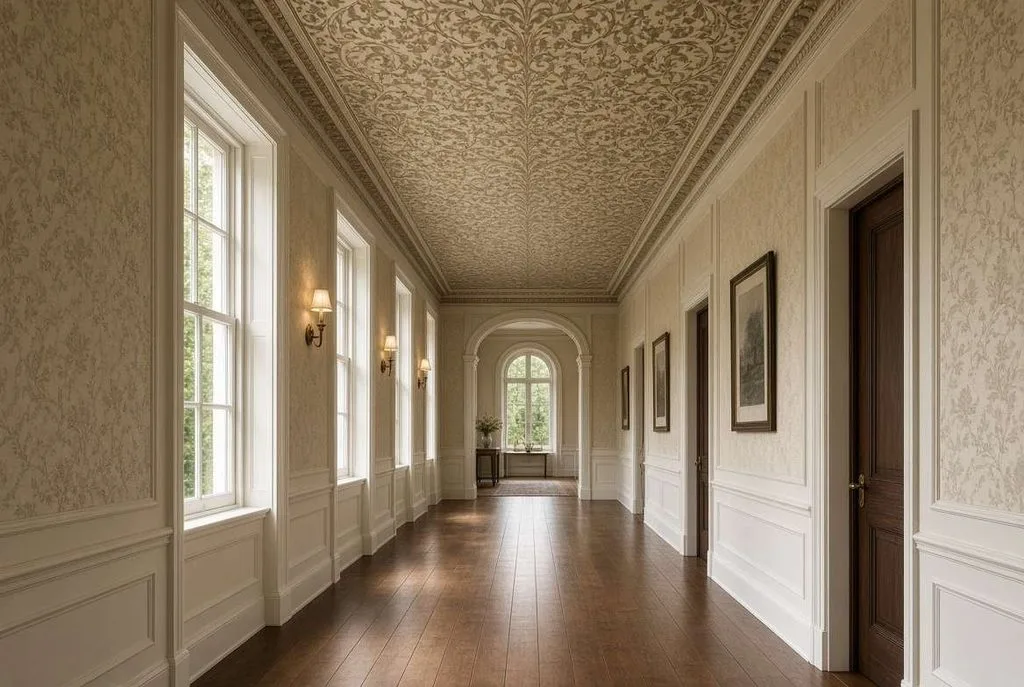
Ceiling Wallpaper Border
A wallpaper border runs around the perimeter of the ceiling where it meets the wall. It adds pattern without papering the entire surface. A 4-to-6-inch border frames the ceiling like crown molding made of paper. Match the border to the wall color or to a wallpapered accent wall for a coordinated look.
Borders also solve a practical problem: they hide the transition line between the wall paint and the ceiling paint. If the wall-ceiling joint is uneven, a border covers it cleanly without taping or mudding.
Peel-and-Stick Ceiling Tiles
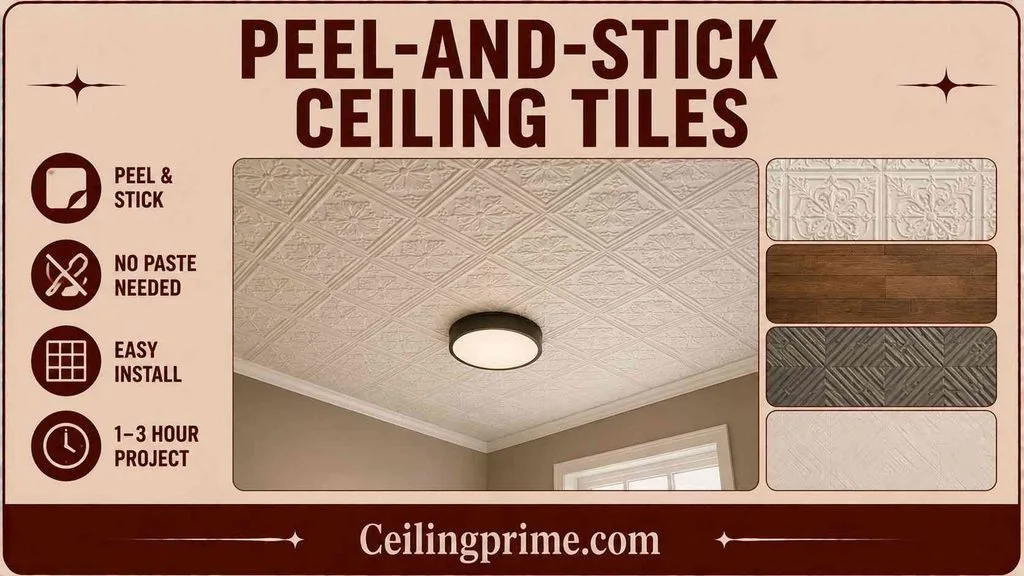
Peel-and-stick wallpaper tiles are pre-cut squares or rectangles that apply directly to a flat ceiling. Each tile is self-adhesive. No paste needed. No full-length strips to wrestle overhead. The tiles come in faux tin, faux wood, geometric, and textured patterns.
These tiles work best on smooth, clean drywall. They do not adhere well to textured or popcorn ceilings. Remove the texture first or skim-coat the surface before applying tiles. Most tiles are 12×12 or 24×24 inches. A single room takes 1 to 3 hours to tile.
Types of Ceiling Wallpaper: Traditional vs Peel-and-Stick
| Feature | Traditional Paste | Peel-and-Stick |
| Adhesion | Strong — paste bonds permanently | Moderate — repositionable, removable |
| Removal | Requires steamer and scraper | Peels off cleanly, no damage |
| Durability | 10–15+ years | 3–7 years |
| Best for | Long-term, owned homes | Renters, short-term, trial runs |
| Installation difficulty | Hard — wet paste, heavy strips, overhead | Moderate — dry application, lighter |
| Moisture resistance | Varies by type (vinyl-coated best) | Vinyl-based — handles humidity |
| Cost per sq ft | $1–$5 | $1–$4 |
Peel-and-stick is easier for DIY ceiling work. No paste dripping overhead. No wet paper sagging. The strips are lighter and repositionable. Traditional paste produces a stronger, longer-lasting bond for permanent installations.
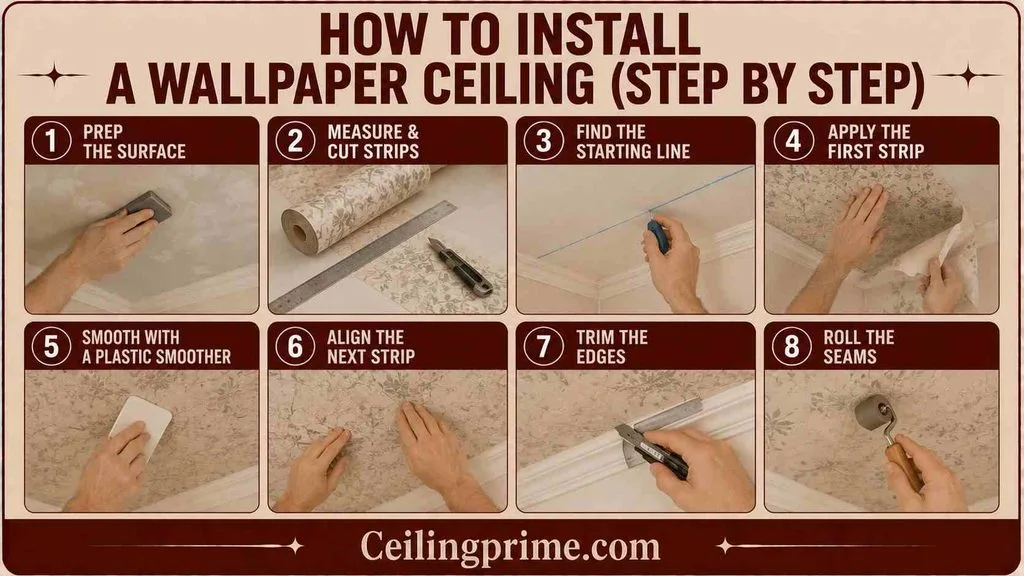
How to Install a Wallpaper Ceiling (Step by Step)
- Step 1: Prep the surface. The ceiling must be smooth, clean, and primed. Sand any rough spots. Fill cracks with spackle. Wipe with a damp cloth to remove dust. Apply a wallpaper primer or sizing if using traditional paste. The paper adheres best to a sealed, non-porous surface.
- Step 2: Measure and cut strips. Measure the ceiling length. Add 2 inches to each strip for trimming. Cut all strips before starting.
- Step 3: Find the starting line. Snap a chalk line parallel to the most visible wall and one strip-width inward. This ensures the first strip runs straight. Crooked first strip means every strip after it is crooked.
- Step 4: Apply the first strip. For peel-and-stick: peel 12 inches of backing, align to the chalk line, press to the ceiling, then peel and press the rest in sections. For paste: apply paste to the back of the strip (or to the ceiling if using pre-pasted), fold the strip loosely, carry it up the ladder, and press to the ceiling.
- Step 5: Smooth with a plastic smoother. Push air bubbles toward the edges. Work from the center of the strip outward.
- Step 6: Align the next strip. Butt the second strip edge against the first. Match the pattern. Press flat. Smooth out bubbles.
- Step 7: Trim the edges. Use a sharp utility knife and a metal straight edge to trim excess paper along the wall-ceiling joint.
- Step 8: Roll the seams. Use a seam roller to press the seam between strips tight. This prevents the edges from lifting over time.
Overhead installation is harder than walls. Gravity pulls wet paste strips down. Have a helper hold one end while you press the other. A plank on two ladders creates a scaffold that keeps you at ceiling height without climbing up and down for each strip.
Wallpaper Ceiling Costs
| Item | Cost |
| Peel-and-stick wallpaper (per sq ft) | $1–$4 |
| Traditional paste wallpaper (per sq ft) | $1–$5 |
| Grasscloth wallpaper (per sq ft) | $3–$10 |
| Metallic or foil wallpaper (per sq ft) | $4–$12 |
| Wallpaper primer/sizing (per gallon) | $15–$30 |
| Paste adhesive (per gallon) | $10–$20 |
| Total DIY (12×12 room, 144 sq ft) | $150–$700 |
| Professional installation (per sq ft) | $3–$8 labor |
Ceiling wallpaper costs more than paint but less than wood planks, beadboard, or coffered ceiling construction. The visual impact per dollar is among the highest of any ceiling upgrade.
7 Common Mistakes to Avoid
- Skipping primer: Unprimed drywall absorbs paste unevenly. The wallpaper lifts at the edges. Always prime with wallpaper sizing or a dedicated primer.
- Choosing the wrong paper for the room: Grasscloth in a bathroom absorbs moisture and molds. Standard paper in a kitchen absorbs grease. Match the wallpaper type to the room humidity level.
- Not removing popcorn texture: Wallpaper does not adhere to popcorn texture. The bumps show through. Scrape the texture or skim-coat the surface first.
- Crooked first strip: Every strip aligns to the first one. A crooked start means a crooked ceiling. Snap a chalk line and follow it.
- Stretching wet paper: Paste-wet wallpaper stretches. It shrinks as it dries. Stretched strips leave gaps at the seams. Let the paper book (fold loosely) for 3 to 5 minutes before hanging.
- Too much pattern in a small room: A busy ceiling in a small bathroom feels chaotic. Use small-scale or tone-on-tone patterns in rooms under 100 square feet.
- Ignoring the seam roller: Unsealed seams peel within weeks. Roll every seam with a seam roller after smoothing.
Turn the Fifth Wall into the Best Wall
A wallpaper ceiling adds pattern, texture, and personality to any room for $1 to $5 per square foot. Geometrics suit modern homes. Florals suit bedrooms. Metallics suit dining rooms. Faux materials replicate wood, tin, and marble without the weight. Peel-and-stick makes it a weekend DIY project. And when you want a change, it peels off clean.
Frequently Asked Questions
Can I wallpaper a popcorn ceiling?
Not directly. The texture prevents adhesion. The bumps show through the paper. Remove the popcorn first, or skim-coat the surface to create a smooth base.
Does wallpaper on the ceiling make a room feel smaller?
Dark or busy patterns can make low ceilings feel heavy. Light patterns, small-scale motifs, and tone-on-tone designs make rooms feel larger. Choose pattern scale based on ceiling height and room size.
How long does ceiling wallpaper last?
Traditional paste wallpaper lasts 10 to 15+ years. Peel-and-stick lasts 3 to 7 years before edges start lifting. Lifespan depends on humidity, adhesion quality, and surface preparation.
Can I install wallpaper on a ceiling by myself?
Yes, but a helper makes it much easier. Overhead work with wet, floppy paste strips is difficult solo. Peel-and-stick is easier for solo installation because the strips are dry and repositionable.
Is wallpaper on the ceiling a trend or a classic?
Both. Wallpapered ceilings appeared in Victorian homes in the 1800s. They are trending again in 2026 as designers treat the ceiling as a design surface rather than an afterthought. Classic damask and modern geometrics are equally popular.
Can I use wallpaper on a tray ceiling?
Yes. Apply wallpaper to the raised center section only. Leave the flat perimeter painted. The wallpaper fills the tray with pattern while the painted border frames it. This is one of the most popular high-end ceiling design combinations.